Kimolos, Greece: Island Guide, Beaches, Chora & Hotels
Kimolos is a small, quiet island in the western Cyclades, 38 square kilometres in size with about 800 inhabitants, lying just northeast of Milos and taking its name from the chalk (kimolia) that was once mined here. The north-east of the island is marked by that mining, but the south coast is friendly, with sandy beaches such as Aliki, Kalamitsi and Bonatsa. Ferries land at the port of Psathi on the east coast, and the capital Chora, with its four-century-old Kastro, stands about one and a half kilometres inland at the foot of Mount Xaplovouni. Kimolos suits travellers who want a traditional, unspoiled island away from the crowds.
- Sea
- Aegean (Cyclades)
- Size
- 38 km²
- Population
- ≈800
- Highest
- Paliokastro 355 m




The island of Kimolos
Kimolos belongs to the Cyclades and lies in the so-called western Cyclades, just northeast of Milos and southwest of Sifnos. It covers 38 square kilometres, is small and mountainous, and had a population of about 800 in the year 2000. The island is volcanic in origin, which makes its plains fertile, and it is named after the lime or "kimolia" that was mined here and used to make porcelain. The mining still shapes the north-east coast, but the island stays quiet and traditional, and its many natural caves, such as the Vromolimni cave northeast of Chora, once served as hideaways for pirates.
Chora and the villages
Kimolos keeps almost all of its life in the capital Chora, set inland at the foot of Mount Xaplovouni, and at the port of Psathi on the east coast where the ferries arrive. The cove of Goupa lies a short distance from Psathi, Prassa sits on the north-east coast near a mine, and Aliki is the bathing resort on the south coast. There is no public bus service outside the high season, when a mini-bus runs between Psathi, Chora and some of the beaches.
Chora and the Kastro
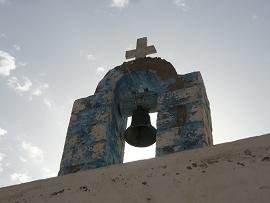


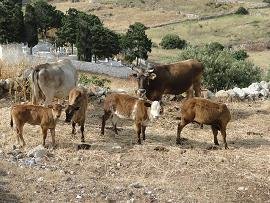
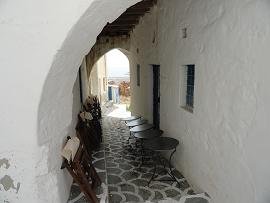


Chora, the capital, stands about one and a half kilometres inland from Psathi at the foot of Mount Xaplovouni, an easy walk from the port. The village is unspoilt and authentic, with whitewashed houses, small squares, striking flowers and a twentieth-century cathedral. It is best known for its Kastro, a group of houses built like a fortress against pirate raids: the Kastro is more than four centuries old, one of its gates carries the date 1556, and parts reuse an even older thirteenth-century reinforcement. Similar kastros stand on Folegandros and Antiparos, but the one on Kimolos is regarded as the finest, and much of it is still unrestored and in its original state.
Psathi, the port


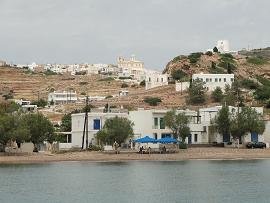


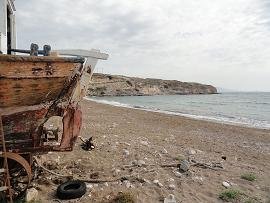
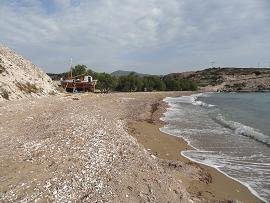
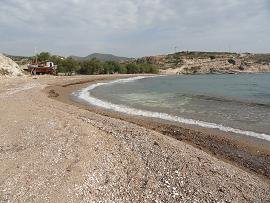
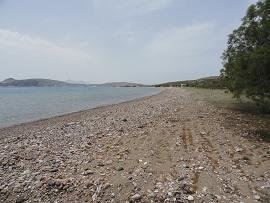
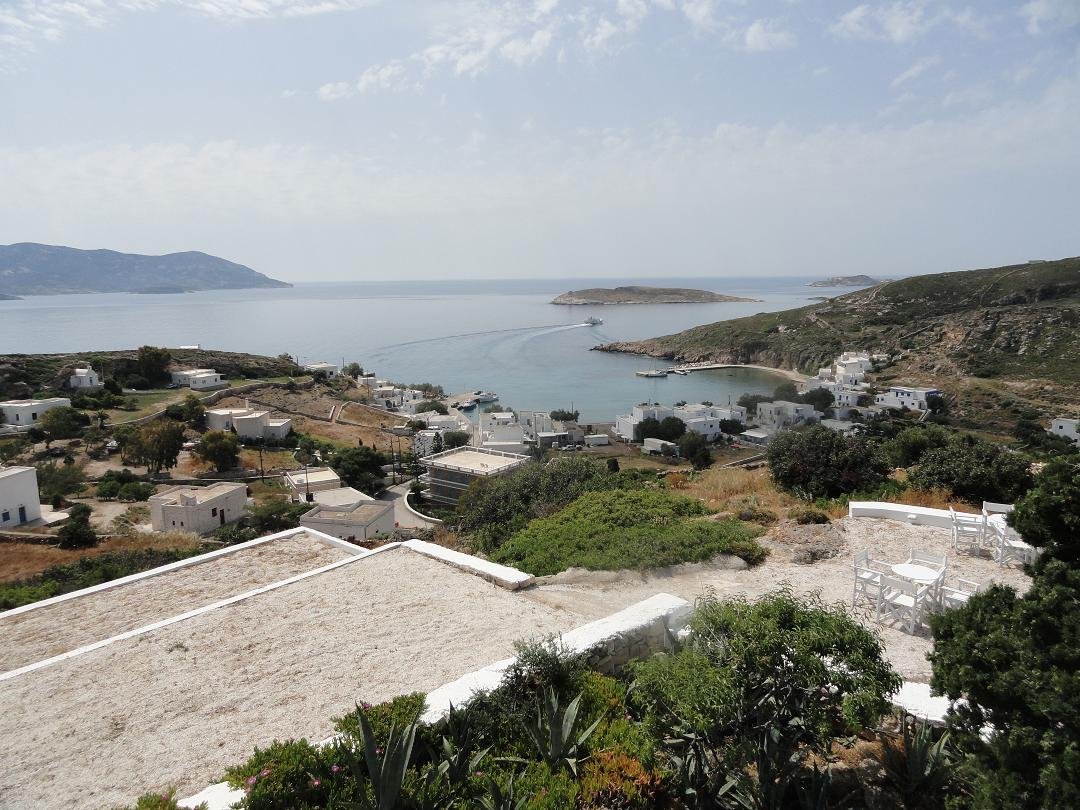
Psathi is the port of Kimolos, on the south-east of the island, where all the ferries arrive. It has a pebble beach and a handful of tavernas and a coffee bar, and it makes a quiet first impression. About 90% of the island's population lives in nearby Chora, and behind Psathi the hills begin, dotted here and there with a windmill.
Goupa
Goupa lies a short distance from Psathi in a cove, with a beautiful beach and a couple of tavernas. It keeps the same quiet character as the port.
Prassa
Prassa is the northern village and beach, reached by a road from Chora. It sits on the north-east coast near a mine, with sandy, rustic beaches that are among the best on the island.
Aliki
Aliki is the bathing resort on the south coast, at the southern end of the road from Chora, where a medicinal sulphur spring can be found. It has cafeterias and a sandy beach, and several rooms and studios stand nearby.
The beaches of Kimolos
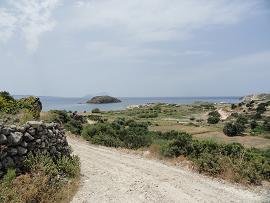

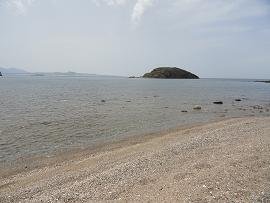
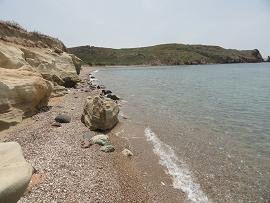

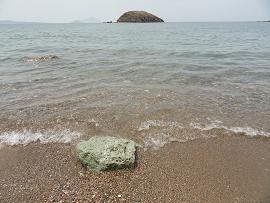
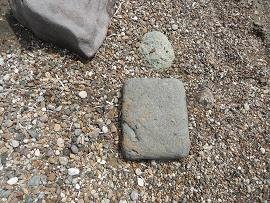
Nearly all the beaches of Kimolos lie on the south and south-east coast, where they are sheltered from the wind and easily reached on foot from Psathi. The sand is often white or red: Aliki, Bonatsa and Kalamitsi have large beaches of golden sand, while Agios Georgios has white sand, and Livadaki, Klima, Rema and Psathi (the port) fill out the south and east. Prassa lies in the north-east near a mine, and Ellinika in the west is a quiet, unofficial naturist beach over the sunken ancient capital. See the full guide to the beaches of Kimolos.
Sights of Kimolos


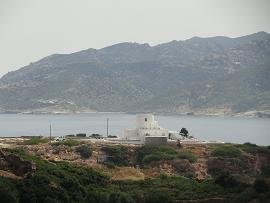


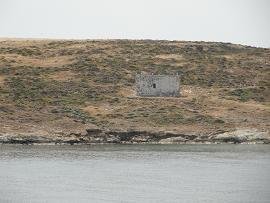


The main sights of Kimolos are the Kastro of Chora, the ruined Venetian castle of Paliokastro built by Marco Sanudo on the island's highest point at 355 metres, and the sunken ancient capital at Ellinika, whose remains lie partly in the sea and date from the eighth century BC. Chora holds a small Archaeological Museum with finds from Ellinika, along with the churches of Evangelistia (1608), Taxiarhis (1670) and Chrisostomos (1680). Off the south-east coast lies Polyaigos, an uninhabited 18-square-kilometre island of the municipality of Kimolos and home to the protected Mediterranean monk seal. These are gathered in the Kimolos sights guide.
Where to stay
There are not many hotels on Kimolos, and most rooms and studios are in and around Chora, Psathi, Aliki and the south-coast beaches. Choices include the boutique Windmill Hotel between Psathi and Chora, the Kimolis Hotel at Psathi, Kimolia Gi above Agios Georgios beach, Kalamitsi Studios near Bonatsa, Studios Maria Begni and Sardis Rooms at Aliki, and self-catering houses in the Kastro. There are no car rentals on the island, so many visitors bring a car from Milos. Compare the options in the Kimolos hotels & villas guide.
Where to eat
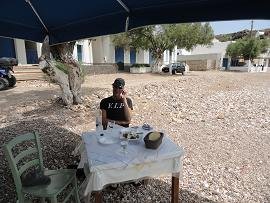

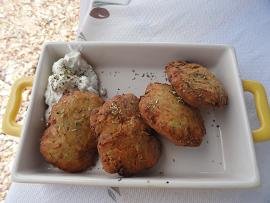
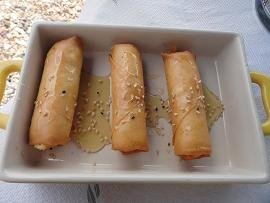


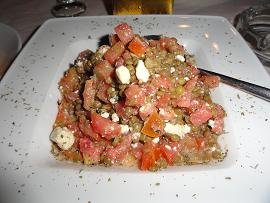
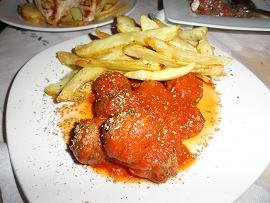


For such a small, non-touristy island the food on Kimolos is a happy surprise. The Echinoussa taverna sits on the beach in the harbour of Psathi, run by Panagiotis with Fotis the cook, and the coffee bar a little further along the port serves good coffee and large glasses of metaxa. Where to eat by area is set out in the Kimolos restaurants guide.
Getting to Kimolos
Kimolos is reached by ferry, with fast boats from Piraeus (Athens) taking about three and a half hours and slower services in the western Cyclades calling at islands such as Kythnos, Serifos, Sifnos and Milos on the way. All ferries land at the port of Psathi on the east coast. The easiest approach in summer is to combine Kimolos with a stay at Pollonia on Milos, from where a small ferry crosses to Kimolos about four times a day. There are no car rentals on Kimolos, so it is best to bring a car from Milos; on the island itself transport is by bus, taxi or water taxi.