Patmos, Greece: Island Guide to Skala, the Monastery & Beaches
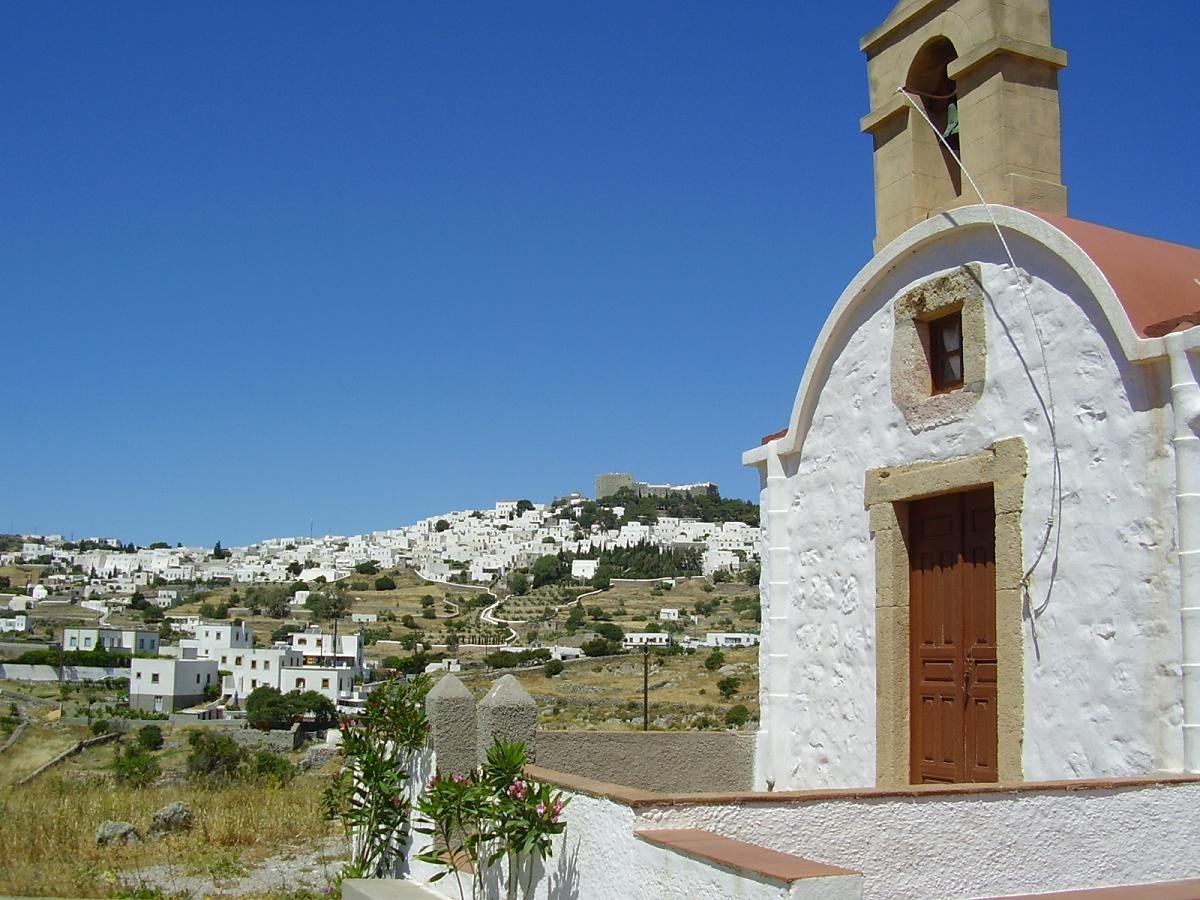
Patmos is a small, volcanic island in the northern Dodecanese of Greece, about 34 square kilometers with around 2,600 inhabitants, best known as the place where the Book of Revelation was written and for the Monastery of St John. The harbour of Skala welcomes ferries and cruise boats, while the monastery crowns the island's highest point above the Chora. Islanders live mainly from fishing and tourism, and Patmos is quiet and good for walking and beach holidays. Hire a car to reach the parts of Patmos the buses miss, covered in our Patmos car hire guide.
- Sea
- Aegean
- Size
- ~34 km²
- Population
- ~2,600
- Group
- Dodecanese




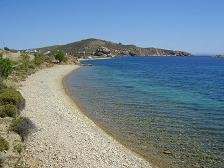
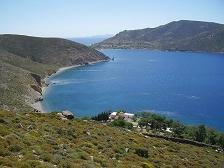
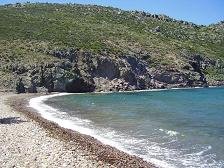

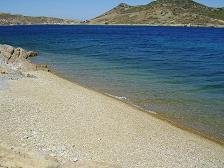
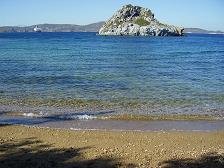
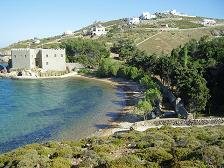
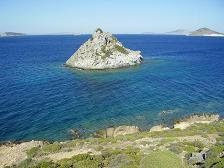
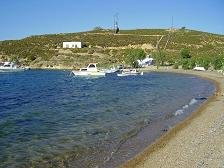








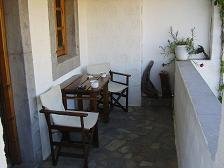
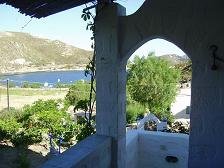
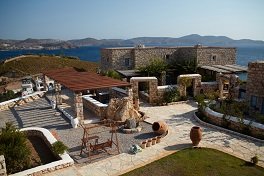






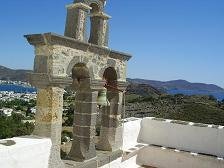
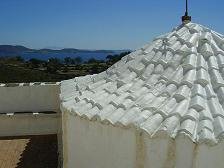


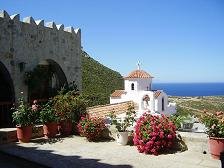


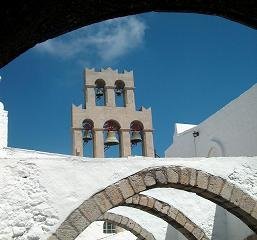
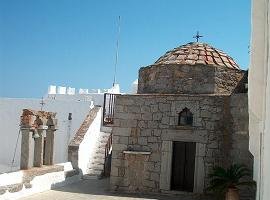

The island of Patmos
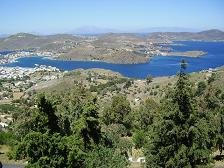
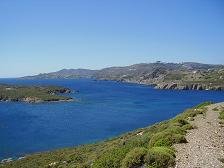
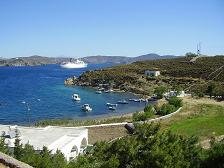
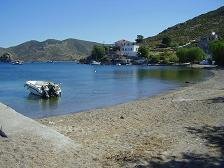
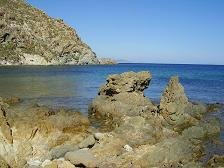
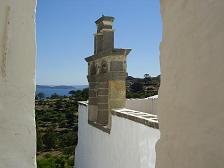
Patmos lies in the northern Dodecanese, the most northern island of the group, and covers about 34 square kilometers with around 2,600 residents. The island has a volcanic origin and mixes small hills with beach-lined bays. Grapes, olives and tomatoes are grown here, but people live mainly from fishing and tourism, because Patmos is one of the centres of Christian religion. It has no airport and is reached only by boat, with good connections to Samos and Kos. Together with Tinos, Patmos is one of the most important Greek religious centres, yet the atmosphere stays relaxed, and the largest village is Skala.
Skala and the Chora
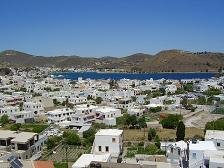
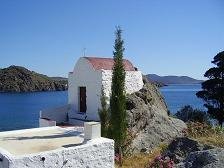
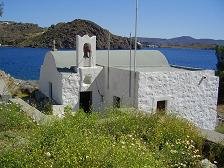
Skala, the harbour, is the liveliest village on Patmos, set where the island narrows so you can walk from the east coast to the west in a few minutes. It is made up of tavernas, Cycladic-style houses and a town beach with good sand. The Chora, the capital, sits on the mountain around the monastery and offers wide views over the island. Grikos, on the bay of Petra about 5 kilometres from Skala, is a former fishing village that has grown into a resort with a good beach and hotels, and Sapsila Bay, between Skala and Grikos, has a small church and a quiet beach.
Monastery of St John & the Cave of the Apocalypse
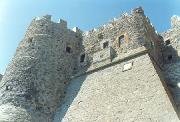
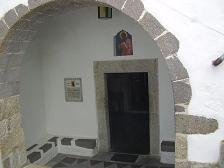
The Monastery of St John was founded in 1088 by the monk Christodoulos, with permission of the Byzantine emperor Alexios I Komnenos, near the cave where the apostle John is said to have written the Apocalypse in 95 AD. The fortress-like monastery protected the island from pirates and holds thirteenth-century frescoes, a library of old manuscripts and a treasury of relics and icons. The Cave of the Apocalypse, just below the Chora, is part of the complex and can be visited; visitors need long trousers and covered shoulders to enter, and photography inside is no longer allowed. When the Turks took the island in 1537 they left local government to the monks, who spread the Christian faith, the Greek language and culture, and a clerical school was founded in 1713. Patmos became part of Italy with the rest of the Dodecanese and was reunited with Greece in 1948.
Beaches of Patmos
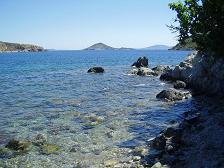
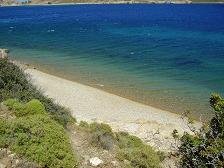
Psili Amos, in the south, is the most beautiful beach on Patmos, reached by daily boat from Skala or a 20-to-30-minute walk from Diakofti, with tamarisk trees for shade and a small taverna. Skala has two beaches, and north of it lie Meloi (with the island's campsite), Agriolivado, Kampos, Vagia, Lampi and Livadi Geranou, most with a taverna. Grikos, about 5 kilometres from Skala, has a good beach and tavernas. See the beaches of Patmos.
Where to stay on Patmos
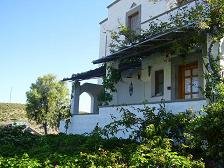
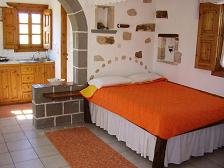
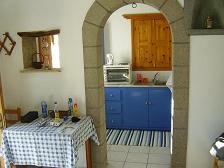
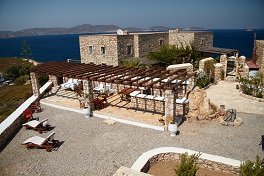
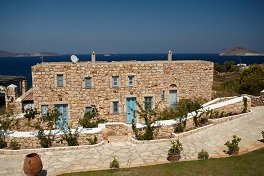
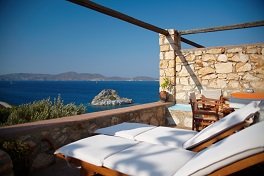
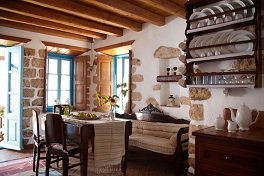
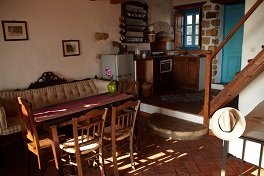
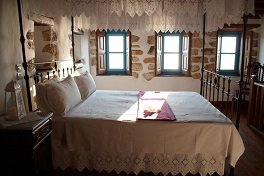
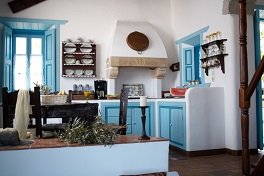
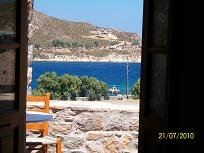
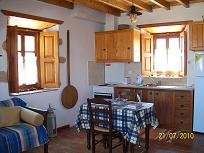
Most hotels, apartments and studios on Patmos are in Skala or the coastal village of Grikos, and there are no large hotels on the island. Mathio's Studios sit on a hill in quiet Sapsila Bay, a 2,500-metre walk from Skala, with 5 studios and 2 apartments and their own small beach. Traditional Houses Irini stand above Loukakia Beach, rustic stone villas a 10-minute walk from Patmos Town and the Monastery of St John. Browse hotels and studios on Patmos.


Getting to Patmos
Patmos has no airport, so all visitors arrive by boat. Daily ferries link Patmos with Piraeus and the other Dodecanese islands, including Leros, Kalymnos, Samos, Rhodes and Kos. The nearest international airports are on Kos and Samos, so many travellers fly there and take the ferry to Patmos to avoid the long crossing from Piraeus.