Sparta & Mystras: Ancient City-State and Byzantine City in Laconia
Sparta and Mystras stand 8 kilometres apart in the Eurotas valley of Laconia, in the southern Peloponnese: modern Sparti covers the sparse remains of the ancient city-state, while Mystras rises on a 634-metre outcrop of Mount Taygetos as a fortified Byzantine city of medieval ruins. Ancient Sparta held the leading military power in Greece for centuries yet built no acropolis and no walls; Mystras, founded by a Frankish crusader in 1249, grew into the capital of the Byzantine Despotate of Morea and a centre of culture of 42,000 people before it was abandoned in 1832.
- Region
- Laconia
- Mystras castle
- 1249
- Peak population
- 42,000
- From Sparta
- 8 km west


Ancient Sparta
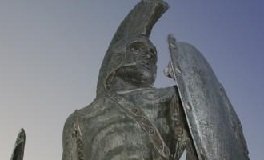
Sparta was the capital of Laconia and, for centuries, one of the most powerful city-states of ancient Greece. Four Doric villages founded the city in the 10th century BC, settling in the valley of the Eurotas river and enslaving the earlier inhabitants. Sparta kept no true acropolis and built no walls, so its residents stayed ready for attack at all times. Between the 8th and 5th centuries BC the population grew sharply, and Sparta conquered first Laconia, then Messinia, and eventually most of the Peloponnese. The Peloponnesian League made Sparta the strongest military state in Greece by the end of the 6th century BC. Rivalry with Athens brought on the Peloponnesian War, and by its end in 405 BC Sparta held the main power on both land and sea. At the Battle of Leuctra in 371 BC Sparta lost half its troops and lost Messinia, and Thebes took the leading role among the Greek states. The Macedonian king Philip, father of Alexander the Great, finally brought the Greek city-states under his rule. Modern Sparti now covers the ancient site: King Otto I ordered the new town built in the 19th century, 8 kilometres east of Mystras.
Mystras, the Byzantine city
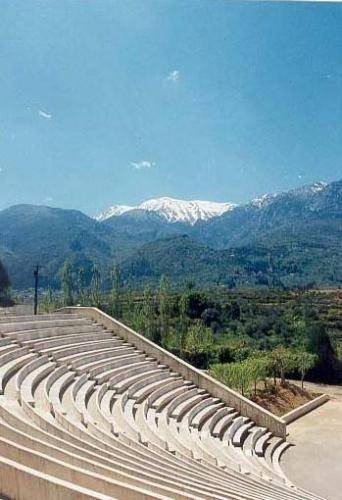
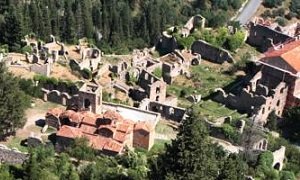
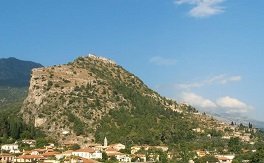
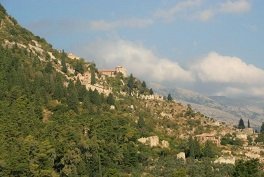
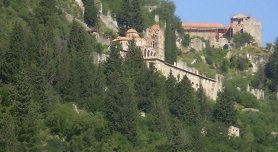
Mystras, also spelled Mistras, is a fortified Byzantine town on a 634-metre outcrop of Mount Taygetos, a short distance west of the ancient site of Sparta; since 2011 it belongs to the municipality of Sparti. The Frankish crusader William II Villehardouin, prince of Achaia, built the fortress here in 1249. Settlers gathered at the foot of the mountain for the protection of the castle, and a town grew around it. Ten years later the Byzantines captured Villehardouin, and his ransom handed them the peninsula of Morea. Mystras then expanded rapidly, and at its height 42,000 people lived here. Morea was a Despotate, a province governed by a Byzantine despot who was usually a brother or a son of the reigning emperor. Mystras served as the capital of the Despotate of Morea through the 14th and 15th centuries, and between 1350 and 1460 it was the despot's residence. The despots filled the city with churches, monasteries and palaces and turned it into a centre of culture. The Turks took Mystras in 1460, the Venetians held it from 1687, and the Turks occupied it again between 1715 and 1825. On Turkish orders, Albanian troops burned and destroyed the city in 1770. By 1832 Mystras stood abandoned — a Byzantine ghost town of medieval ruins set in a green landscape — and its people moved down to the new town of Sparta.
Mystras through the centuries
| Year | Event |
|---|---|
| 1249 | William II Villehardouin builds the fortress on a 634 m outcrop of Taygetos |
| 1259 | The Byzantines capture Villehardouin; his ransom hands them the peninsula of Morea |
| 1350–1460 | Mystras is the residence of the despot and capital of the Despotate of Morea |
| 1460 | Mystras falls to the Turks |
| 1687 | The Venetians take the city |
| 1715–1825 | The Turks occupy Mystras again |
| 1770 | Albanian troops burn and destroy the city on Turkish orders |
| 1832 | Mystras is abandoned; its people move to the new town of Sparta |
The dates below trace Mystras from a Frankish fortress to an abandoned Byzantine city over almost six centuries.
Where to stay
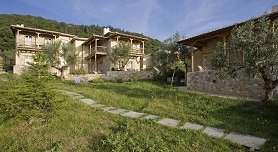

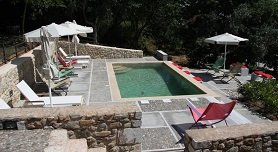
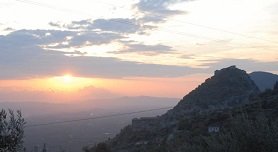
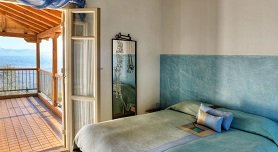

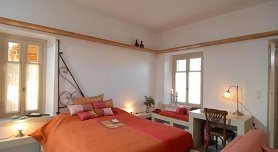

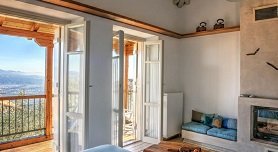
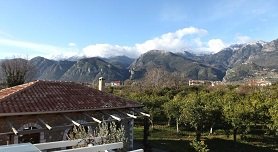
Two family-run hotels sit on the road up to Mystras, within a short walk or drive of the archaeological site. Guesthouse Mazaraki stands at 600 metres altitude in a wooded area of mountain springs and streams, 1 kilometre from the Byzantine castle, 4 kilometres from Mystras and 9 kilometres from Sparta. Its three buildings hold double rooms and one- or two-bedroom suites, most with a fireplace and a furnished living room, and the guesthouse arranges mountain bikes and visits to the local olive mills and fields. Rooms look east to the castle of Mystras and the city of Sparta, or west to Mount Taygetos, and the cellar keeps a range of fine wines.
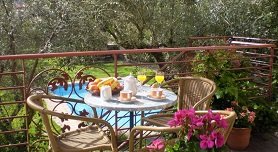
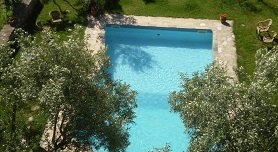
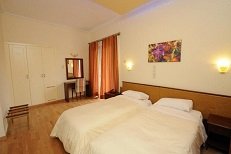
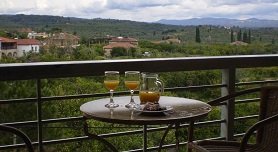
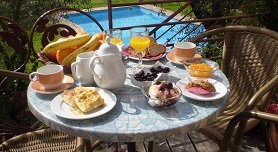
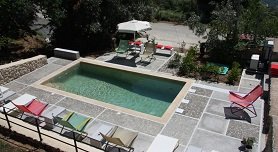
Hotel Byzantion sits lower down the road to Byzantine Mistras, a 5-minute walk from the archaeological site. Its rooms look over ancient Mistras and Mount Taygetos, with balconies facing the plains of Laconia. Each air-conditioned room has a minibar, internet access and satellite TV, and the hotel adds a swimming pool, an elegant bar, bicycles for rent at reception and free private parking on site.