Mykonos Sights: Mykonos Town, Ano Mera & the Delos Day-Trip
The sights of Mykonos are Mykonos Town (Chora), the inland village of Ano Mera, and the sacred island of Delos on a short boat day-trip. Mykonos Town packs a maze of whitewashed streets, a row of windmills and waterfront churches around two harbours; Ano Mera, 8 km inland, gathers around the Panagia Tourliani monastery; and Delos, just southwest, holds the largest archaeological site in the Cyclades. Hire a car to explore Mykonos at your own pace, covered in our Mykonos car hire guide.
- Ano Mera
- 8 km inland
- Panagia Tourliani
- Founded 1542
- Delos
- Birthplace of Apollo
- Delos boats
- Daily except Monday
| Sight | What it is | Where |
|---|---|---|
| Mykonos Town (Chora) | Maze of whitewashed streets, a row of windmills and two harbours | West coast, the island's main town |
| Archaeological Museum | Vases, grave statues, stelae and funerary urns, mostly from Rheneia | Mykonos Town |
| Panagia Paraportiani | Whitewashed waterfront church | Mykonos Town, by the old harbour |
| Panagia Tourliani | 16th-century monastery with Byzantine icons and a marble fountain | Ano Mera, 8 km inland |
| Paleokastro Monastery | 12th-century monastery beside a ruined Byzantine castle | Hill facing Ano Mera |
| Delos | Sacred archaeological island, birthplace of Apollo | Southwest of Mykonos, day-trip by boat |
Mykonos Town & its landmarks
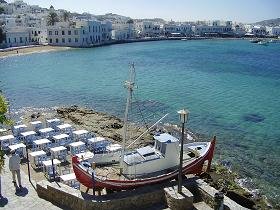
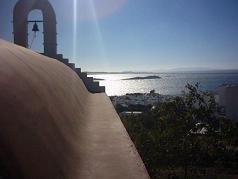
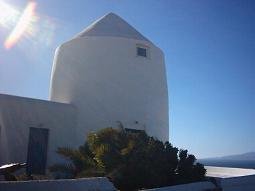
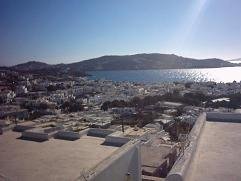
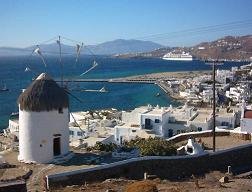

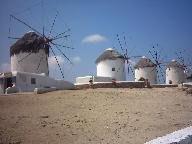
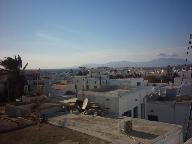

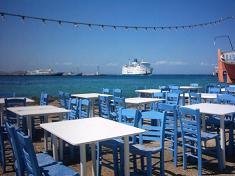
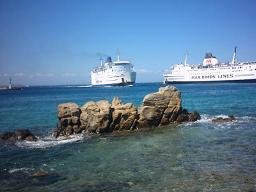
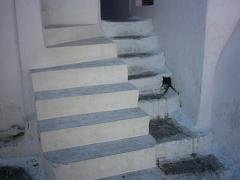
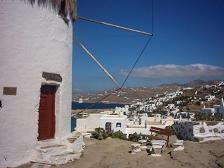
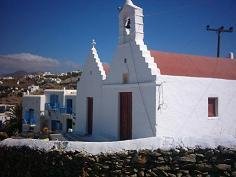
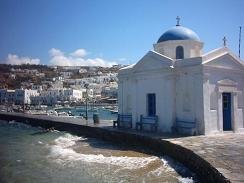
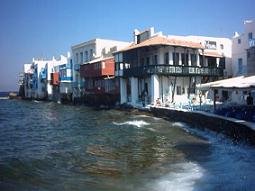
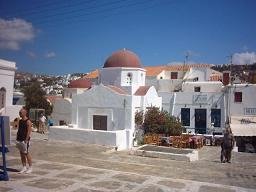
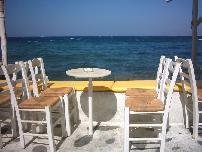
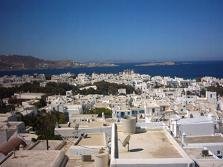
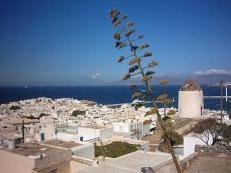
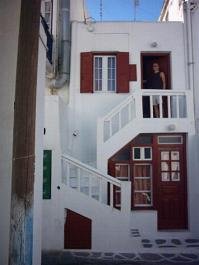
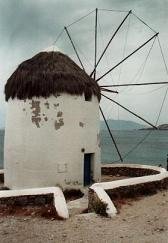
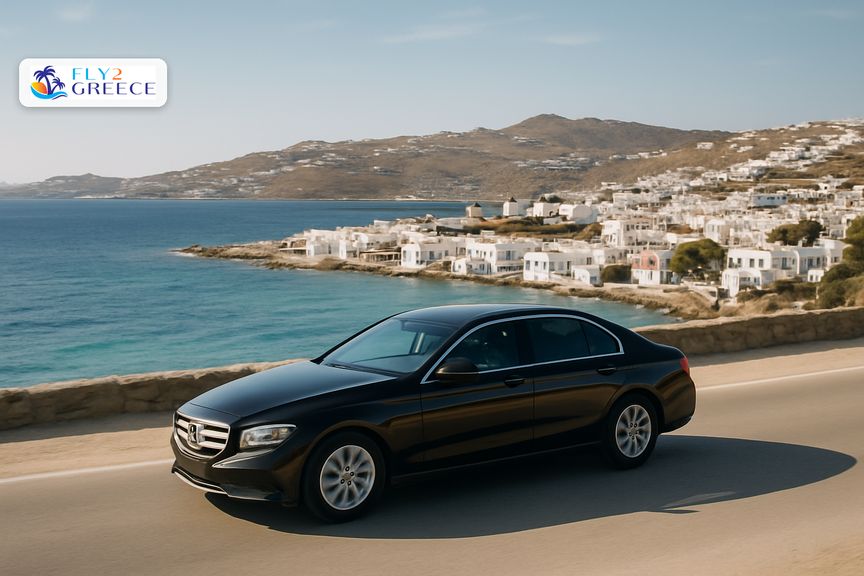
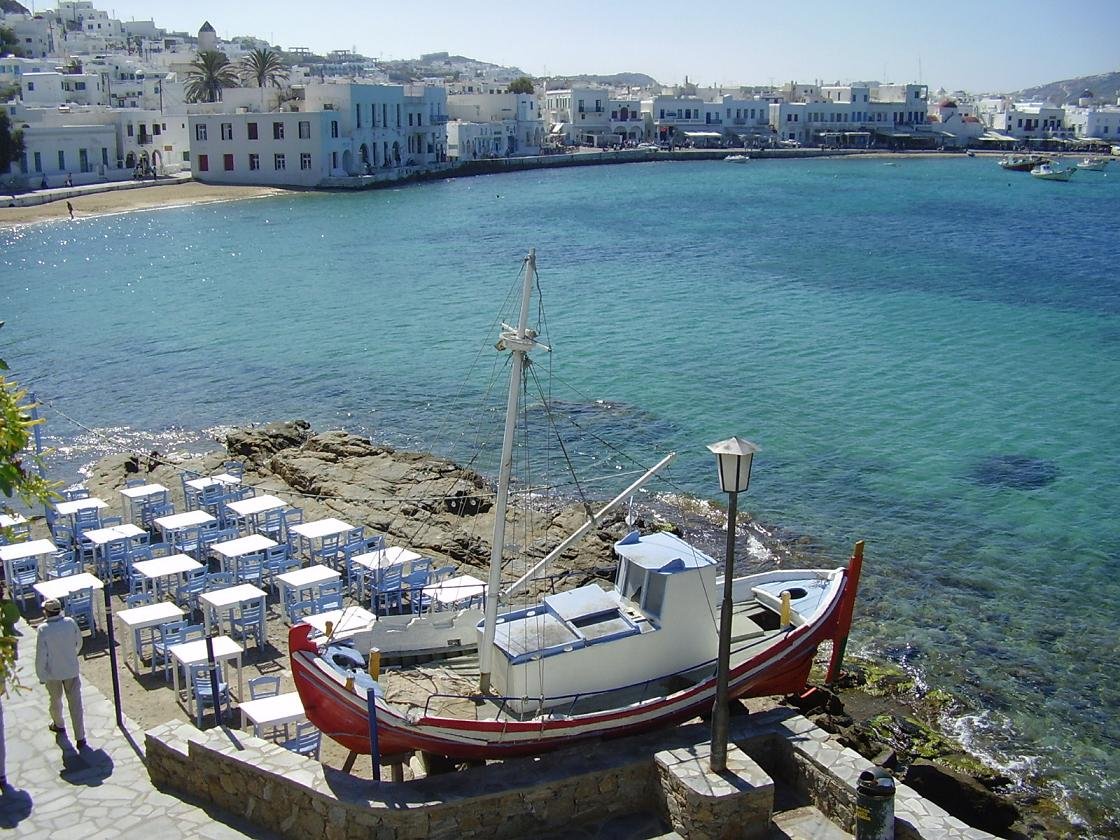
Mykonos Town, or Chora, is the island's main sight: a maze of whitewashed streets that the old builders laid out to confuse pirates, so losing your way is part of the pleasure. The town climbs the hill on roads and stairs, its houses painted white with blue, green and red shutters, and it keeps two harbours where you sit for a drink and watch the boats. Along the harbourfront stand colourful fishing boats, a row of windmills and a pelican or two, while small squares end at a terraced restaurant or a church. The whitewashed Panagia Paraportiani church and the Little Venice quarter are the town's best-known corners. The archaeological museum displays vases from the prehistoric to the late Hellenistic period (25th–1st century BC), grave statues, stelae and funerary urns from the nearby island of Rheneia. Three bus stations serve the town, the largest at Fabrikos Square, and the ferry harbour links Mykonos to the other Cyclades and to Rafina and Piraeus. Plan the rest of your visit from the Mykonos guide.
Ano Mera & the Panagia Tourliani
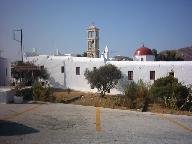
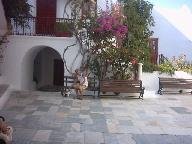
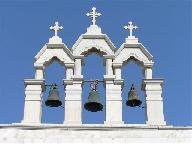
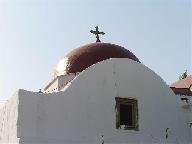
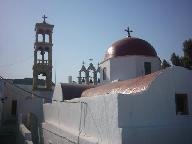
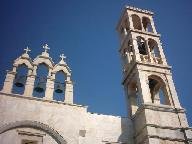
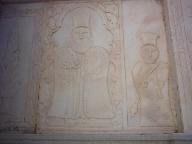
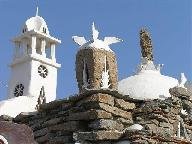
Ano Mera sits 8 km inland and is the island's second-largest village after Mykonos Town, built around the Panagia Tourliani monastery. Two monks from Paros founded the monastery in 1542 and it was restored in 1767; it shows an ornate bell tower and a marble fountain and holds a collection of fine Byzantine icons. The monastery took the name Panagia Tourliani, the holy Tourlos, after an icon of the Virgin Mary was found at Tourlos. It opens daily from 09:00 to 13:00 and from 15:30 to 19:00, and you dress modestly to enter. Village life gathers on the marble-tiled square in front of the monastery, where tavernas, souvenir shops, a couple of mini-markets and a bakery serve the visitors, and two ruined windmills top the village. On the hill opposite stands the 12th-century Monastery of Paleokastro, beside the remains of a Byzantine castle. The village sits on the highway to the eastern beaches, so many visitors arrange Mykonos car rental to reach it.
The Delos day-trip

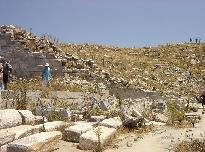


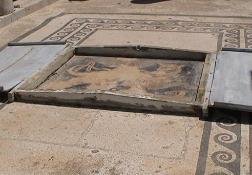

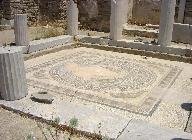

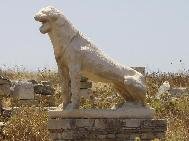
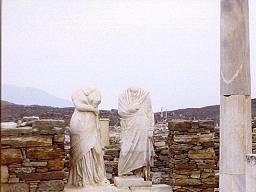
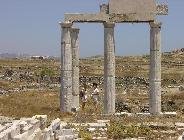
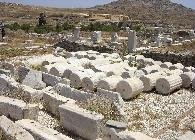
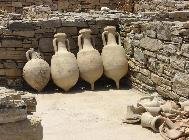

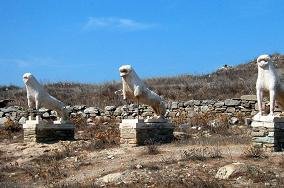
Delos lies just southwest of Mykonos and holds the largest and most important archaeological site in the Cyclades, which you visit on a daytime boat trip. The small, rocky island is the mythical birthplace of Apollo: in the myth Leto took refuge here and gave birth to the twin gods Apollo and Artemis, and Zeus set a ring of islands around Delos to make it the centre of the Cyclades. Today Delos has no hotels, no restaurants and no inhabitants, and it opens only in the daytime. Small boats run between Mykonos Town and Delos daily except Monday, and a morning boat also leaves from Platis Gialos; bring a guidebook or a map, or you are simply looking at old stones. The island is about 5 km long and up to 1.3 km wide, and its highest point is the 113-metre hill of Cynthus. The French archaeological school in Athens began systematic excavations in 1872, and the site now covers some 50 acres.