Poros Island Beaches: Beaches, Sights & Hotels
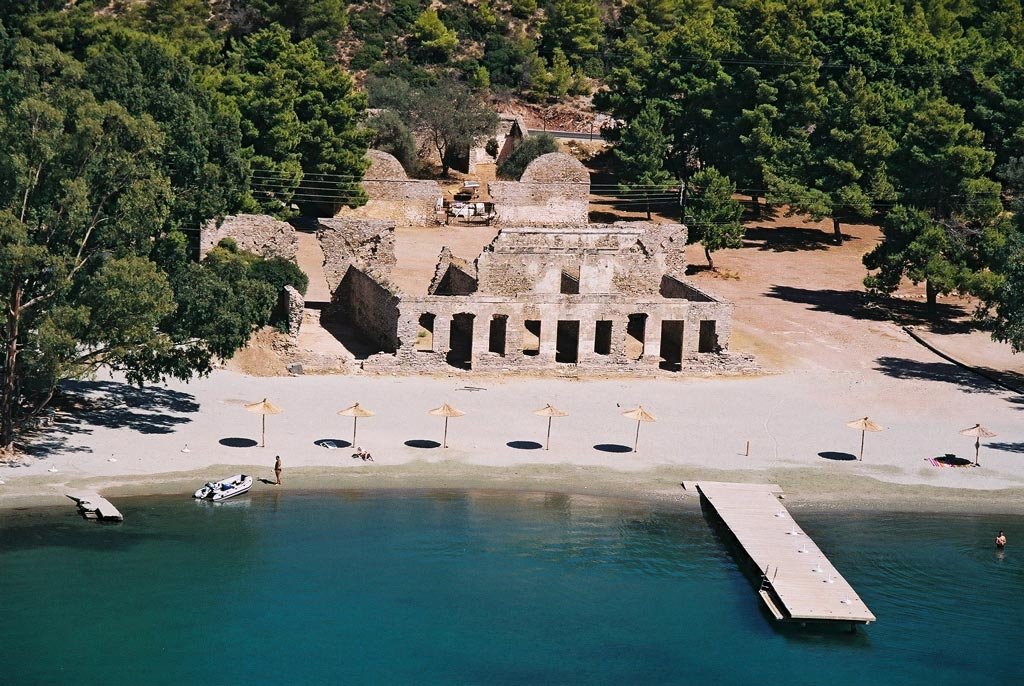
The beaches of Poros are almost all pebble or a mix of sand and pebbles and line the south coast of the island, from long, organised Askeli to pine-fringed Neorio, Russian Bay and Love Bay. Poros is a green island in the Argo-Saronic Gulf a little south of Athens, separated from the Peloponnese by a strait just 360 metres wide, and a favourite of cyclists who ride its south coast between the beaches.
- Sea
- Argo-Saronic
- Size
- 28 km²
- Population
- ~4,500
- Strait
- 360 m

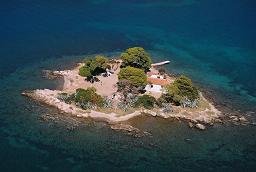
The beaches of Poros
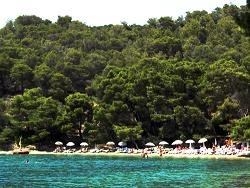
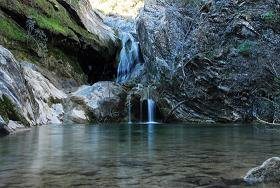
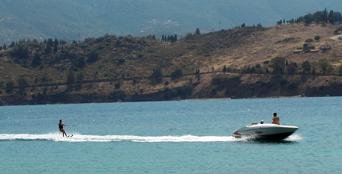
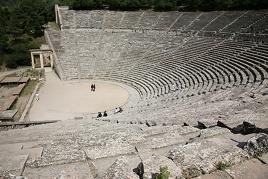
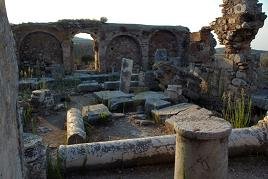
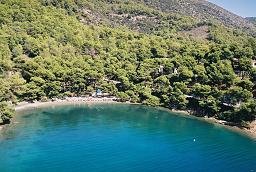
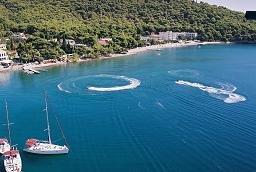
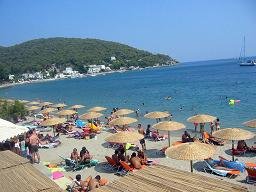
The beaches of Poros are mostly pebble or sand-and-pebble and lie along the south coast. Askeli Beach, about 3 kilometers north-east of Poros Town, is the longest beach on the island - a large organised sandy beach with all the facilities and a regular bus. Neorio Beach, 2 to 3 kilometers west of town, is one of the most beautiful, backed by tall pines and split into Megalo and Micro Neorio, with water sports and a bus service. Kanali Beach, 2 kilometers from town near the bridge, is a small sand-and-pebble beach with sunbeds and tavernas. Monastery Beach, about 5 kilometers east below the monastery of Zoodochos Pigi, is quieter, while tiny Panagitsa Beach next to Askeli sits among trees by a small church. Russian Bay Beach, 5 kilometers south-west, is a sheltered sandy beach where the first Russian ships that helped in the revolution were once moored, and neighbouring Love Bay has white pebbles, sand and shade under the trees. Vagionia, in the north, is a sand-and-pebble beach where a sunken ancient city is visible on the seabed; there is no bus, so bring water.
The island of Poros
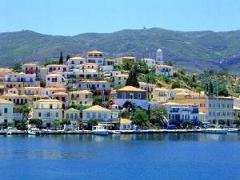
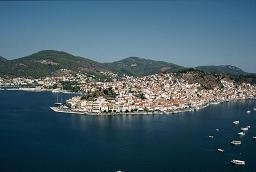
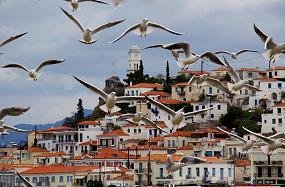
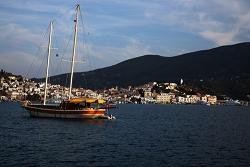
Poros is one of the Argo-Saronic islands, a green island south of Aegina and close to the Peloponnese mainland. It actually consists of two islands joined by a bridge - pine-covered Kalaureia and smaller, volcanic Sphairia, which carries the main village of Poros Town. A narrow strait just 360 metres wide separates the island from the mainland and gives Poros its name, which means "passage". The island is 28 square kilometers in size with about 4,500 residents. Poros Town, set in an elongated bay, has wooden fishing boats, 19th-century houses, white houses with red roofs on the hills, churches, a beautiful bell tower, restaurants and shops, and all the amenities including supermarkets, banks, pharmacies, a bus station and an archaeological museum. Many people return to Poros because it is a relaxed island, and it is popular with cyclists who ride the south coast to the beaches.
Where to stay on Poros
Poros Town and nearby Askeli Beach make the handiest bases, close to the harbour, the tavernas and the south-coast beaches.
7 Brothers Hotel, Poros Town
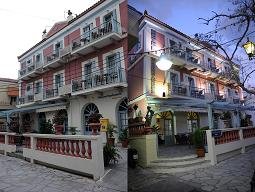
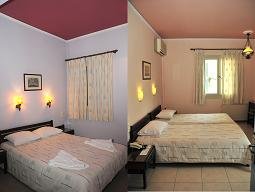
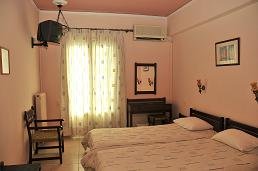


7 Brothers Hotel is a small, family-run hotel in the heart of Poros Town, a 5-minute walk from the archaeological museum, the clock tower, the harbour and the market place. Its 16 rooms all have air conditioning and heating, a mini fridge, satellite TV, a safe, a hair dryer and free wi-fi, and each has a balcony with views over the harbour and the coast of the Peloponnese or the flower-filled side streets of the town.
Check availability & bookAlkyoni Hotel, Askeli
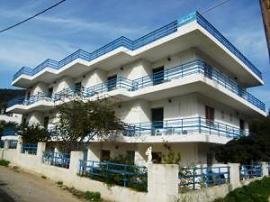
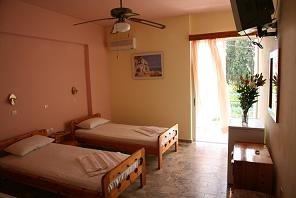
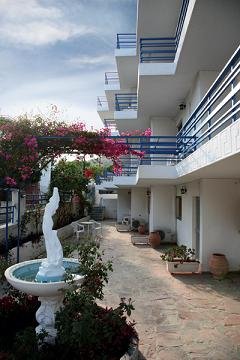

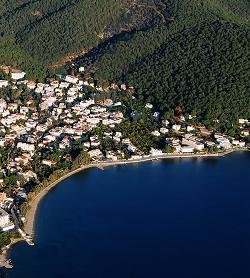
Alkyoni sits among pine trees and green hills 3 kilometers from Poros Town and 150 to 200 metres from Askeli Beach, with a water park close by. Its 20 comfortable rooms each have air conditioning and heating, TV, a fridge, a kettle, a hair dryer, a safe and a balcony, with daily cleaning, free wi-fi, free parking and a free bicycle programme for guests.
Check availability & bookSights of Poros
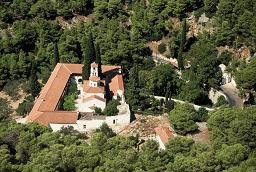
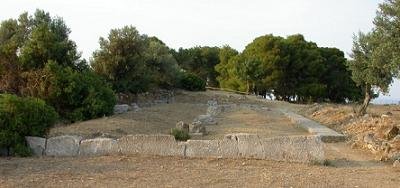
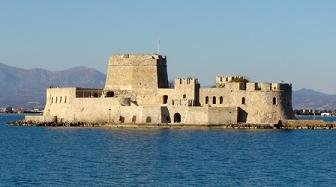
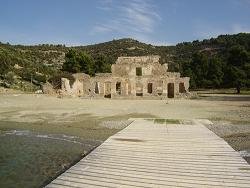
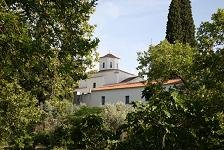
Poros Town has an archaeological museum and, on a small islet in front of the town (Bourtzi), a Venetian fortress and the Naval Cadet School, housed in a 19th-century arsenal built in 1830 - the first naval weapons store in Greece. The blue-and-white bell tower on the hill is one of the island's most photogenic sights, reached through little streets and stairways lined with verandas. In the village of Kalaureia stand the remains of the Temple of Poseidon, god of the sea, dating from the 6th century BC. The monastery of Zoodochos Pigi in the east, from the 18th century and dedicated to the Virgin Mary, has a waterfall and, unusually, the graves of three foreigners - an Englishman and a Russian killed in Greece's struggle for independence, and the daughter of the painter Rafaello Ceccoli.