Zakynthos (Zante), Ionian: Shipwreck Beach, Turtles and Villages
Zakynthos, called Zante by the Venetians, is the most southern of the Ionian Islands, 406 km2 in size and best known for Navagio Shipwreck Beach, its loggerhead sea turtles and the Venetian capital Zakynthos Town. The steep west coast hides cliffs, sea caves and hard-to-reach coves, while the smoother east and south hold the busy resorts of Laganas, Argassi, Tsilivi and Alykes, and the quieter mountain north keeps its more authentic villages. This guide sets out the island, its beaches and sights, its villages and where to stay and eat. Hire a car to reach the parts of Zakynthos the buses miss, covered in our Zakynthos car hire guide. Getting from the airport is easy too, covered in our Zakynthos airport transfers guide.
- Sea
- Ionian
- Area
- 406 km2
- Capital
- Zakynthos Town
- Highest
- Vrachionas 758 m
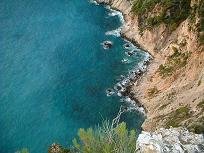



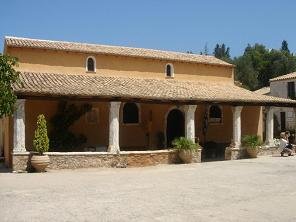


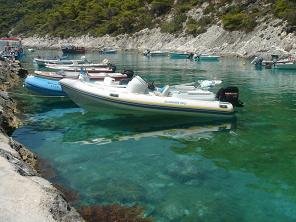
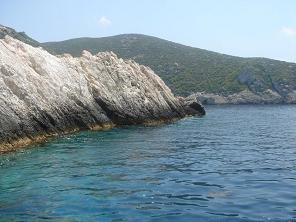
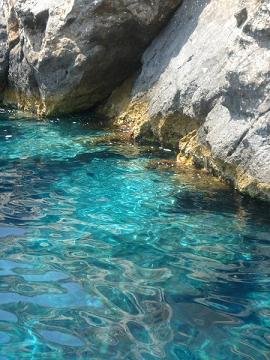
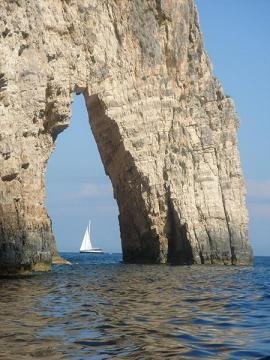
The island of Zakynthos
Zakynthos is the third largest of the Ionian Islands after Corfu and Lefkas, covering 406 km2. The island runs about 40 km from north to south and 20 km wide, its coastline measures some 123 km, and its highest point is Mount Vrachionas at 758 m. It lies west of the Greek mainland, roughly level with Sicily, and its subtropical Mediterranean climate keeps it green with olive groves and vineyards; the island's largest wine factory stands in the Kalipado wine district. Because Zakynthos sits at the southern end of the Ionian, its only frequent ferry link is with the mainland at Kilini.
History of Zakynthos
Zakynthos is often called "Il fiore di Levante", the flower of the east, and takes its name from a son of Dardanos, the king of Troy. In Roman times it belonged to the province of Achaia and later, under the Byzantine empire, to Illyria, then passed in turn to the Turks, the Venetians, the French and the British before reuniting with Greece on 21 May 1864. The island's patron saint, Dionysios, was born here in 1547 and died in 1622. A severe earthquake in 1953, with around 120 shocks, destroyed about 70% of the island, though the church of Agios Dionysios was spared. More detail is on the Zakynthos history page.
Getting to Zakynthos
Zakynthos has an international airport near Zakynthos Town, so most summer visitors arrive on a direct flight. By sea, Superfast Ferries sail from Ancona to Patras in about 19 hours; from Patras it is roughly 45 minutes by road to Kilini, and from Kilini several ferries a day cross to Zakynthos Town in about 55 minutes. The Kilini boat cannot be reserved, so you buy a ticket on arrival, waiting times are short, and the fare is about €6.50 per person and €29.40 per car one way. Full details of getting there and getting around are on the Zakynthos travel page.
Beaches of Zakynthos
Zakynthos keeps its most famous beach on the roadless north-west coast at Navagio, the Shipwreck Beach, a strip of white sand under sheer cliffs around a rusting freighter, reached only by boat. The sheltered south and east hold the family sands of the Vasilikos peninsula, among them Gerakas, Porto Zoro and Banana Beach, plus the long resort beaches of Laganas and Kalamaki in the turtle bay. The full run of coast, from the boat-only coves of the west to the sandy south, is set out in the Zakynthos beaches guide.
Sights and sea turtles
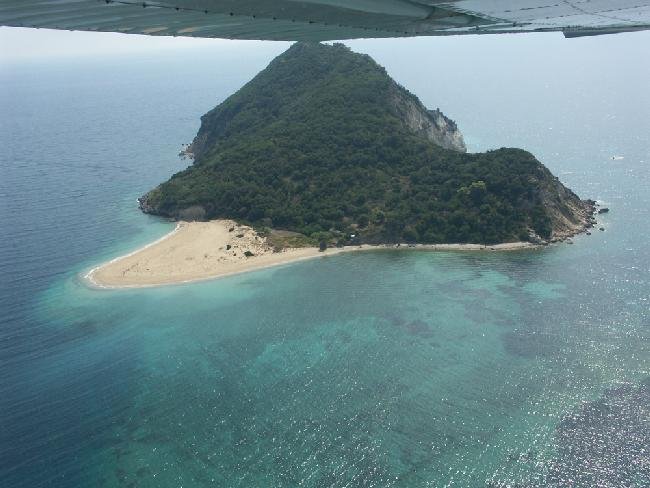
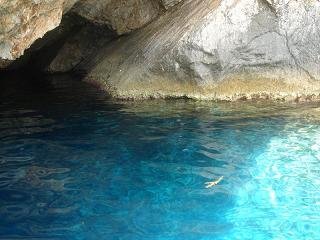
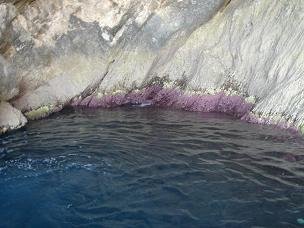
The marquee sight of Zakynthos is the Navagio viewpoint over Shipwreck Beach, paired with the Blue Caves at the northern tip of the island, where boat trips run through arches of clear blue water. Zakynthos is also famous for its loggerhead sea turtles, protected in the National Marine Park of the Bay of Laganas, where they nest from late May and gather around the turtle-shaped islet of Marathonisi. In Zakynthos Town the church of Agios Dionysios, Solomos Square and the Venetian Kastro above Bochali complete the list. These are gathered in the Zakynthos sights guide.
Villages and resorts
Zakynthos gathers its life in the Venetian capital of Zakynthos Town on the south-east coast and in a ring of resorts and mountain villages around it. Laganas is the busy nightlife resort on the turtle bay, Tsilivi and Alykes are the quieter family resorts of the north-east coast, and Keri and Volimes are traditional villages in the hills above the wild west coast.
Zakynthos Town
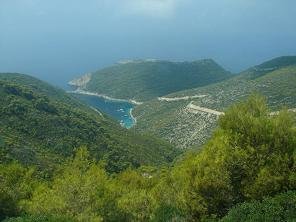
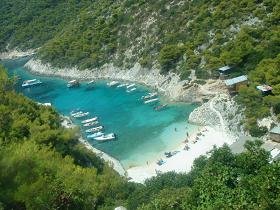
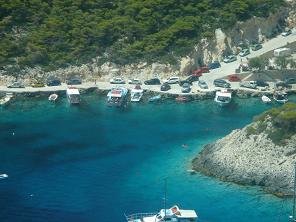
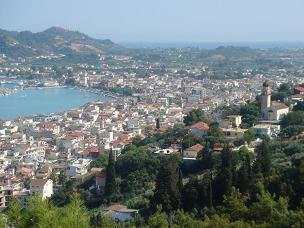
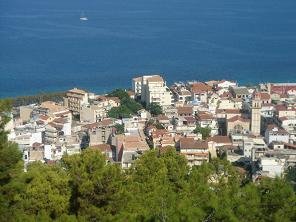

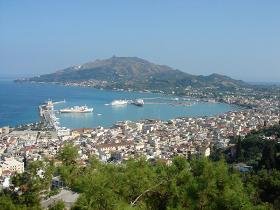

Zakynthos Town is the capital and cultural centre, on the south-east coast, with about 13,000 residents (2006). The 1953 earthquake destroyed roughly 90% of the town, which was rebuilt from old plans as a blend of restored, reconstructed and new buildings, so it keeps much of its old face. A long harbour runs the length of the town, lined with fishing boats, ticket offices, hotels and tavernas, while Solomos Square opens onto the water and the church of Agios Dionysios stands near the port. Above the town the ruined Venetian Kastro at Bochali gives wide views. The church, square and castle are described in the Zakynthos sights guide.
Laganas
Laganas is the busiest resort on Zakynthos, on the wide Bay of Laganas about 9 km south-west of the capital, with a long sandy beach and a strip of bars, fast-food and souvenir shops that draws a young, mainly British crowd for its nightlife. The same bay is the heart of the National Marine Park, so stretches of its sand and the sea around Marathonisi are protected for nesting loggerhead turtles, with some sections closed and boat speeds limited in summer. It suits travellers who want a lively base and easy boat trips to the turtles, rather than quiet.
Tsilivi
Tsilivi is a family resort on the north-east coast, about 5 km from Zakynthos Town, gathered behind a long sandy Blue Flag beach with shallow water and a spread of tavernas, mini markets and low-key bars. It is quieter than Laganas and sits within easy reach of the capital and the KTEL bus station, which makes it a practical base for families and couples. The village of Planos runs into Tsilivi behind the beach.
Alykes
Alykes is a low-key resort further along the north-east coast, named after the salt pans behind it, with a long sandy beach, a small harbour and a calm, family feel. It is one of the quieter bases on the island, good for authentic tavernas and short boat trips, and the sulphur springs of Xigia beach lie just to the north. Alykes and neighbouring Alikanas suit travellers who want the sand without the crowds of the south.
Keri


Keri is a traditional village in the far south of the island, above a headland where caravan-white sea caves and rock arches line the coast and boats set out for the turtle-shaped islet of Marathonisi. The old village of Keri sits inland among vines and olives, while Limni Keriou by the harbour is the base for boat trips and diving, and the Keri lighthouse on the cliff gives one of the island's best sunset views over the Ionian. It is the quiet, scenic corner of Zakynthos.
Volimes
Volimes is a mountain village in the north-west, the highest inhabited part of the island, spread across three hamlets among the hills above the wild west coast. It is known for its handmade textiles, rugs and local honey sold along the roadside, and it is the nearest village to the Navagio viewpoint over Shipwreck Beach and to the Blue Caves at the northern cape. Volimes keeps the traditional, farming face of Zakynthos away from the resorts.
Where to stay
Accommodation on Zakynthos spreads along the east and south coasts. Laganas and Kalamaki put you on the turtle bay in the middle of the nightlife, Tsilivi and Alykes offer quieter family beaches near the capital, and Argassi sits just outside town, while villas with private pools cluster in the green south around Vasilikos and Marathia. Compare the options, from the Exensian villas at Marathia to the Balcony Hotel at Tsilivi, in the Zakynthos hotels & villas guide.
Where to eat
Zakynthos serves its best food in the tavernas of Zakynthos Town, on the hill at Bochali and in the villages of the south. The town quayside and its squares cook fresh fish and Zakynthian dishes, Bochali adds a view over the lights of the harbour, and the resorts of Laganas and Tsilivi hold the beach bars and international menus. Local specialities include the ladotyri cheese, the mandolato nougat and the island's Verdea wine. The dining spots are set out in the Zakynthos restaurants guide.
The Zakynthos guides
Four guides cover the island in detail. Pick a theme below.