Kefalonia (Cephalonia): Island Guide, Beaches & Hotels
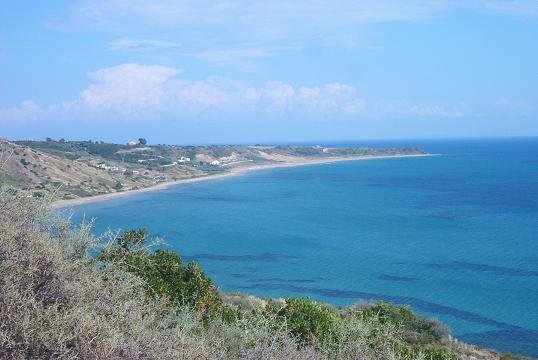
Kefalonia, also spelled Cephalonia, is the largest island of the Ionian group in north-west Greece, a green, mountainous island famous for Myrtos beach, the Melissani cave and the capital Argostoli. Kefalonia is called the island of contrasts: Roman, Venetian and Byzantine ruins sit beside long sand and pebble beaches on a turquoise sea, and its attractions lie scattered across a large landscape of forest, olive groves and vineyards. Hire a car to reach the parts of Kefalonia the buses miss, covered in our Kefalonia car hire guide. Getting from the airport is easy too, covered in our Kefalonia airport transfers guide.
- Sea
- Ionian
- Highest
- Mt Ainos 1628 m
- Capital
- Argostoli
- Ferry from Patras
- ~2.5 h
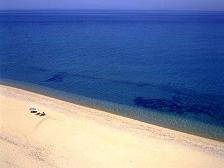
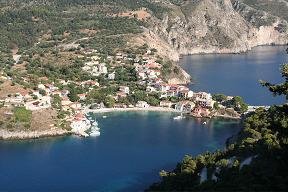
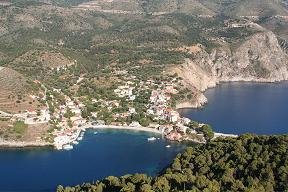

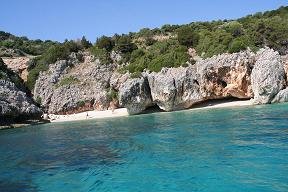

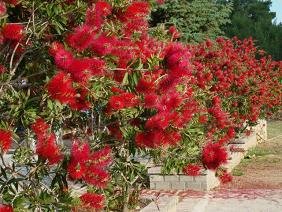
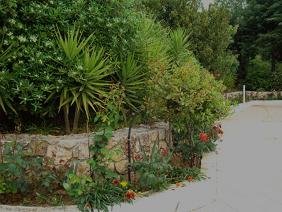
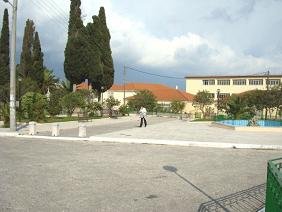
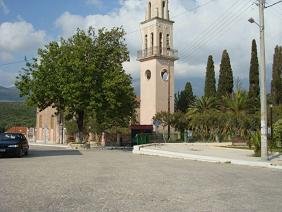
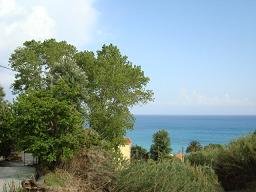

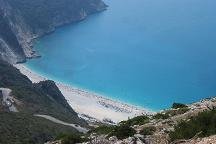


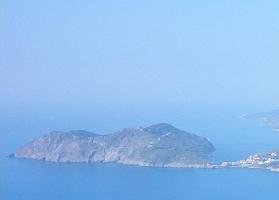
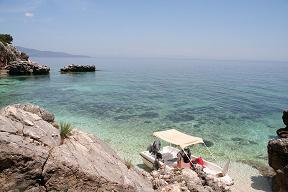



The island of Kefalonia
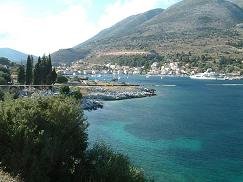
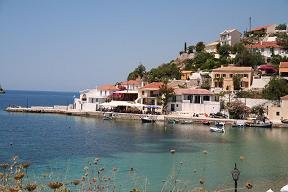
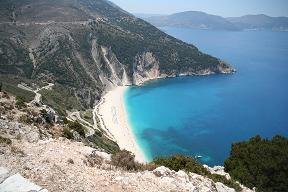
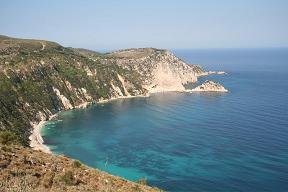
Kefalonia is the largest of the Ionian islands, lying in the north-west of Greece with the small island of Ithaca just to its north-east. It is a mountainous, green island of quiet beaches, forest, olive and orange trees and vineyards, and Mount Ainos rises to 1628 metres, the highest point on the island. An earthquake in 1953 destroyed most of the buildings, so many towns were rebuilt in a hurry, yet Kefalonia stays attractive for its spectacular mountains, coasts and postcard beaches. Because the island is large, its sights are scattered, and connections by bus are poor, so a car or a taxi helps.
Argostoli, the capital
Argostoli is the capital of Kefalonia and sits photogenically in its bay on the western side of the island, below the mountains. It holds the small Archaeological Museum of Kefalonia, and on the outskirts a Mycenaean beehive tomb from the 14th century BC was found, fuelling the rumour that Kefalonia, not Ithaca, was the home of Odysseus. Popular day trips by bus run to the Venetian Kastro of Saint George, 9 kilometres south, and the monastery of Agios Gerasimos. Across the bay lies Lixouri, a second, more attractive port linked to Argostoli by a small ferry, and nearby are the beaches of Platis Gialos, Makris Gialos and Spartia.
Myrtos and the beaches
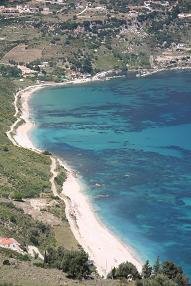

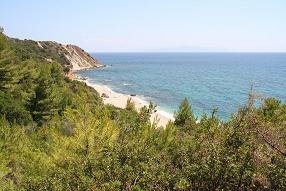

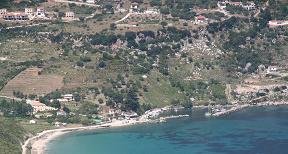
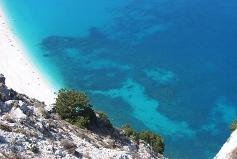
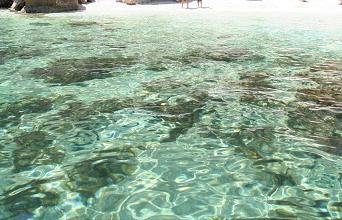
Myrtos is the calling card of Kefalonia and is widely regarded as one of the most beautiful beaches in the Ionian, a strip of fine gold sand and turquoise water north of Argostoli, framed by steep rocks and photographed for countless postcards. Antisamos, a pebble beach near Sami 22 kilometres east of the capital, sits among green hills below a monastery. Emblisi and Foki are small pebble coves near Fiskardo in the north, Lourdas is a long sand-and-pebble beach below Mount Ainos, and Makris Gialos and the quieter Platis Gialos lie close to Argostoli. See the full guide to the beaches of Kefalonia.
The caves: Melissani & Drogarati
The Melissani cave holds an underground lake in a so-called blue cave near the coastal village of Karavomilos, on the Sami–Agia Efimia road; the roof partly collapsed in the 1953 earthquake, and you take a boat inside to the chambers where the lake lies. Objects from antiquity were found in its water, and it was probably once a shrine to the god Pan. At Katavothres, near Argostoli, sea water pours into a crack in the earth and reappears about two weeks later on the far side of the island at Karavomilos and in the Melissani lake. The Drogarati cave, 4 kilometres south-west of Sami, is reached by descending about 45 metres, and its largest and most beautiful chamber lies almost 100 metres below the ground.
Fiskardo and the villages
Fiskardo, in the north of Kefalonia, is the village to see for its many traditional and Venetian buildings, most of which survived the 1953 earthquake that flattened much of the island. The eastern part of the island faces the mainland and has as many as seven ports where ferries call, while Argostoli and Lixouri sit on the sheltered western bay. Between the two lie the mountain slopes of Ainos, forest, olive groves and vineyards that make Kefalonia one of the greenest of the Ionian islands.
Sights of Kefalonia
The Venetian castle of St George at Livathos, near Argostoli, dates from the 16th century, stands on a hill on top of a Byzantine church that gave it its name, and was the Venetian capital of the island until the 1953 earthquake damaged it. The fortress of Assos was built early in the 17th century as a defence against pirates, its walls about 2000 metres long. The Ainos National Park, on the mountain of the same name, is a nature reserve with rare plants, including a kind of cedar that grows nowhere else in the world. Near the village of Skala lie the ruins of a Roman villa with beautiful floor mosaics. For more, see the Kefalonia sights guide.
Getting to Kefalonia
Kefalonia has an airport with direct flights in season, and from the mainland town of Patras a daily ferry crosses to the island in about two and a half hours. The island has as many as seven ports, so ferries call at several points; from Pessada there are excursions to Zakynthos, and day trips run to Ithaca and Lefkada. Check the ferry timetables before you travel, and see the Kefalonia travel page.
Where to stay on Kefalonia
Kefalonia has hotels, apartments and studios all over the island, from Argostoli and Lixouri to the beach resorts and the northern villages. Browse the full list on the Kefalonia hotels page.
Sami Beach Hotel
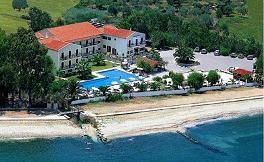

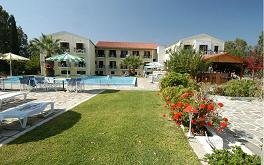

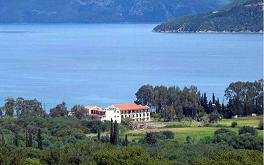
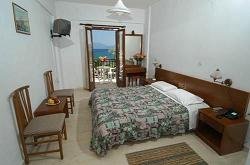
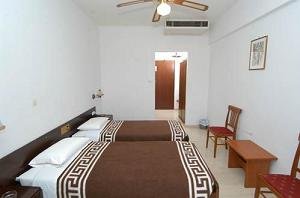
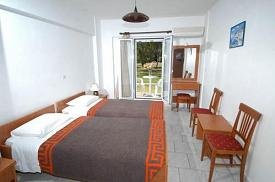

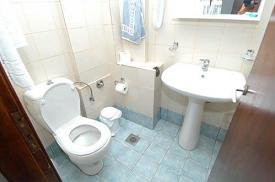
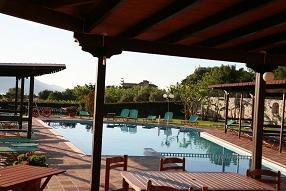
Sami Beach Hotel stands on the seafront at Sami, surrounded by green mountains, with a swimming pool, a hot tub and a poolside bar, and free sun beds and umbrellas. The air-conditioned standard rooms have a private balcony with a garden or mountain view and a bathroom with hairdryer, and a rich continental buffet breakfast is served between 07:00 and 10:00. The spacious lounge has a TV with satellite channels, and guests have free use of the library and the internet corner.
Check availability & book