Kastellorizo (Megisti): The Easternmost Island of Greece
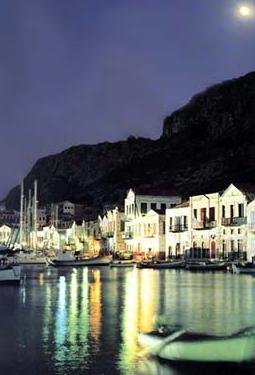
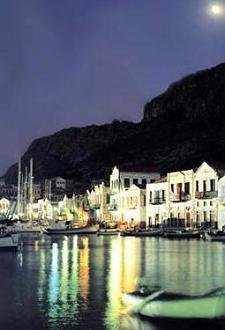
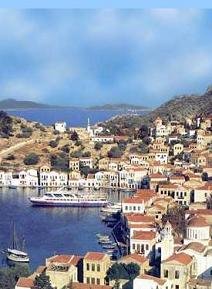
Kastellorizo, or Megisti, is the easternmost island of Greece, a single bright harbour of about 250 people 90 kilometres east of Rhodes and only 3 kilometres from the Turkish coast. Its waterfront of white and pastel mansions, backed by a red-rock castle, survived earthquakes, fires and the bombardments of two world wars; today it draws travellers for its museum, its Lycian tomb and, above all, the Blue Cave, one of the finest sea caves in the Mediterranean.
- Sea
- Dodecanese
- Size
- 9 km²
- Population
- ~250
- From Rhodes
- 90 km east
The island and its history
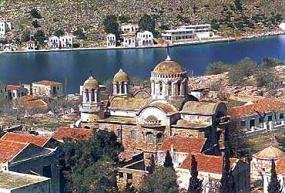
Kastellorizo lies at the far eastern edge of Greece, 90 kilometres east of Rhodes and just 3 kilometres off the Turkish coast. It is often called Megisti, meaning “largest”, though it is only 9 square kilometres in size — the name marks it as the biggest of an archipelago of 14 small islands. Its great asset is the best natural harbour in the area, which in the 19th century, when the Ottoman Empire opened trade with Europe, made it rich: some 17,000 people once lived here. The 20th century brought tragedy instead. The island passed between French, Italian and British hands, was blockaded, bombed by German aircraft, and swept by a great fire in 1944 that burned out most of its buildings; the islanders were evacuated to Cyprus, and in 1946 a ship bringing 500 of them home sank with the loss of 33 lives. Kastellorizo was finally reunited with Greece in 1947. Little less than a third of the old harbour town survives, its waterfront mansions repainted white and pastel, and because the cooling Meltemi wind does not reach here the summers run very hot.
Sights and the Blue Cave
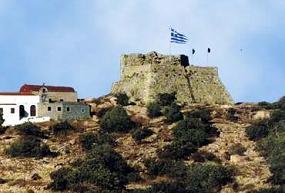
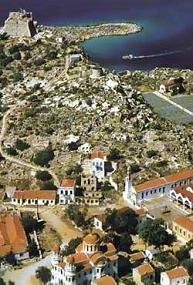
The most important sight is the 14th-century Castle of the Knights of Agios Ioannis, standing on a hill of red rock above the town — the “red castle” that gives the island its name. The Museum below it is free to enter and shows finds from the ancient acropolis of Paleocastro, earthenware from a medieval wreck, and local costumes and artefacts; in the rock beneath the castle is the only Lycian rock tomb found in Greece. The 19th-century cathedral reuses columns from an ancient temple, and around the harbour stand attractive churches, a small Turkish bath, a ruined windmill and a war memorial. The island's marvel, though, is the Blue Cave (Fokiali), reached by organised boat trip on the south-east coast: 75 metres long, 45 wide and 35 high, hung with stalactites, it fills with an unearthly blue light when the morning sun reflects off the water, and you can swim inside. Other boat trips run to the islets of Ro and Strongili and across to the Turkish mainland.
Where to stay
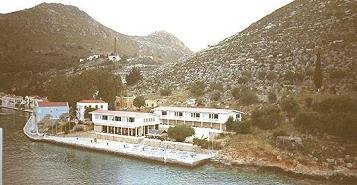
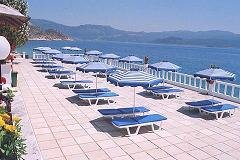
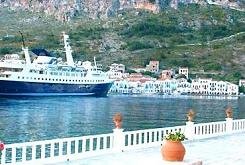
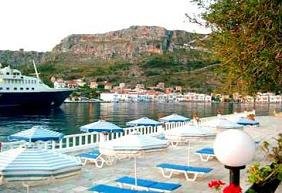
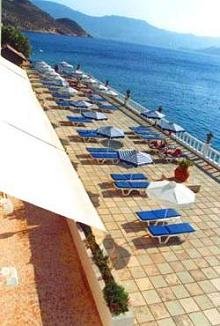
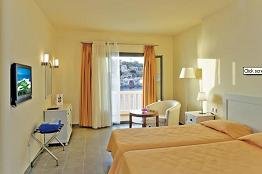
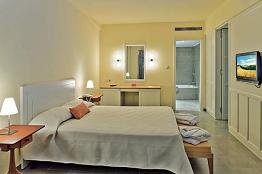
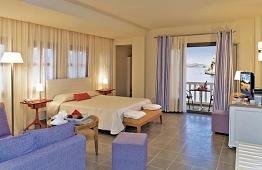

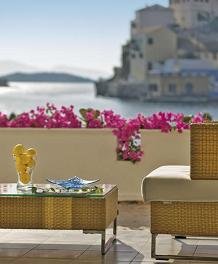
Accommodation on Kastellorizo is limited and gathers around the harbour, so in August it is wise to book ahead. The Megisti Hotel sits on the east side of the natural harbour between the capes of Agios Stephanos and Nifti, with the island's only private swimming and snorkelling area, a sun terrace and spectacular views over the cape and the port, breakfast included. Agnanti Studios are seafront self-catering units in Megisti village, built in the local style with dark-wood furnishings, beamed ceilings and balconies, each with a well-equipped kitchenette, within 500 metres of the port and the tavernas and 400 metres of the museum. Poseidon Studios, in a neoclassical building 30 metres from the water and 300 metres from the main port, offer individually decorated air-conditioned studios with a kitchenette, a fridge and a balcony or terrace, some looking over the sea. Most of the tavernas, cafes and shops line the waterfront a short walk from all three.
Getting to Kastellorizo
Kastellorizo has a small airport but no international flights, so you arrive by way of Rhodes: there are several flights a week from Rhodes to Kastellorizo and several ferries, the sea crossing taking around six hours. The simplest plan is to fly to Rhodes and continue by plane or boat from there, checking current times and booking ahead for the fast summer ferries. On the island itself there is almost no traffic and barely any road — one taxi and one small shuttle bus — so beyond the town, walking is the way to explore, and because the island sits so close to Turkey you will often see soldiers about. For most visitors the harbour, the castle, the museum and a boat trip to the Blue Cave are the whole and considerable point of a stay.