Hydra, Greece: The Car-Free Saronic Island Guide, Beaches & Hotels
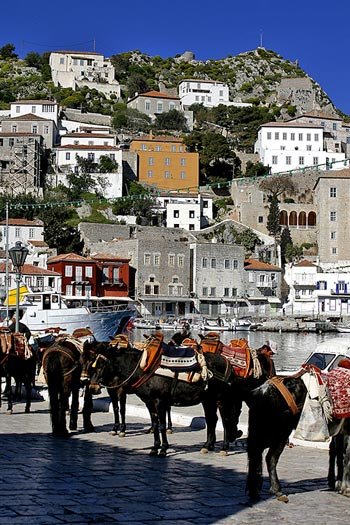
Hydra is a car-free Argo-Saronic island south of Athens, between Poros and Spetses, covering about 64 square kilometres with around 2,000 residents and a single picturesque harbour town. Hydra has no cars: goods and luggage travel by donkey and mule, while water taxis and caiques cover the coastline, and the island grows quieter the further you walk from Hydra Town. Its closeness to Athens turns Hydra into a tourist hot spot and a popular day-trip destination, with cruise ships calling regularly.
- Sea
- Saronic Gulf
- Size
- ~64 km²
- Population
- ~2,000
- Transport
- No cars – mules & water taxis
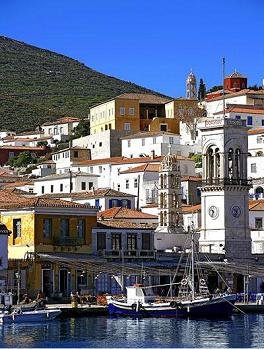


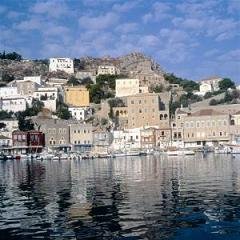


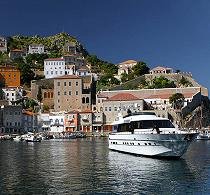

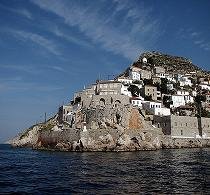

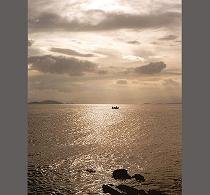
The island and Hydra Town
Hydra Town is an attractive, picturesque harbour with fortifications, an 18th-century monastery, red-tiled roofs and neo-classical mansions rising up the hillside. Behind the restored mansions, restaurants and shops on the waterfront run the cobbled, narrow streets of the town, where quiet squares offer some rest away from the crowds. Cruise ships and mainland day-trippers crowd the port at peak times, so travellers seeking peace simply walk away from Hydra Town, where the island quietens with every step. Most visitors stay in Hydra Town and set off from there on foot, or take a water taxi or caique to reach the monasteries, bays and beaches around the island.
The beaches of Hydra
Hydra is not a beach island: most of its shores are small pebble coves or rocks with concrete platforms for getting into the sea. Mandraki Beach, 2 kilometers east of Hydra Town, is the best on the island, with pebbles and sand, an organised bay, sunbeds, tavernas and watersports. In the town itself, Spilia and Hydroneta are rocks and platforms just west of the harbour, and Avlaki is a small pebble beach reached by steps. A 15-to-20-minute walk west leads to the village of Kamini with two pebble beaches, and Vlichos, 2 kilometers west, is a shallow pebble-and-sand beach near a 17th-century stone bridge. Remoter coves such as Bitsi, Agios Nikolaos and Limnioniza are reached only by water taxi or caique. For every beach see the Hydra beaches guide.
Sights of Hydra
The Monastery of the Prophet Elias (Profitis Ilias) dates from 1813 and stands on the slope of Mount Eros, an hour-and-a-half walk uphill from Hydra Town, inhabited by two monks and set beside the convent of Agia Efpraxia from 1825; the views from both over Hydra, the sea and the Peloponnese are spectacular, so carry water. In Hydra Town, the 18th-century Panagia Monastery was built with stones from the former Poseidon Temple of Poros, and the three-storey bell tower in the middle of the harbour dates from 1643, one of the oldest buildings in the town. The Byzantine (Ecclesiastical) Museum sits in the centre of the harbour under the clock tower. The Lazaros Kountouriotis Historical Mansion, the restored 18th-century home of a Hydriot shipowner who helped finance the Greek War of Independence, overlooks the harbour and now displays island costumes, furnishings and paintings. The Historical Archives Museum of Hydra, near the waterfront, keeps naval relics, ships' figureheads and documents from the War of Independence.
Artists, writers and celebrities on Hydra
Hydra has drawn artists, writers and celebrities to its car-free lanes since the 1960s. Canadian songwriter Leonard Cohen bought a house on Hydra in 1960 and kept it for the rest of his life, and the island became one of the places most closely tied to his early songs and poetry. In 1957 the film Boy on a Dolphin, starring Sophia Loren, was shot on Hydra and introduced the island to cinema audiences around the world. Opera singer Maria Callas and shipping magnate Aristotle Onassis were among the well-known visitors who followed, and Hydra has kept its reputation as a retreat for artists and travellers ever since.
Where to stay on Hydra
Most visitors stay in Hydra Town, within walking distance of the harbour, the restaurants and the start of the walking paths across the island. Because there are no cars, guests are met at the port and heavy luggage can be carried by mule. For every hotel, apartment and studio on the island see the Hydra hotels guide.
Mistral Hotel, Hydra Town
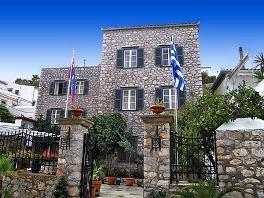
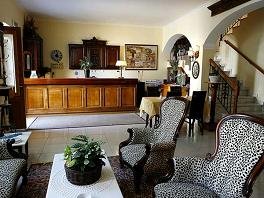


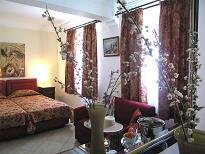
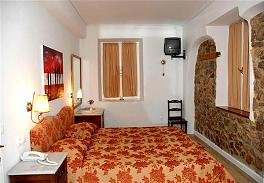

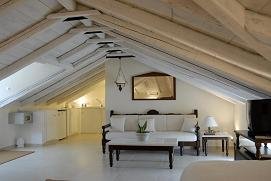

Mistral Hotel is a traditional stone mansion just 3 minutes from Hydra's port, run by friendly family owners. A small selection of rooms and studios allows close attention to detail and personalised service, with elegant rooms looking over Hydra or the sea. A homemade breakfast is served in the picturesque flower garden or the cosy lounge, and the main attractions of Hydra are within easy walking distance.
Check availability & bookNefeli Hotel, Hydra Town


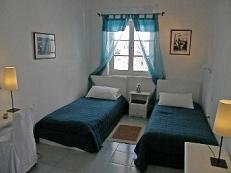

Nefeli Hotel enjoys a prime location in Hydra with views over Hydra Town, the ancient port and the mainland of the Peloponnese. Its 9 traditional guestrooms are each uniquely styled with a terrace, air conditioning, TV, refrigerator and en-suite bathroom, surrounded by gardens. Guests are welcomed at the port and escorted to the hotel, luggage can follow by mule, and the hotel arranges half-day and full-day mule treks around the island.
Check availability & bookPiteoussa Guesthouse, Hydra Town

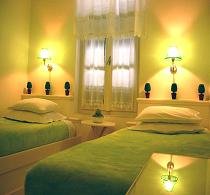
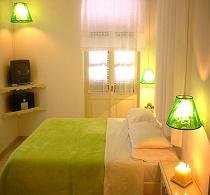


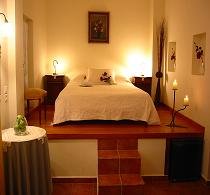


Piteoussa Guest House stands in a quiet part of Hydra Town, only 200 metres from the harbour. Its tastefully and individually decorated rooms are spacious and comfortable, some with a private balcony, each with an en-suite bathroom, air conditioning, TV and free WiFi. It is a home-from-home base on the most exclusive of the Saronic islands.
Check availability & bookGetting to Hydra
Hydra lies a little south of Athens, between Poros and Spetses; ferries connect it to Piraeus, the main port of Athens. There are no cars on the island, so on arrival you continue on foot, by donkey or mule, or by water taxi; water taxis and caiques also run from the port to the bays and beaches around the coast.
Hydra FAQ
Is Hydra worth visiting?
Yes, Hydra is worth visiting. Hydra combines a car-free, traffic-free harbour town with a genuine artistic history and an easy ferry connection to Athens, which makes it one of the most rewarding day trips or overnight stays in the Saronic Gulf.
What celebrities and famous residents are linked to Hydra?
Canadian songwriter Leonard Cohen bought a house on Hydra in 1960 and kept it for the rest of his life. The 1957 film Boy on a Dolphin, starring Sophia Loren, was shot on the island, and opera singer Maria Callas and shipping magnate Aristotle Onassis were among its well-known visitors.
What is Hydra, Greece known for?
Hydra is known for being car-free, with transport by donkey, mule and water taxi rather than road vehicles. The island is also known for its 18th- and 19th-century sea-captains' mansions, its picturesque harbour and its reputation since the 1960s as a retreat for artists and writers.
How many days do you need in Hydra?
One full day is enough to see Hydra Town and the closest beaches. Two days give you time for a monastery walk and a slower pace away from the day-trip crowds.