Small & Lesser-Known Greek Islands
This guide gathers 26 of Greece's smallest, most remote and least-visited islands into one place, grouped by island group. Some are inhabited fishing and shipping islands with a village and a few rooms; many are uninhabited islets, private estates or strict nature reserves — several protected by the National Marine Park of Alonissos and the Northern Sporades. Use it to find where each island sits, what makes it notable, and whether you can visit.
- Islands
- 26
- Island groups
- 7
- Largest
- Psara, 45 km²
- Protected
- Sporades Marine Park
The Sporades
Several small islands scatter north and east of Alonissos, and the National Marine Park of Alonissos and the Northern Sporades protects many of them — Piperi, Gioura and their neighbours — to shelter the Mediterranean monk seal.
Gioura (Yioura)
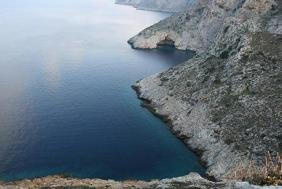
Gioura (Yioura) sits north of Alonissos inside the Marine Park of the Sporades, a mountainous, uninhabited island of rocky shores and low shrub. Its Cave of the Cyclops holds stalactites and stalagmites; excavations there uncovered painted potsherds, bone tools and fish hooks from the Middle Neolithic, plus Bronze Age, Hellenistic and Roman finds. The surrounding waters shelter the endangered Mediterranean monk seal, a unique wild-goat species grazes inland, and one or two guards stay permanently to protect the wildlife.

Piperi
Piperi covers 8 km² northeast of Alonissos and rises to 352 metres. It forms the strict core of the National Marine Park, founded in 1983 to protect the Mediterranean monk seal, so fishing is banned within 3 miles and only licensed research teams may approach. Pine trees and rare plants grow on its rocky slopes, and rare birds of prey nest here.
Skantzoura
Skantzoura is a low 8 km² island about 25 to 30 kilometres south-southeast of Alonissos, with shores partly of white marble. The now-closed Monastery of Evangelistria stands at its centre, ringed by former vineyard terraces, and the ruins of an older monastery lie near the coast. Rare birds — Audouin's gull and Eleonora's falcon — breed among its cedar woodland and olive groves.
Skyropoula
Skyropoula lies in the southern Sporades between Skyros and Evia, about 5 kilometres west of Skyros and 20 kilometres from Kimi. The 2-kilometre-wide island rises to 188 metres across three hills, carries pine and olive trees, and keeps a small church of Saint Mary from 1726. It is privately owned — the Antoniades family held it from 1860 to 2001 before selling it to a Cypriot businessman — and has a sand-and-white-pebble beach on its south side.
Kyra Panagia (Pelagos)
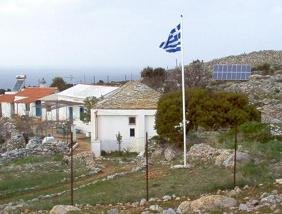
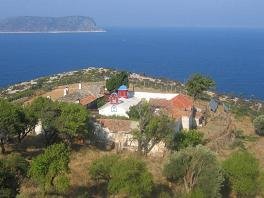
Kyra Panagia (Pelagos, Pelagonisos) is the largest deserted island north of Alonissos, 25 km² and rising to 299 metres. The Megisti Lavra Monastery of Mount Athos has owned it since the Byzantine emperor granted it in 963, and a single monk still lives in the monastery on its east side. Its two natural harbours, Agios Petros and Planitis, once sheltered pirates, and excavations at Agios Petros show habitation from about 6000 BC. The island is open to visitors.

Peristera
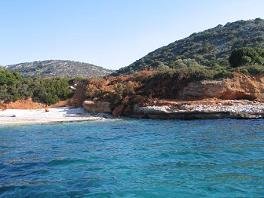
Peristera covers 16 km² just east of Alonissos and rises to 259 metres; 5 people live in the tiny settlement of Vasiliko. Its name means “dove”, and the dry island grazes goats over low shrub. Graves prove ancient habitation, and in Byzantine times Saracen pirates based themselves in Vasiliko harbour. Small fishing and excursion boats reach its beaches from Alonissos.

Psathoura
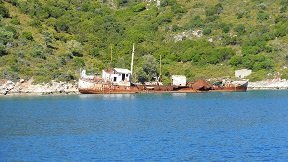
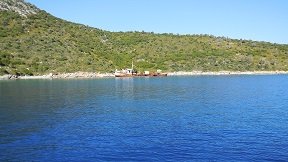
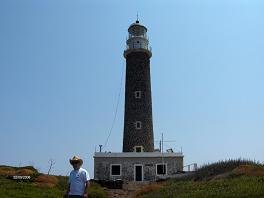
Psathoura is the northernmost and flattest island of the Sporades, only 2 km² and rising to 14 metres. Its lighthouse, built in 1895 from dark volcanic Skopelos stone, stands 28.9 metres tall and flashes for 1 second every 10 seconds — one of the tallest in the Aegean. A sunken city lies 10 to 17 metres underwater off the island, and the rare white sand lily blooms on its beach in early summer.
The Cyclades
Despotico (Despotiko)
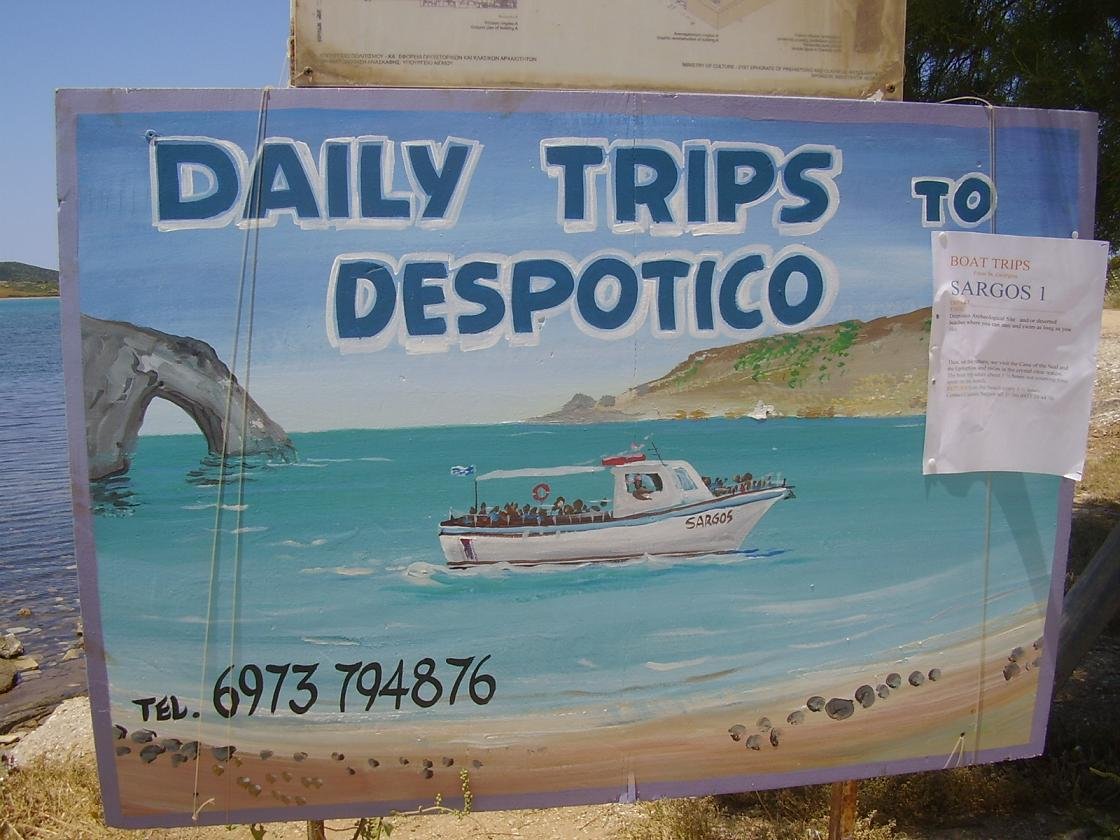
Despotico (Despotiko) is a small uninhabited island 0.7 kilometres south of Antiparos, near the geographic centre of the Cyclades. Archaeologists have excavated houses and a large sanctuary here, and the dig continues; its safe bay made it an important anchorage in ancient maritime trade. Many small coves with sandy beaches line its coast, and the largest, Livadi, faces the islet of Strongili in the north.
Keros
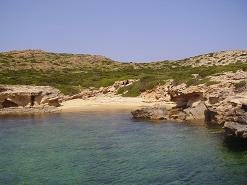
Keros covers 15 km² in the Small Cyclades between Naxos and Amorgos, best reached from Koufonissi, and rises to 432 metres. Aside from a few monks it stands virtually uninhabited and grazes goats. It was a major centre of early Cycladic culture (3000 to 2000 BC): about 100 figurines, including the famous harpist and flutist now in Athens, were excavated here, nearly all deliberately broken, which points to a place of pilgrimage. The neighbouring islet of Dhaskalio, 100 metres west, yielded the largest known building of that period.

Gyaros (Giaros)
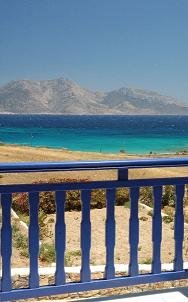
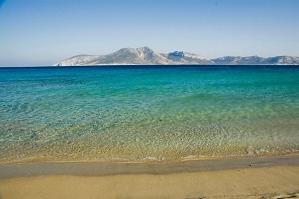
Gyaros (Giaros) is a barren, uninhabited island of 23 km² in the northern Cyclades, north of Syros. Rome exiled prisoners here, and between 1948 and 1974 the Greek state jailed roughly 22,000 people — mainly leftist activists and junta opponents — in a large red-brick prison that now stands abandoned. Farming terraces in the east suggest habitation since prehistoric times. The navy used the island as a target range until 2000, when it opened to the public.
Antimilos
Antimilos (Erimomilos) is an uninhabited volcanic island in the Cyclades, 20 kilometres northwest of Milos, rising steeply to 671 metres. Its crater once stored rainwater for ancient inhabitants, and signs of old settlements remain. A rare goat species related to the Cretan kri-kri lives here, so the island is a protected area that visitors may not enter without permission; a single pebble beach sits on its south coast.
Rhinia (Rinia)
Rhinia (Rinia) lies immediately southwest of Mykonos, beside the archaeological island of Delos across a 100-metre channel. About four times the size of Delos, it served as the sacred island's cemetery — births and burials were forbidden on Delos, so the sick, the pregnant and the dead were moved to Rhinia. Remnants of tombstones survive, and finds are shown in the Archaeological Museum of Mykonos. The uninhabited island has no amenities and no tour boats, so only private boats reach its sandy beaches.
The Dodecanese
Agathonissi (Agathonisi)
Agathonissi (Agathonisi) is the northernmost inhabited island of the Dodecanese, home to about 150 people across three settlements — Megalo Chorio, Micro Chorio and the harbour of Agios Georgios. The island measures 7 by 3 kilometres with a 32-kilometre coastline of small bays and beaches, and ferries call about 3 times a week on the Samos–Patmos route. Inhabited since antiquity under the old name Yetoussa, its present name derives from the Greek agathos, “good”; a few small hotels and rooms cluster near the port.
Pserimos
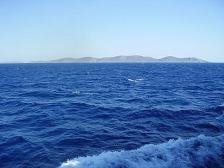
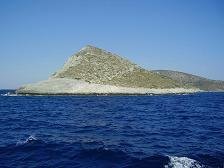
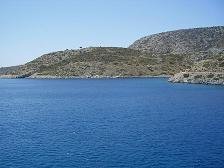
Pserimos is a hilly 15 km² island between Kos and Kalymnos, home to about 100 people in its single harbour village of Pserimos (Aulakia). Day-trippers from Kos crowd its shallow, sandy main beach in high season, then leave the island quiet by evening. It has no cars or roads, several harbour tavernas and only a few places to stay.

Aspronissia
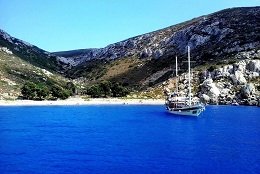
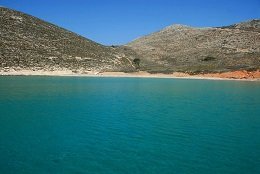
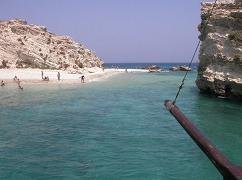
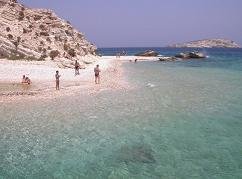
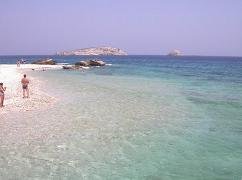
Aspronissia is a small uninhabited islet on the east side of the Lipsi archipelago in the Dodecanese, north of Leros. It rises from the sea as a bare white rock with low shrubs and holds one attractive sand-and-pebble beach in turquoise water. Organised day trips from Agia Marina on Leros, such as the Barbarossa, visit it in season; the island has no tavernas, sunbeds or accommodation.
The Ionian islands
Kalamos
Kalamos is the largest islet around Lefkada, 25 km² east of the island and near the mainland, rising to 754 metres along a central ridge. About 465 people live here, nearly all in Kalamos village, with roughly 60 in Episkopi and the earthquake-abandoned Kefali now deserted. Regular ferries link Kalamos and Episkopi with Mytikas on the mainland, and pine forest and small beaches cover the north and east. The island has been inhabited since the Neolithic period.
Ptychia (Vido / Vidos)
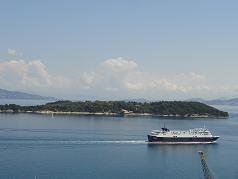
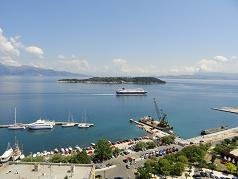
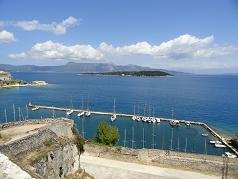
Ptychia — also called Vido or Vidos — is a wooded island of 550,000 m² off the east coast of Corfu, 1,200 metres from Corfu Town, and a protected nature reserve since 1993. A Venetian count once used it as a hunting reserve, and its strategic position drew repeated occupations; the British later built a fortress and ran it as a prison island. 1,232 Serbian soldiers who died of sickness and starvation are buried here, remembered by a mausoleum, and excursion boats run from the old port of Corfu Town in about 10 minutes to its two beaches.
Lazaretto
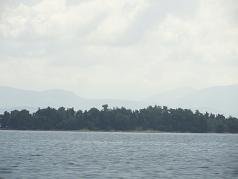
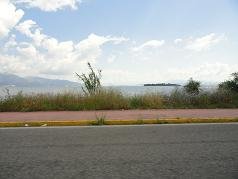
Lazaretto is a tiny island of 77,000 m² off Corfu Town, west of Ptychia. Venetians built a monastery here in the 16th century, then a leprosy colony and a plague quarantine station — the name Lazaretto dates from that time. In the Second World War the Germans used it to execute Greek resistance fighters, and every 27 May Corfu residents place flowers in the bullet holes in the wall.
Madouri
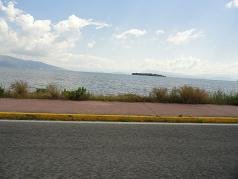
Madouri is a small, very green island of about 400 metres diameter off the east coast of Lefkada, opposite Nidri. The Valaoritis family has long owned it privately, so it cannot be visited, though excursion boats pass close by. The 19th-century poet Aristotelis Valaoritis grew up here and built a house overlooking Lefkada; his grandchildren own it today.
Sparti
Sparti lies east of Lefkada, between the island and the Greek mainland. Like nearby Skorpios, the Onassis family owns it privately; Aristotle Onassis bought it for his son and began building an airport and a resort. After his death it passed to Christina Onassis and then to her daughter Athina Roussel.
The North Aegean
Psara & Antipsara
Psara is a dry, desolate island of 45 km² in the eastern Aegean west of Chios, with about 460 people who live mainly from fishing and a high point at Profitis Ilias, 512 metres. Its large merchant fleet made it important in the early-19th-century Greek War of Independence, and in 1824 the Turks slaughtered almost all its people in reprisal, blowing up the fort's powder magazine; about 3,000 survivors escaped by boat and founded Nea Psara on Evia. The smaller neighbour Antipsara, 3 kilometres southwest, holds 4 people and forms a protected nature reserve for rare seabirds.
Inousses (Oinousses)
Inousses (Oinousses) is the largest and only inhabited island of a nine-island group between Chios and the Turkish coast, about 16 km² with roughly 450 people. It is the birthplace of several wealthy shipowners, so yachts fill the harbour and luxury villas dot the island, while that wealth has kept mass tourism away. Its quiet beaches and coves lie mainly west of the village, and its sights include a Maritime Museum and the Evangelismou Convent.
Samiopoula
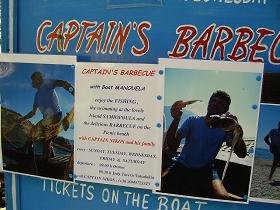
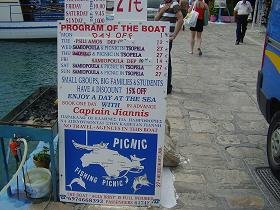
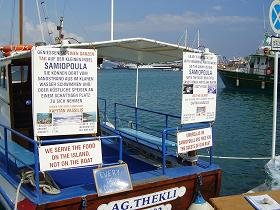
Samiopoula sits less than 1 kilometre off the south coast of Samos and holds 5 inhabitants; its name means “Small Samos”. Psalida Beach, in a sheltered bay, ranks among the best in the area, with fine sand and turquoise water. Day boats from Pythagorion and Marathokampos reach it in about an hour, so it can get busy, while the rocky island otherwise stays very quiet with one small taverna.
The Argo-Saronic
Fleves
Fleves is a small, dry, abandoned island south of Vouliagmeni on the mainland coast, rising in high white cliffs with sea caves along its shore. Developers have long eyed it for a luxury resort, which conservation groups resist. For now it belongs to fishermen and to divers exploring the many old wrecks around it, some from ancient times with amphorae.
Off Crete
The Paximadia islands
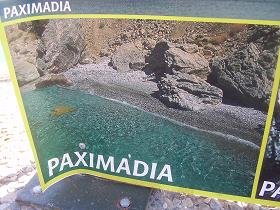
The Paximadia are two small uninhabited islands 12 kilometres off the south coast of Crete, opposite Agia Galini. Cretans nickname them “Elephantaki” (“small elephant”) for their shape; ancient names included Dionysioi, and legend says Leto bore Apollo and Artemis here. Today they take their name from a hard traditional Cretan dry bread. Excursion boats from Agia Galini or Kokkinos Pirgos visit their beaches in high season, the best a pebble beach on the south side of the eastern island.