Chios, Greece: The Mastic Villages, Nea Moni, Beaches and Hotels
Chios is the mastic island of the North Aegean, lying off the coast of Asia Minor. The island grows mastic, an aromatic resin drawn from the mastic trees of its southern mastic villages, a crop found nowhere else in the world. The Genoese fortified the mastic villages of Mesta, Pyrgi and Olympi in the 14th and 15th centuries; Pyrgi carries black-and-white geometric xysta facades, and Mesta stays one of the best-preserved. Beyond the villages, Chios keeps the medieval monastery of Nea Moni, the ghost village of Anavatos, the citrus estates of Kambos, and the busy capital Chios Town. Hire a car to reach the parts of Chios the buses miss, covered in our Chios car hire guide.
- Group
- North Aegean
- Capital
- Chios Town
- Famous for
- Mastic (mastiha)
- Mastic villages
- Mesta, Pyrgi, Olympi


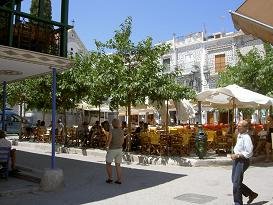


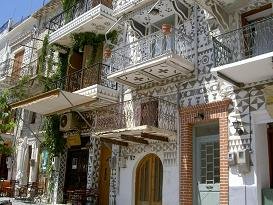
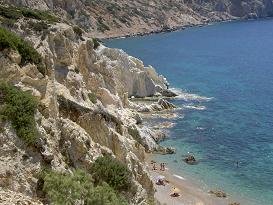


The island of Chios
Chios is an island in the North Aegean, close to the coast of Asia Minor, and its trademark is mastic. Mastic, or mastiha, is an aromatic resin bled from the low mastic trees that grow only in the south of the island, and it has been harvested here since the Middle Ages for paint, cosmetics, medicine and, today, chewing gum, liquor and toothpaste. The south holds the 20 medieval mastic villages, built inland by the Genoese as fortified strongholds against pirates. The capital, Chios Town, sits on the east coast facing Turkey, and the interior climbs to a bare mountain landscape crossed by the road to the monastery of Nea Moni. Public transport is limited, so a car helps for reaching the villages and the beaches, as set out on the Chios car rental page.
History and the massacre of 1822



Chios was settled by Ionian Greeks and later ruled by the Genoese, who founded the fortified mastic villages, and then by the Ottoman Turks. In 1822, during the Greek War of Independence, the Turks killed or enslaved most of the population of Chios in a massacre that shocked Europe; the mastic villages of the south were spared because their resin was prized in the Sultan's court. The Kastro, a Byzantine fortress rebuilt by the Genoese, guards the harbour of Chios Town and holds the tomb of the Turkish admiral Kara Ali, who ordered the massacre and was killed when the Greek captain Kanaris blew up his ship. Chios Town also keeps the Korais library, one of the largest in the Aegean, with more than 130,000 books grown around the legacy of the scholar Adamantios Korais.
Sights of Chios
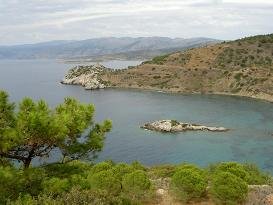
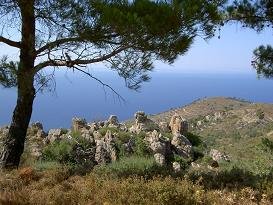


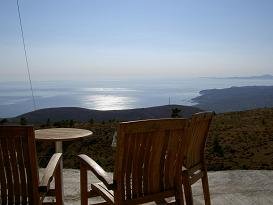
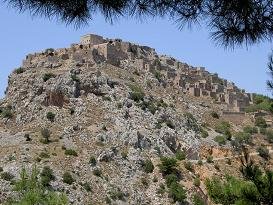


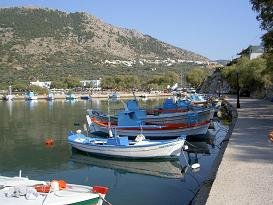
The marquee sights of Chios are its mastic villages, its great monastery and its ghost village. Nea Moni, founded in 1042, holds Byzantine mosaics that rank among the finest in Greece and stands 13 km west of Chios Town in bare mountain country. Anavatos is a ruined medieval village built into a cliff in the interior, a natural fortress abandoned after 1822. The mastic villages of Pyrgi, with its painted xysta houses, and Mesta, with its intact towers, are living museums of Genoese planning. Near the capital lie the citrus estates of Kambos and, at Vrondados, the rock throne of Daskalopetra where tradition says the poet Homer taught. The full list is in the Chios sights guide.
Beaches of Chios
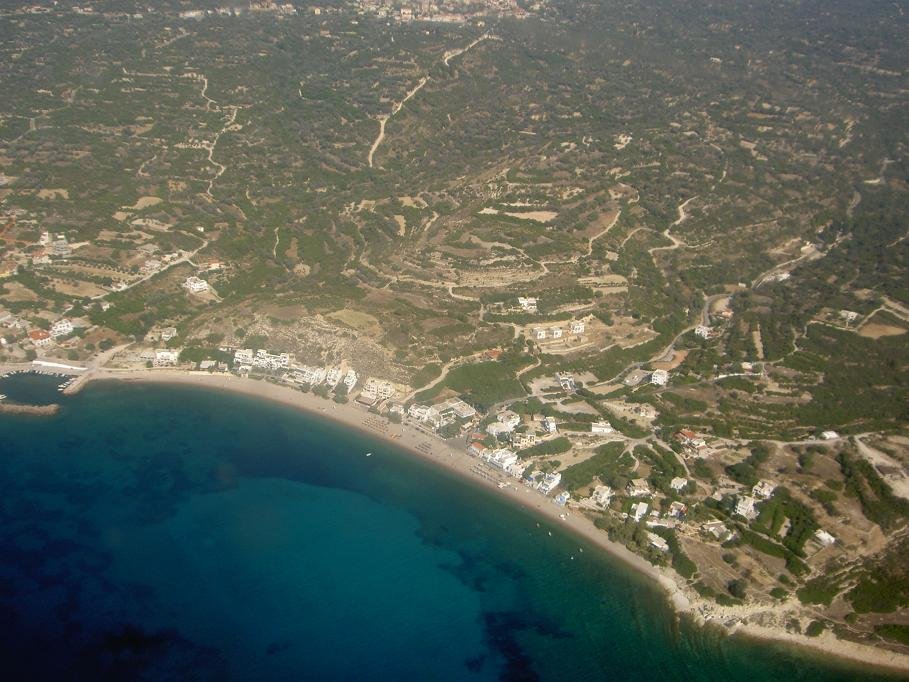
Chios rings its coast with sand and pebble beaches, from the busy resort of Karfas near the capital to the black volcanic pebbles of Mavra Volia at Emporios in the far south. Karfas, 7 km south of Chios Town, is the island's main beach resort, with a long strip of sand. Megas Limnionas and Komi are popular sandy beaches on the east coast, Nagos and Anemi lie in the green north near Kardamyla, and Lefkathia and Managras stretch along the quieter north-west near Volissos. The black-pebble coves of Mavra Volia stand out as the island's most unusual beach. The whole coast is covered in the Chios beaches guide.
Villages of Chios
Chios keeps its character in a handful of very different villages, from the busy capital of Chios Town to the fortified mastic villages of the south and the stone hill villages of the north-west. The mastic villages of the south, led by Pyrgi and Mesta, are the island's marquee draw; the monasteries and sights around them are detailed in the Chios sights guide.
Chios Town


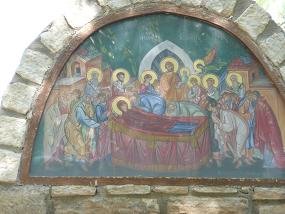


Chios Town is the capital and port of the island, on the east coast facing the Turkish mainland, with about 24,000 inhabitants. Most of the town dates from after an earthquake in 1881, but it keeps the Genoese Kastro over the harbour, the Korais library, an archaeological museum and a lively waterfront. Just south spreads the Kambos, a plain of walled citrus estates built by the Genoese and Ottoman gentry, where high stone walls hide mansions and orange and lemon groves. North of the town, at Vrondados, the rock throne of Daskalopetra is linked by tradition to the poet Homer.
Pyrgi


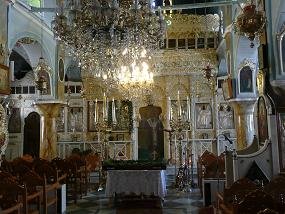

Pyrgi is the largest and most famous of the mastic villages, in the south of Chios, known for the black-and-white geometric patterns called xysta that cover its houses from top to bottom. The technique is unique in Greece. A Byzantine church stands at the heart of the village, and the main square is lined with facades scored in these repeating designs. Pyrgi was one of the villages spared in the massacre of 1822 because its mastic was valued in the Ottoman court.
Mesta

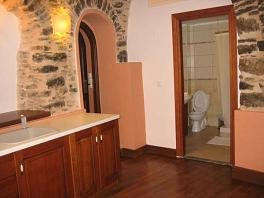
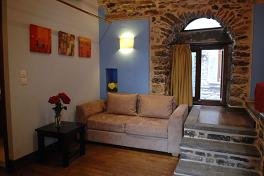
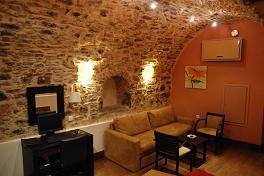
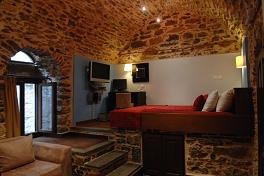
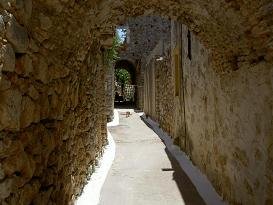
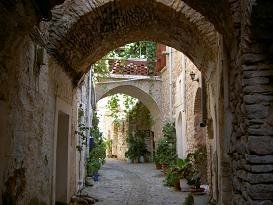
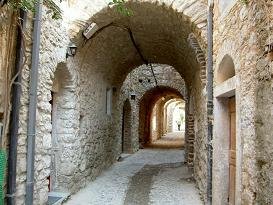
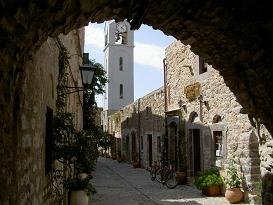
Mesta is one of the best-preserved mastic villages, in the south-west of Chios, built as a fortified maze of stone houses whose outer walls form a defensive ring, with a square tower once at its centre. The narrow, partly covered lanes were laid out to confuse invaders, and the village keeps its original medieval plan almost intact. Its 19th-century church of the Taxiarchis is the largest on the island. Mesta lies about 4 km from its little port of Limenas Meston.
Volissos
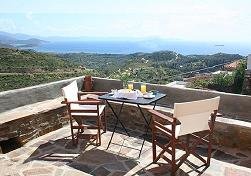
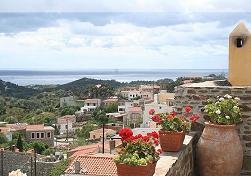

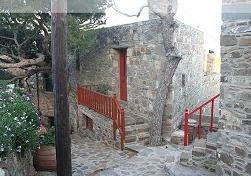
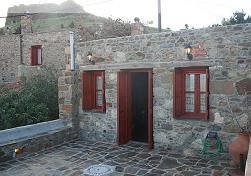
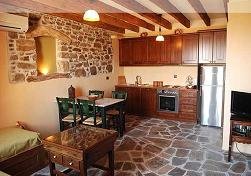

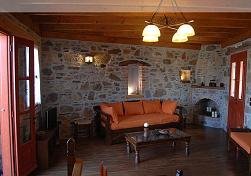


Volissos is the main village of the north-west, a cluster of stone houses climbing a hill below a ruined Venetian castle, about 42 km from Chios Town. Local tradition names it as a birthplace of the poet Homer. The village looks over the fertile plain of the north-west coast towards the sea, and the quieter beaches of Limnos, Limnia, Lefkathia and Managras lie a short drive below it.
Kardamyla


Kardamyla is the main village of the green north of Chios, a farming and seafaring community set back from the coast. Its beaches, among them Nagos, Anemi, Gyaliskari and Vlihada, ring the northern shore in wooded coves, and the landscape here is markedly greener than the bare south. Kardamyla makes a quiet base away from the resorts near the capital.
Where to stay
Accommodation on Chios spreads from the resort of Karfas near the capital to stone houses in the mastic villages and the north. Karfas holds most of the island's hotels and studios on its sandy bay, Chios Town suits a base near the museums and ferries, and the villages of Mesta and Volissos offer restored medieval and stone houses for a quieter stay. The most exclusive option is a converted estate at Kambos. Compare the choices in the Chios hotels & villas guide, which covers the island's hotels and its self-catering villas.
Where to eat
Chios serves its food in Chios Town, at the mastic villages and in the fishing coves of the coast. The tavernas of the capital's waterfront cook fresh fish, the mastic villages hide small family kitchens on their squares, and mastic flavours turn up in local sweets, liquor and coffee. The dining spots are gathered in the Chios restaurants guide.
The Chios guides
Four guides cover the island in detail. Pick a theme below.