Corfu Beaches: A Guide to the Coast, North to South
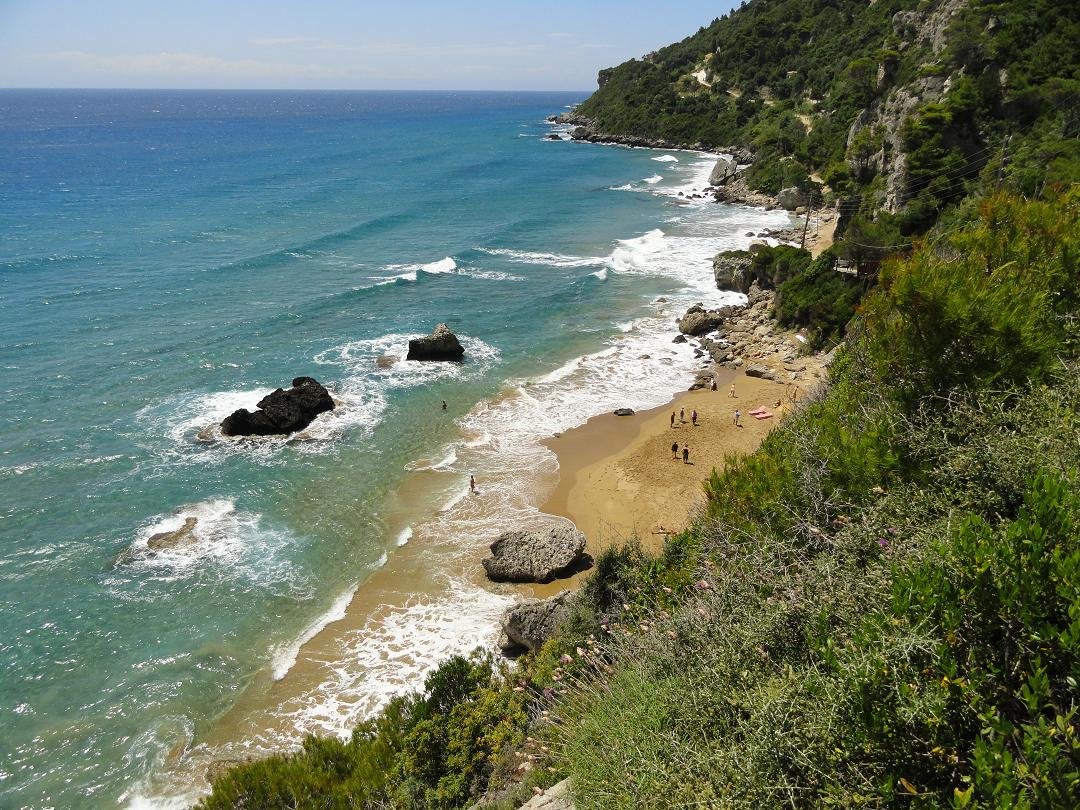
Corfu has many beaches, most of them pebble or a mix of small pebbles and sand, and the busiest lie around Corfu Town while the beaches in the north and south grow quieter the further they are from the capital. Corfu also has a few official and unofficial naturist beaches. This guide runs round the coast in five stretches, from the resorts just north of Corfu Town to the quiet beaches of the far south. Hire a car to explore Corfu at your own pace, covered in our Corfu car hire guide.
- Coast
- Ionian
- Best-known resort
- Paleokastritsa
- Naturist beach
- Mirtiotissa
- Party beach
- Kavos
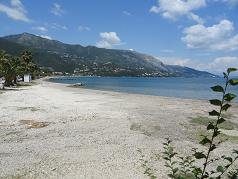
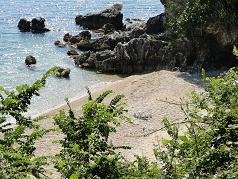
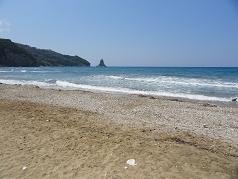
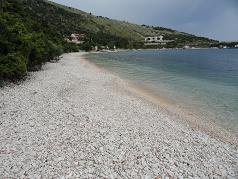
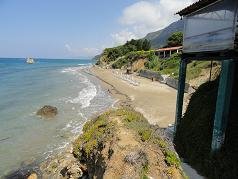
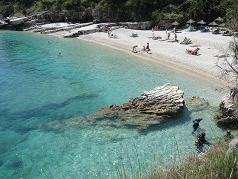
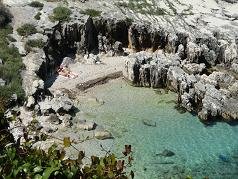
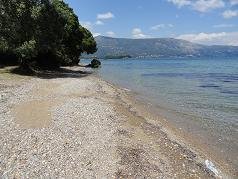
Beaches north of Corfu Town
The beaches just north of Corfu Town are the busiest and most touristic on the island, and they grow quieter as the coast road runs north. Kondokali, 6 kilometres from Corfu Town, is touristic, with sheltered, shallow pebble beaches, watersports and views over the Bay of Gouvia and the islet of Lazaretto. Gouvia, a little further north, is a family village with a sailboat harbour, short beaches and Venetian remains. Kommeno, between Gouvia and Dassia, is a quiet cape and bay whose sandbeaches partly serve the luxury Astir Palace Hotel, reached best by car. Dassia is a lively, growing resort with a long, narrow pebble beach and easy buses to Corfu Town. Ipsos and Pirgi have grown into one, sharing a long pebble beach nicknamed the "golden stretch" below the Pantokrator mountain, with English-oriented nightlife. Barbati, 2 kilometres east of Pirgi, is a quieter, family beach of fine white pebbles shaded by trees. Nissaki lies below the main road, its pebble beach and coves reached by steep paths, 22 kilometres and about 40 minutes by bus from Corfu Town, with six buses a day in high season and boats from the capital. Kaminaki keeps an older, non-touristic feel, with white pebbles and rented apartments. Agni, reached only by a steep path or by boat, has a pebble beach with three tavernas, free sunbeds and a view of Albania. Kouloura is even quieter, a small pebble beach beside a circular harbour with cypress trees and a single taverna, a few kilometres from Albania.
Beaches in the northeast
The beaches in the northeast of Corfu are more remote, reached by steep roads or by boat, and Albania lies just across the water. Agios Stefanos is a fishing village a couple of kilometres above Kouloura, its large pebble beach and coves reached down a steep road or by boat, with Albania only 1.7 kilometres away. Kassiopi is a holiday village that mixes tradition and tourism, with pebble beaches, wooden fishing boats, a church on the site of a temple of Jupiter and the ruins of a 13th-century castle, about an hour by bus from Corfu Town; the quieter beach of Avlaki, 800 metres long, draws mainly Greek visitors at weekends. The Antinioti lagoon in the north shelters rich birdlife and small marsh turtles, with the sandbeach of Agios Spiridon, one taverna and quiet walks around the canal. Acharavi is a quiet resort whose clean, wide beach of sand and pebbles runs about 8 kilometres and joins the beach of neighbouring Roda, a small, English-oriented resort with a shallow sea, a wide beach and the remains of a Dorian temple from the 5th century BC.
Beaches in the northwest
The beaches in the northwest of Corfu include some of the island's prettiest bays, from windswept surf beaches to the celebrated resort of Paleokastritsa. Sidari sits on a picturesque beach among rock formations, with a lively nightlife, small family hotels, the famous Canal d'Amour carved by the sea into soft sandstone, and the remains of a settlement dated to 7000 BC nearby. Agios Stefanos (San Stefano) in the northwest is a quiet fishing village popular with windsurfers for its wind, connected by bus to Sidari and on to Corfu Town, about two hours in all. Arillas is another quiet village with an almost one-kilometre sandbeach curving round a bay, popular with windsurfers and families, opposite the island of Gravia. Agios Georgios is a family resort with a long, wide sandbeach that many rank the prettiest on Corfu, with watersports and growing tourism. Paleokastritsa is the most popular resort in the west and, for many, the most beautiful place on Corfu, with steep, tree-covered mountains, three coves of sandbeaches, cold sea, plenty of accommodation and boat trips along the coast and its caves. Liapades, about 18 kilometres south of Corfu Town and just south of Paleokastritsa, lies in a bay of high wooded hills with watersports, fewer crowds and boat trips to the caves.
Beaches of the west and centre
The beaches of the west and centre of Corfu range from long organised sandbeaches to the naturist sands of Mirtiotissa. Ermones, level with Corfu Town on the west coast, is a small, busy resort of sand and pebbles at the edge of the Ropa plain, with watersports but sharp shells that make it less suitable for children. Mirtiotissa, just below Ermones, counts as one of the most beautiful beaches on Corfu and is the island's only naturist beach, golden sand below straight cliffs, reached by a steep road from Vatos near the 14th-century Mirtiotissa monastery. Pelekas, also called Kontogialis Beach, lies about 13 kilometres from Corfu Town, an organised sandbeach among olive-covered hills that was once a hippy spot, with the village of Pelekas above it. Glyfada is a long, wide sandbeach reached by a steep road, with the Grand Hotel Glyfada, a shallow sea and watersports. Agios Gordis is a long beach of sand and small pebbles between two capes, dominated by the Agios Gordis Hotel, with a diving centre, a shallow sea and a bus of about 45 minutes to Corfu Town via Sinarades. Messonghi in the southeast keeps a village feel despite its hotels, with a kilometre of sand-and-pebble beach running to Moraitika and temple remains from the 3rd century BC. Moraitika, just above Messonghi, holds some of the island's largest hotels, including the 870-room Messonghi Beach Hotel and the Miramar, plus the remains of a Greek-Roman villa. Benitses, 12 kilometres south of Corfu Town, is a cosy resort with a long, narrow, shallow sand-and-pebble beach, Roman bath remains and, these days, a quiet, restored village. Perama, south of Corfu Town opposite Mouse Island and linked to Kanoni by a dike, has small pebble beaches lined with hotels and a bus every half hour in high season.
Beaches in the south
The beaches in the south of Corfu are the longest and often the quietest, apart from the busy party resort of Kavos. Agios Giorgios and Santa Barbara lie below the lake of Korission, where sandbeaches run almost 12 kilometres around a cape, some used unofficially by naturists, so a quiet spot is always in reach. The lake of Korission is a protected nature reserve of about 6 square kilometres, screened from the sea by dunes and long beaches, where swimming in the lake is banned but flamingos and other birds gather. Paramonas, on the west coast between Agios Gordis and Prasoudi, is a quiet sandbeach with rocks offshore, one hotel and little nightlife, 25 kilometres from Corfu Town. Petriti and Boukari are two small, authentic villages in the bay of Lefkimmi, with quiet pebble and sandbeaches and rooms to rent. Kavos, at the southeast tip, is the island's party village, with a beautiful three-kilometre beach, lively bars and clubs, a shallow sea and day trips to Paxos, about two hours by bus from Corfu Town. Gardenos, 12 kilometres from Kavos in the southwest, is a long, unspoiled beach split by the Gardenos river near the traditional village of Vitalades, 35 kilometres from Corfu Town. Molos, between Boukari and Kavos near Lefkimi, is a quiet sandbeach with a shallow sea, a small church and a family feel.
Where to stay near the beaches
Accommodation follows the beaches, from the busy resorts north of Corfu Town to quiet villages in the south. Every resort named above has rooms, studios or hotels within walking distance of the sand. For a full choice of hotels, apartments and studios across the island, browse the Corfu hotels and accommodation guide.