Skopelos Beaches, Greece: A Guide to Every Beach on Skopelos
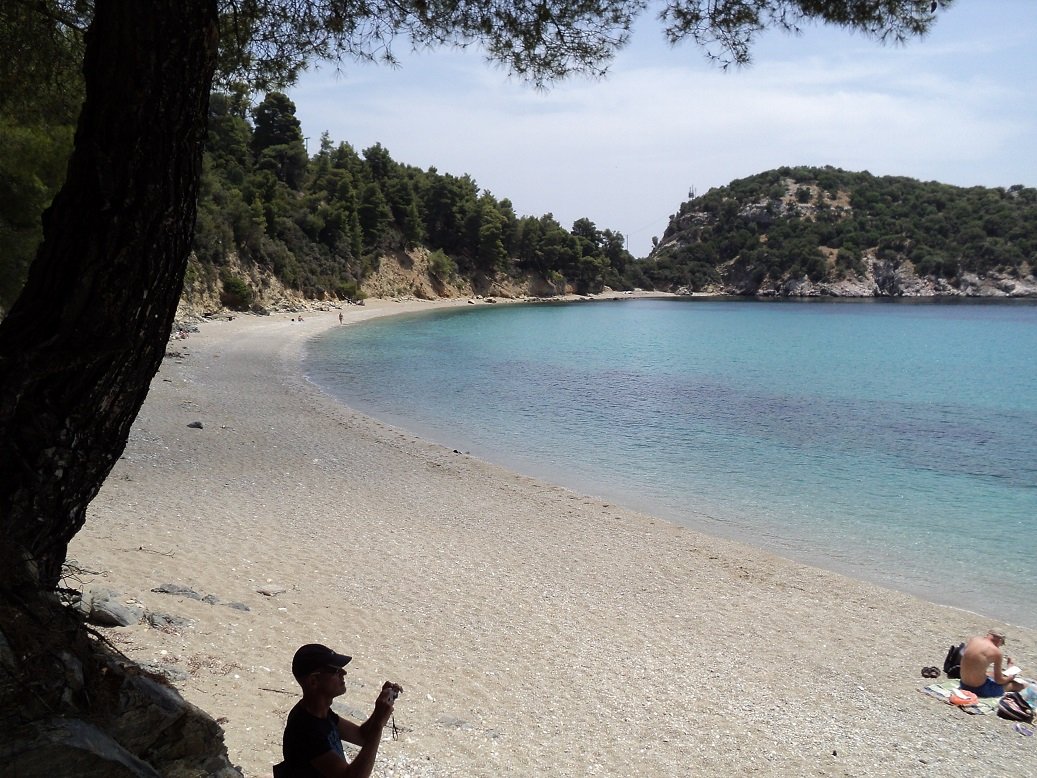
Skopelos beaches are long, pine-fringed bays of sand and pebble on a green Sporades island, with most of the best-known coves — Panormos and Milia — strung along the sheltered south-west coast. One main road and a good bus service link the bays, and most stops sit at a beach. Many of the prettiest coves have fine sand or pebbles and can only be reached by boat. For the wider island see the Skopelos island guide. Hire a car to explore Skopelos at your own pace, covered in our Skopelos car hire guide.
- Sea
- Sporades / Aegean
- Best known
- Panormos & Milia
- Closest to town
- Stafilos, 4 km
- Most beautiful
- Milia, 21 km
| Beach | Type | Organised? | Notable for |
|---|---|---|---|
| Stafilos | Sand | Closest to Skopelos Town (4 km); busiest beach | |
| Velonia | Sand | Partly | Naturist beach south of Stafilos |
| Agnontas | Pebble | Fishing harbour; greenish-blue water | |
| Limnonari | Sand | Yes | Sheltered turquoise bay 900 m from Agnontas |
| Panormos | Natural setting; among the best sunset spots | ||
| Milia | Sand & pebble | Widely considered the island's most beautiful; pine-backed | |
| Kastani | Sand | Yes | Mamma Mia! filming location |
| Hovolo | Easy to reach; textile beach | ||
| Elios | Pebble | Village beaches on either side of the harbour | |
| Kalives | Pebble | At the end of a dirt track | |
| Armenopetra | Pebble & sand | Larger and more picturesque; exposed to the wind | |
| Glisteri | Reached by caique from Skopelos Town | ||
| Perivoli | Northernmost and largest north-east beach | ||
| Hondrogiorgi | Pebble | Secluded and quiet, at the end of a dirt road | |
| Pethameni (Kanalaki) | “Dead Woman beach”; hard to reach on foot |
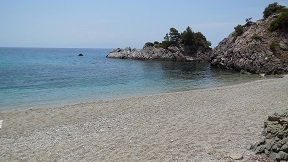
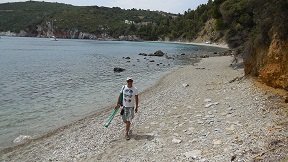
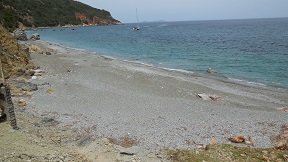
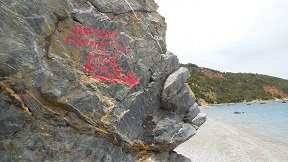
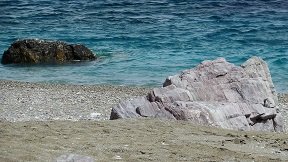
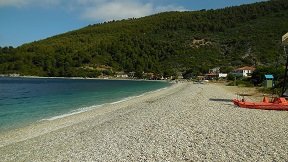
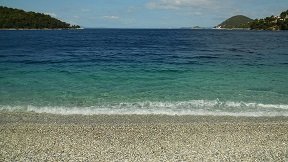
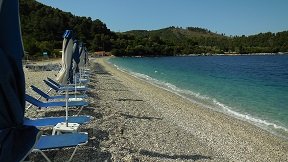
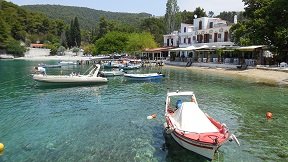
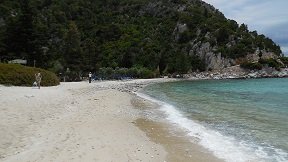
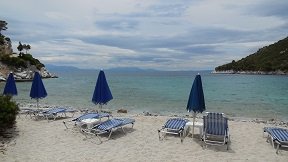
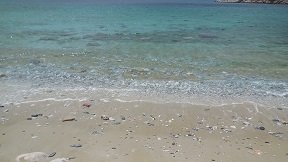
Stafilos and Velonia beaches
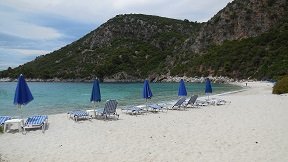
Stafilos is the most crowded beach on Skopelos, partly because it lies a 4-kilometer walk from Skopelos Town. It is a sandy beach set in a sheltered bay. South of Stafilos is the naturist beach of Velonia, reached by a path that leads from Stafilos beach. Velonia is not heavily developed and splits into two parts: one where you can rent parasols and sunbeds, and one where you simply lay your towel on the sand.
Agnontas, Cape Amarantos and Limnonari beaches
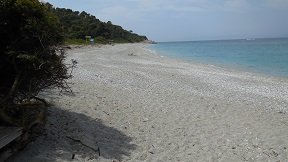
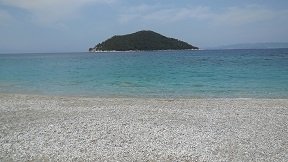
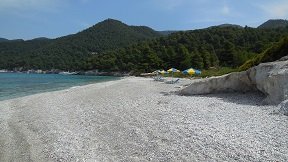
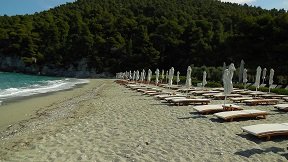
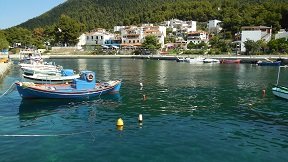
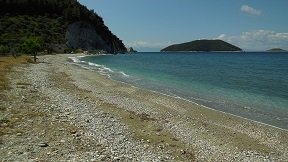
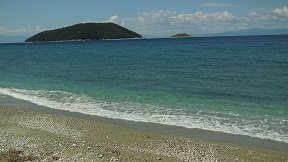
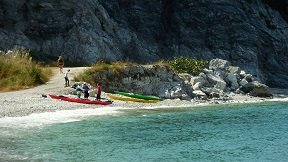
Agnontas is a small fishing village with fish restaurants, some accommodations and a village beach, and it also works as a small harbour where a larger cargo ship stops now and then. Agnontas Beach is a pebble beach of small white pebbles with no sand, and those white stones give the whole bay a beautiful greenish-blue colour. From Agnontas you can walk, or take a wooden boat, to Limnonari, 900 meters away in a very well-protected bay where the sea is almost always calm and turns a turquoise colour. Limnonari is mostly sandy, with umbrellas and sunbeds you may use when you order something at the taverna they belong to; it is one of the nicer beaches on this side of the island.
Just south of Agnontas, Cape Amarantos is a headland of twin pine-clad rocks that drop into deep, clear water, nicknamed the “piscina” locally for its calm, pool-like swimming. Cape Amarantos served as a photo backdrop in Mamma Mia! and has no organized facilities, so you swim from the natural rock platforms.
Panormos, Linarakia and Andrines beaches
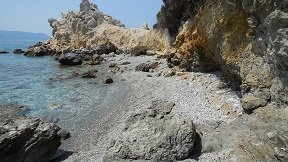
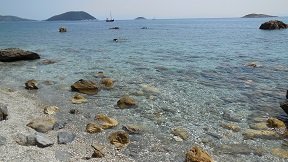
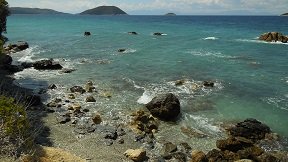
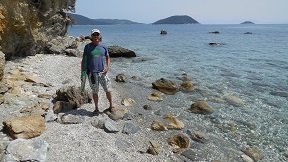
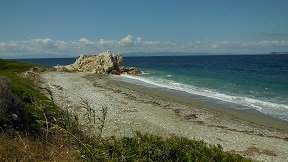
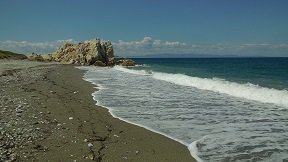
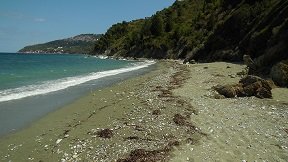
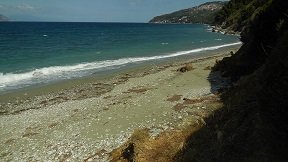
Panormos is popular with windsurfers, as the water drops away quite steeply from the shore. It sits in a beautiful natural setting and ranks among the best places on Skopelos to watch a sunset, and the village of Panormos has a few hotels and some rooms for rent. Next to Panormos beach lie the small beaches of Linarakia, between Andrines and Panormos, reached by a small path a few meters after Panormos beach or by a path leading from Panormos itself. Behind Linarakia are the two small beaches of Andrines.
Milia and Kastani beaches
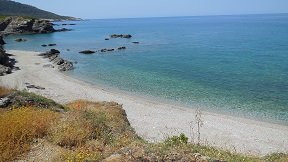
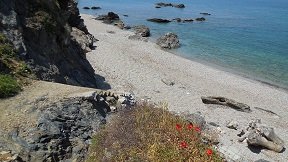
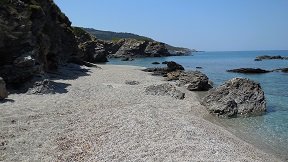
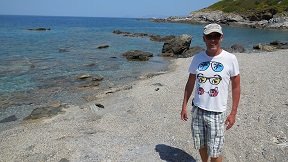
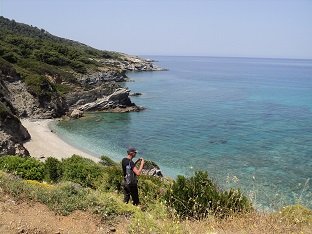
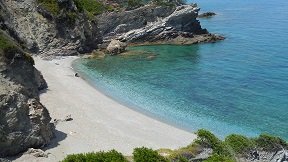
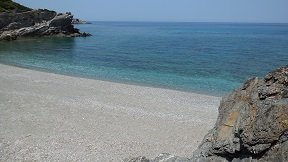
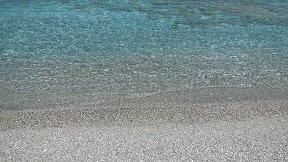
Milia lies 21 kilometers from Skopelos Town and is quieter, with a mix of sand and small pebbles. It is considered the most beautiful beach on the island, is quite large and is surrounded by pine forests. Next to Milia is the smaller beach of Kastani, a sandy beach that was a main filming location for the 2008 film Mamma Mia!. Kastani is almost completely covered with luxury sunbeds and umbrellas apart from a small part, with a large taverna on the sand and a car park.
Hovolo, Elios and the west coast
Along the main route from Kastani to the village of Elios you pass three beaches that are hard to reach and some smaller ones, among them Megalo Peuko and Hovolo, which is easy to reach nowadays and is a textile beach. Elios is a quiet little fishing village with friendly inhabitants. It has a beach on its north side and one on its south side, interrupted by the harbour with its fishing boats, and these beaches consist mostly of pebbles of different sizes.
Kalives and Armenopetra beaches
North of Elios, at the end of a road that turns into a dirt track, lie the beaches of Kalives and Armenopetra. They are really one beach split in two by a large rock, and both are pebble beaches reached over the same track. Armenopetra also has some sandy patches and is the larger and more picturesque of the two, though it is more exposed to the wind.
Glisteri and the boat-only beaches
From Skopelos Town, caiques — small wooden boats — run to Glisteri, an attractive beach that is harder to reach by land, and more small beaches lie around it. Small boats also run from Agnontas to Limnonari. Reaching these coves by sea is part of the appeal, since many of the island's idyllic sand and pebble bays can only be visited by boat.
North-east beaches and Agios Ioannis sto Kastri
A run of beaches lines the north-east of Skopelos, and some of them are only accessible by boat. A few sit near Agios Ioannis sto Kastri, the clifftop chapel where the wedding scene in Mamma Mia! was filmed, reached by a climb of about 200 steps; more beaches lie further north. Perivoli is the northernmost and largest beach, reached by a recently paved road. More secluded and quieter is the beautiful pebble beach of Hondrogiorgi at the end of a dirt road. Between the two lies Kanalaki, or Pethameni beach — “Dead Woman beach”, named after a dead woman found here in the 1970s. Pethameni is reached by a path in front of the entrance to Hondrogiorgi, on the left, after a short climb over some rocks; good shoes are required, and from the sea you can see that the two beaches lie right next to each other.
Skopelos beaches FAQ
Is Skopelos too touristy?
Skopelos stays relatively quiet and green, and is not overrun even in high summer. The island's beaches spread along one main road, so visitors disperse and most coves stay uncrowded. Stafilos, the closest beach to Skopelos Town, is the busiest, while several north-east coves reachable only by boat stay near-empty. July and August are the peak months.
Is Skopelos better than Skiathos for beaches?
Skopelos suits travellers who want seclusion, while Skiathos suits those who want easy, organized beaches. Skopelos is greener and more pine-backed, with many coves reached only by boat or dirt track. Neighbouring Skiathos has more organized sandy beaches with direct road access and livelier nightlife.
Is the sea warm in Skopelos?
The sea around Skopelos is warmest in late summer. The Aegean here warms steadily through the season, peaking in August and staying pleasant into September and October, while spring and early summer are cooler. Sheltered bays such as Limnonari hold their warmth, while deeper, more open water like Panormos feels fresher.