Zakynthos Sights: Shipwreck Beach, Blue Caves and the Turtles
The main sights of Zakynthos are the Navagio Shipwreck Beach viewpoint and the Blue Caves in the north, the loggerhead sea turtles of the Laganas Marine Park, and the church of Agios Dionysios and the Venetian Kastro in Zakynthos Town. The wild north cape holds the island's two natural landmarks, the turtle bay in the south holds its wildlife, and the rebuilt Venetian capital holds its history. This guide gathers them by theme. Hire a car to explore Zakynthos at your own pace, covered in our Zakynthos car hire guide.

- Marquee sight
- Navagio
- North cape
- Blue Caves
- Marine Park
- Loggerheads
- Patron saint
- Agios Dionysios
Navagio and the Shipwreck viewpoint
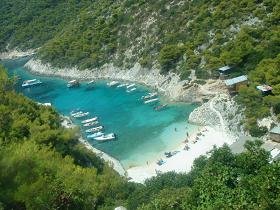
Navagio, the Shipwreck Beach, is the most famous sight on Zakynthos, a white-sand cove enclosed by sheer cliffs on the north-west coast, with the rusting hull of a wrecked freighter half-buried in the sand. The cove has no road, so most visitors see it two ways: from a boat trip out of Porto Vromi or the town harbour that lands on the sand, and from the signed clifftop viewpoint above, reached by car near the village of Volimes, which looks straight down onto the wreck and the turquoise water. It is best in the morning light before the tour boats arrive.
The Blue Caves
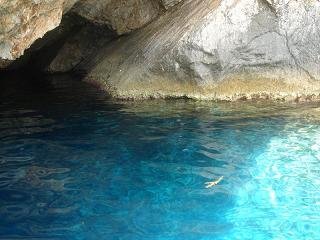
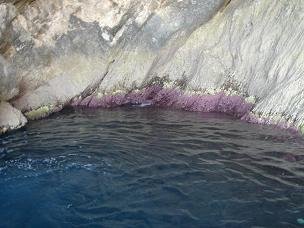
The Blue Caves are a run of sea caves and rock arches at Cape Skinari, the northern tip of Zakynthos, where the water glows an intense blue as the light reflects off the white rock and the sea floor. Small boats leave from Agios Nikolaos and from the cape itself to thread through the arches, and many trips pair the caves with Navagio in a single half-day around the north of the island. The clear water makes the caves a popular spot for a swim as well as a boat pass.
The Marine Park and sea turtles


Zakynthos is famous for its loggerhead sea turtles, which are protected in the National Marine Park of the Bay of Laganas, the first of its kind in the Mediterranean for the species. The turtles come ashore to lay their eggs on the bay's beaches from late May, and they can be seen in the water around the island until about the end of August. They gather mainly in the sheltered bay and around the uninhabited, turtle-shaped islet of Marathonisi, so parts of the sand are closed at night and boat speeds are limited in the protected zone. Trips from Laganas, Keri and Agios Sostis take you out to look for them.
Agios Dionysios and Solomos Square
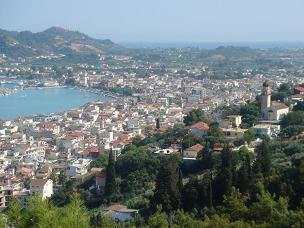
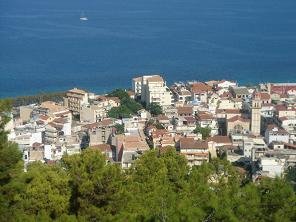

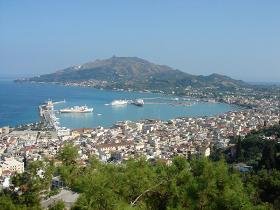

The church of Agios Dionysios, near the south end of the harbour in Zakynthos Town, holds the relics of the island's patron saint, born on Zakynthos in 1547, and it was one of the few buildings to survive the 1953 earthquake, with a tall free-standing bell tower beside it. At the north end of the seafront, Solomos Square is the town's main open space, named after the national poet Dionysios Solomos, who was born here, and it faces the harbour with the museum of post-Byzantine art on one side. Between the two runs the arcaded main street rebuilt from the old plans after the earthquake.
The Venetian Kastro at Bochali
Above Zakynthos Town, on the pine-covered hill of Bochali, stand the ruined walls of the Venetian Kastro, the fortress that once held the whole town inside its walls before the settlement moved down to the shore. The castle was badly damaged in the 1953 earthquake and is no longer a grand monument, but the walk or short drive up to it rewards you with the island's widest view over the town, the harbour and the Ionian, and the small square of Bochali below the gate is a favourite spot for a coffee or dinner at sunset.