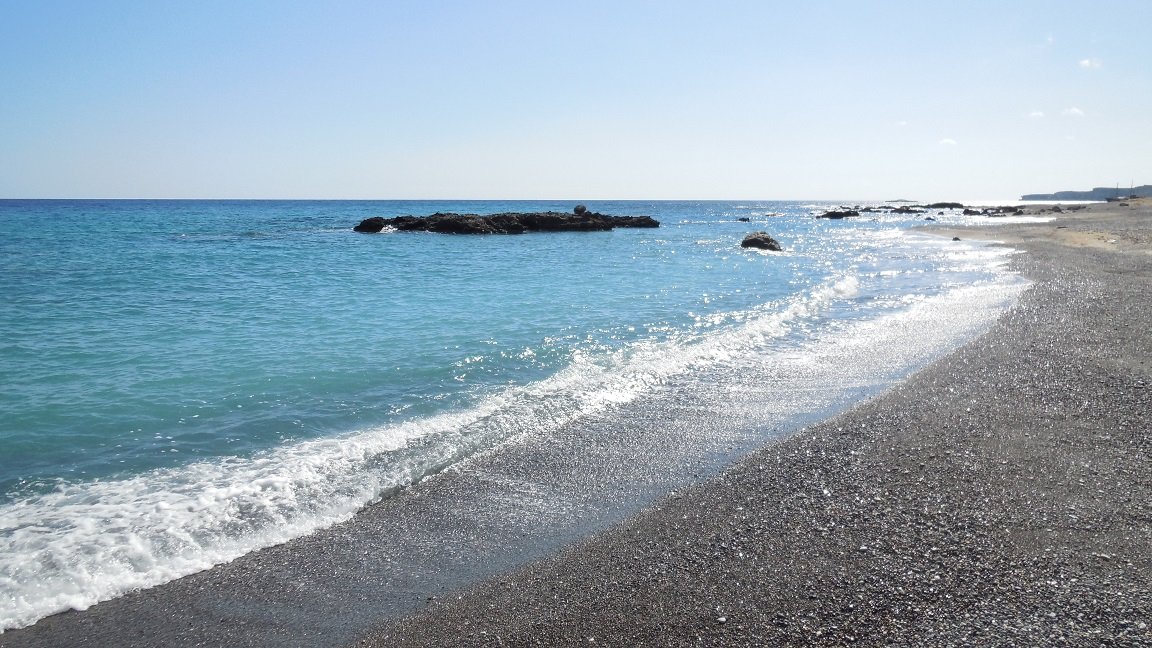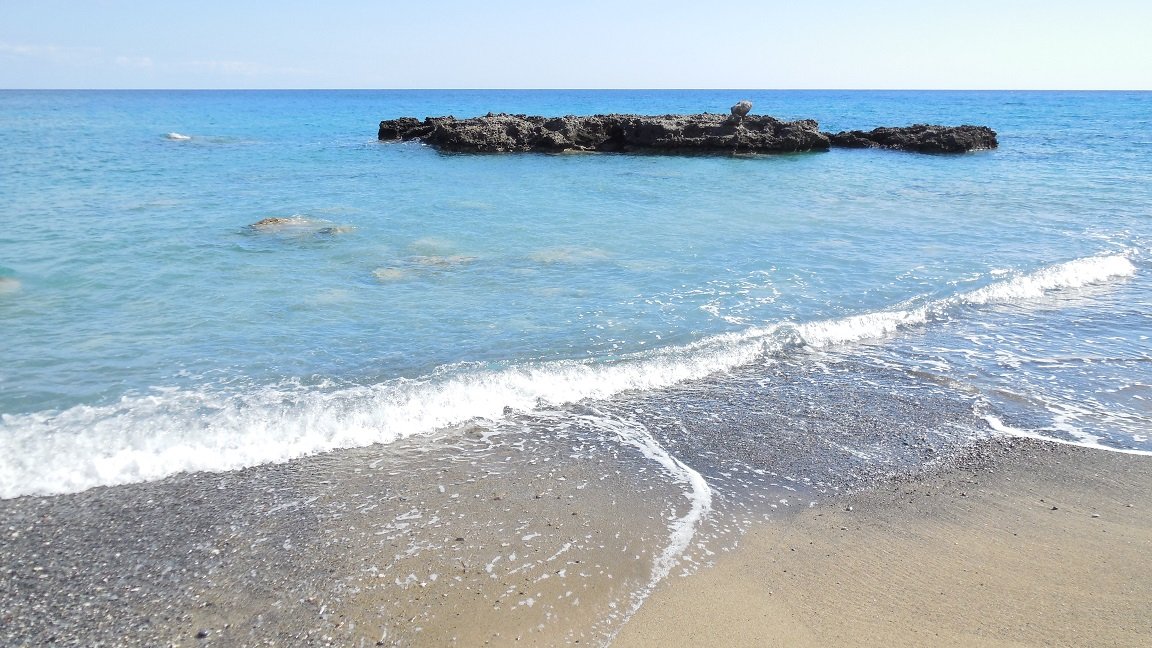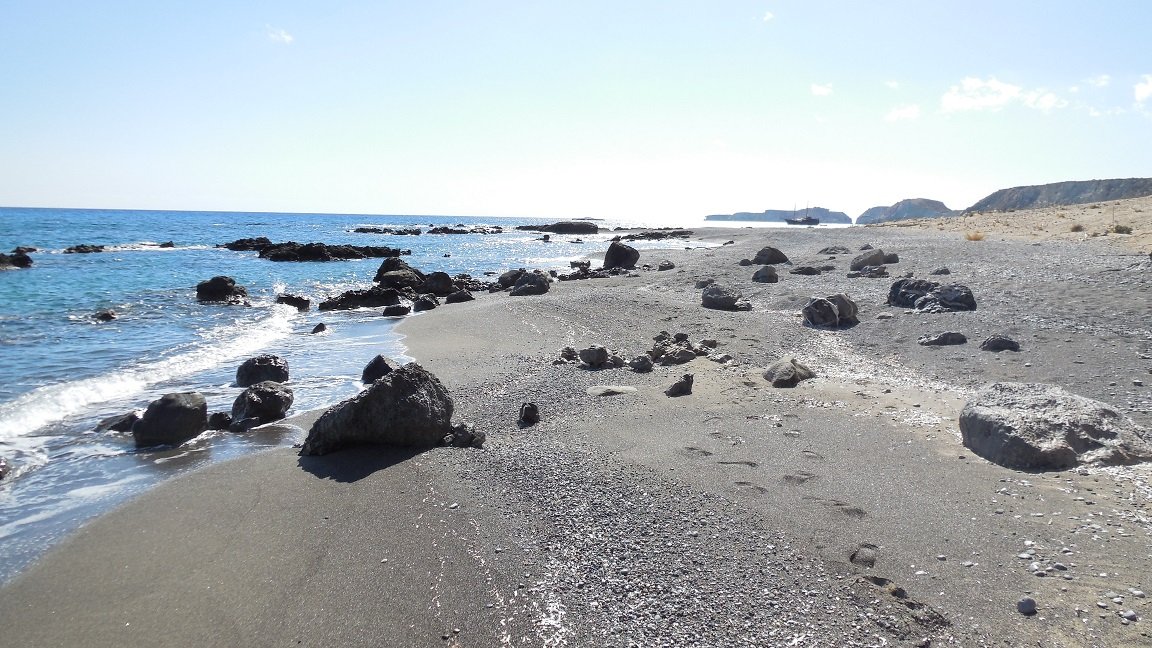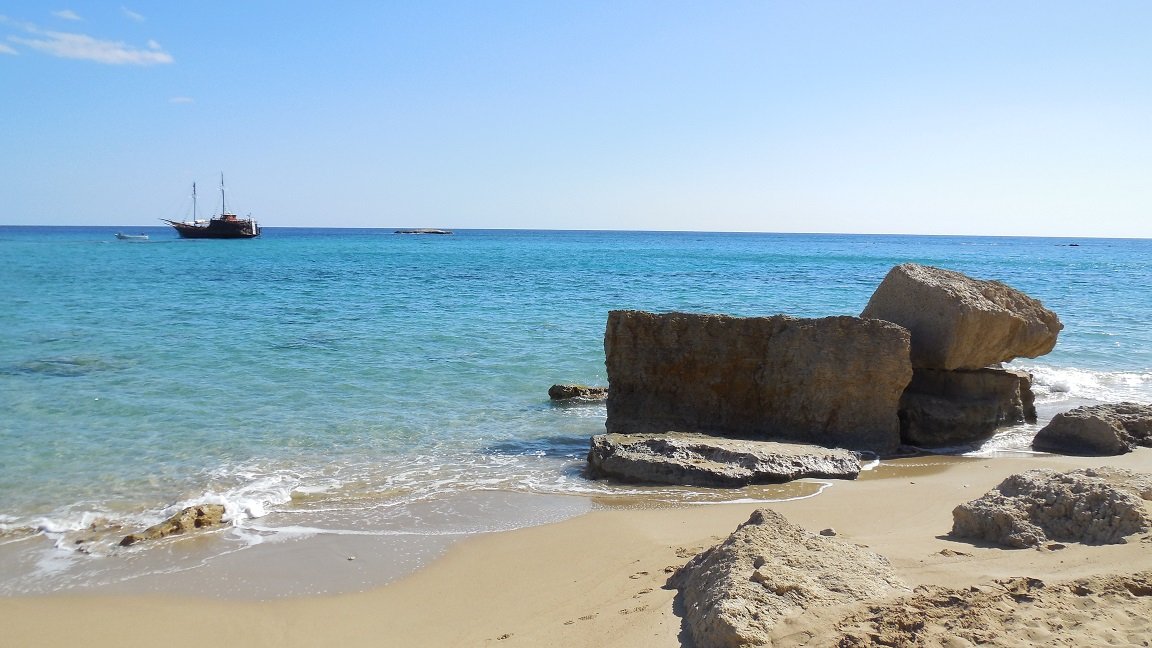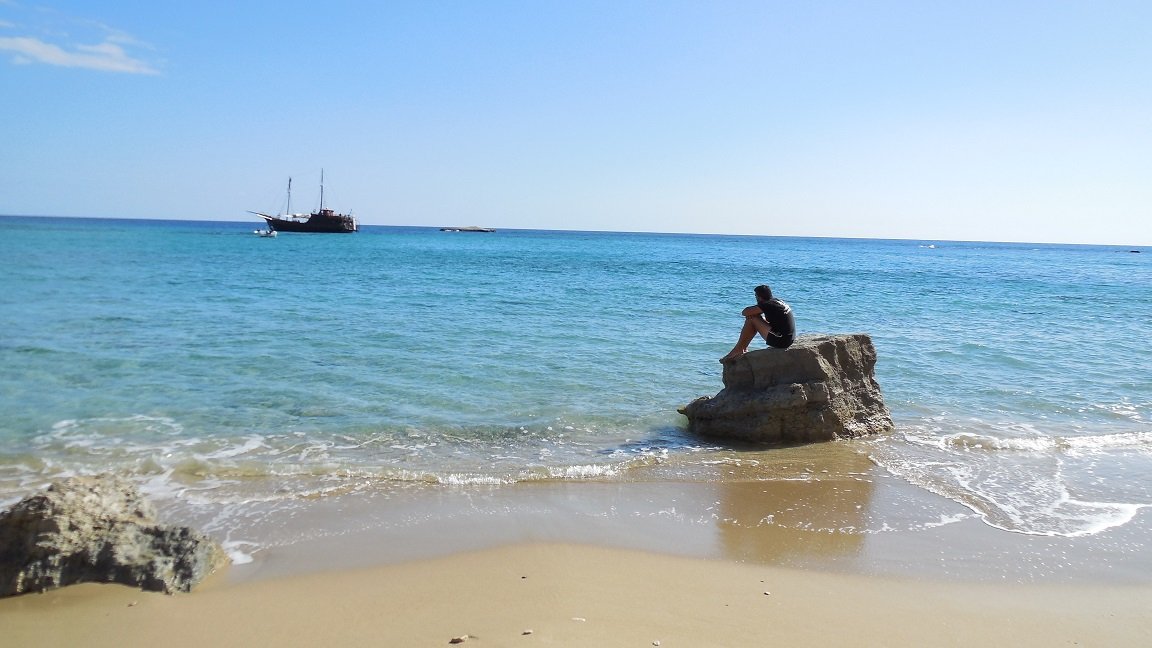
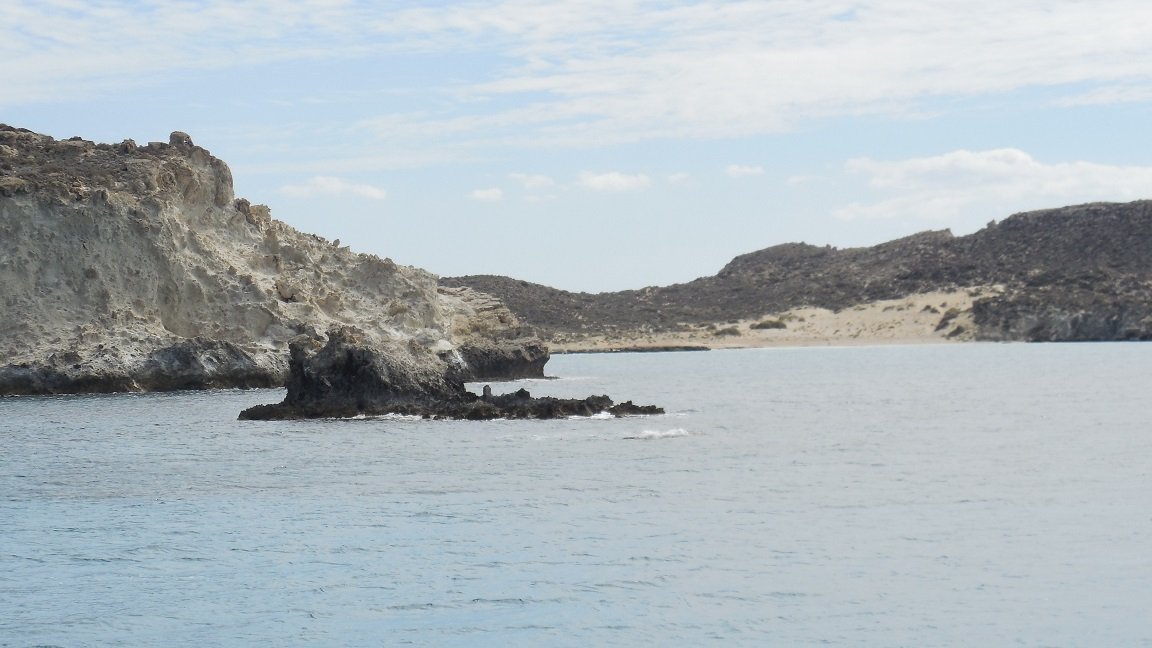
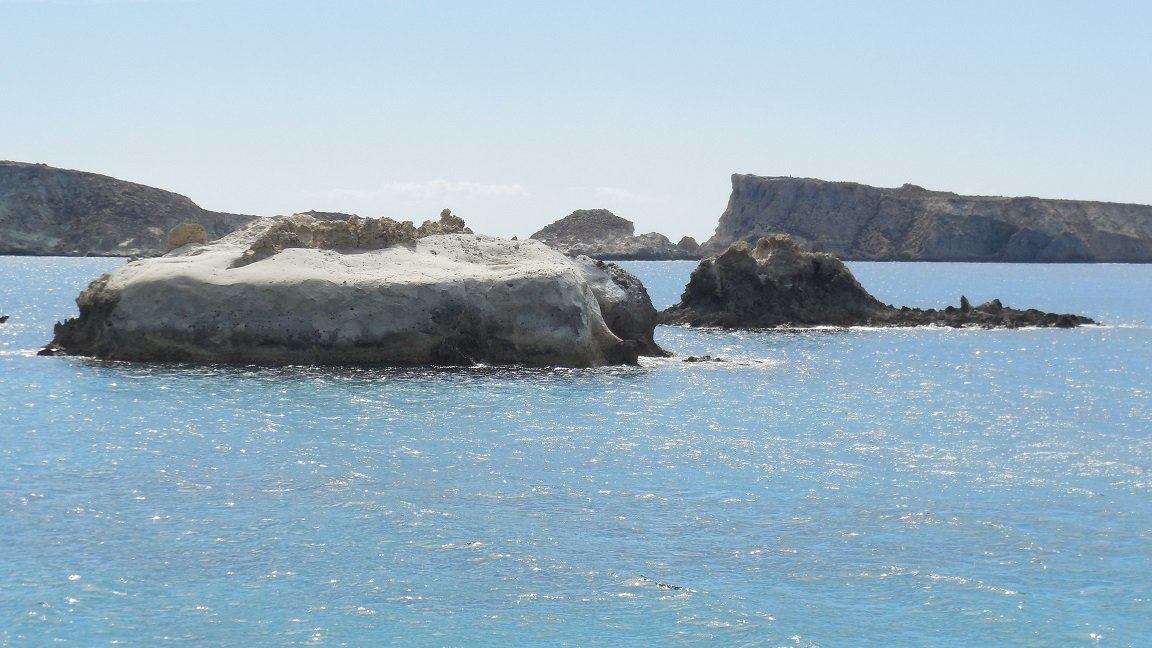

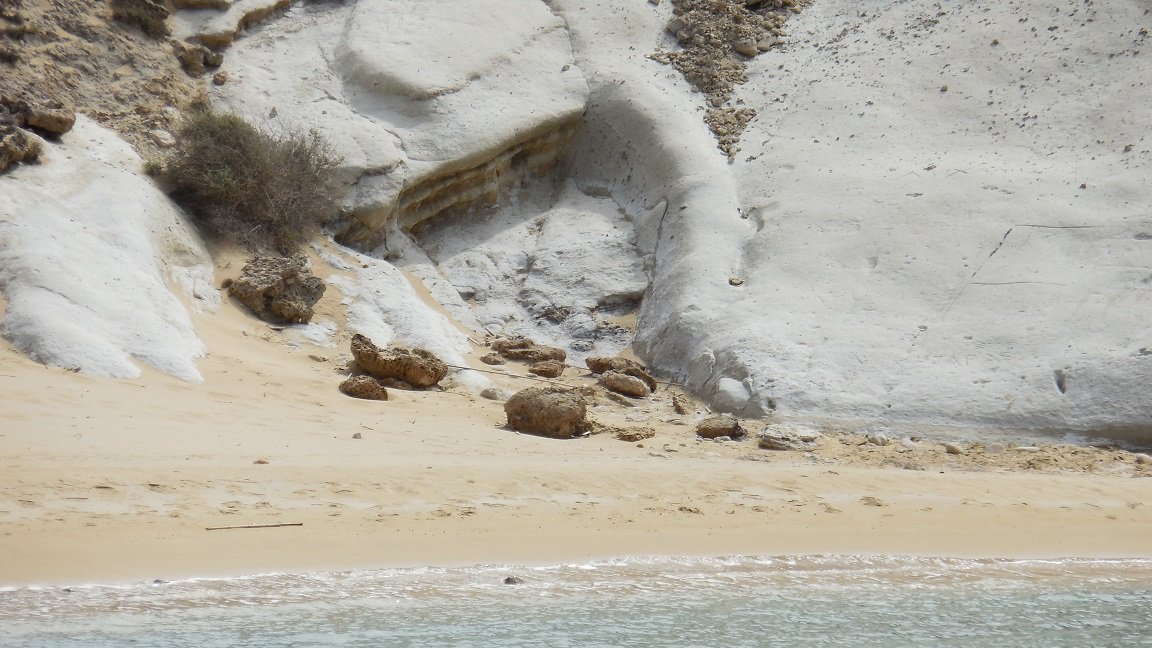

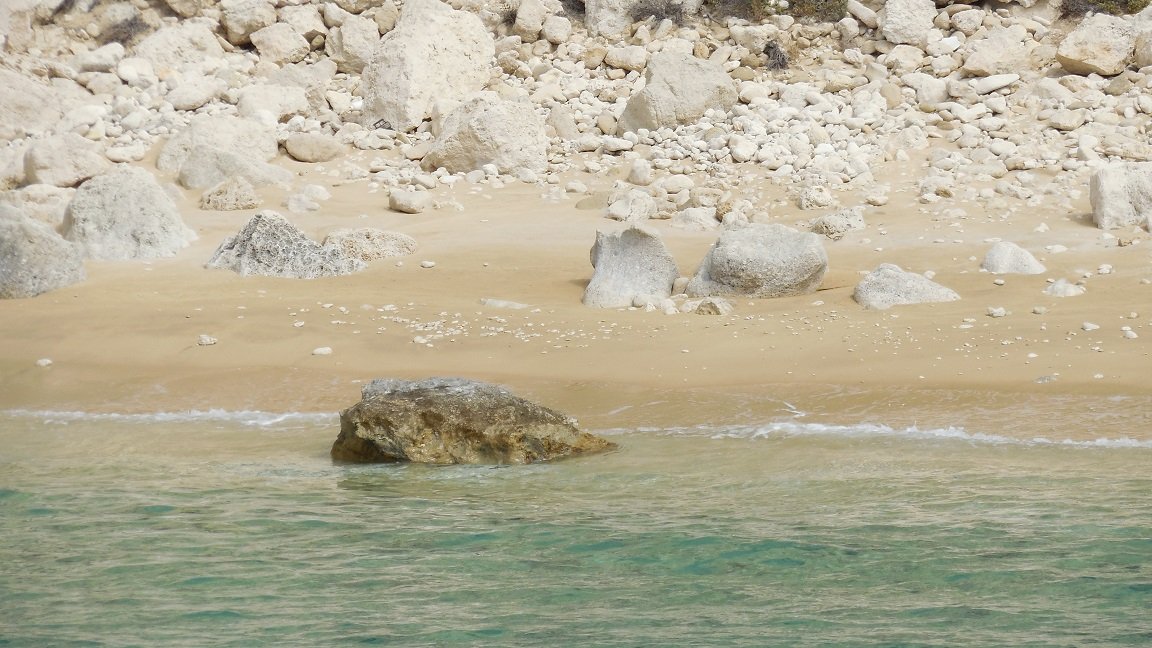
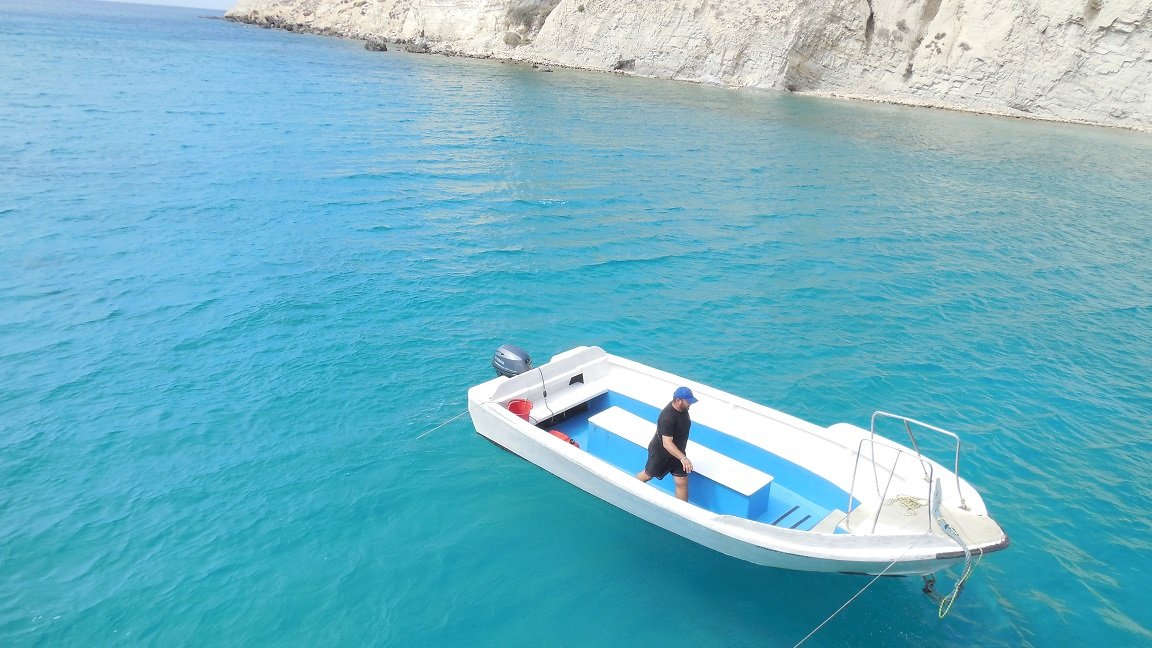
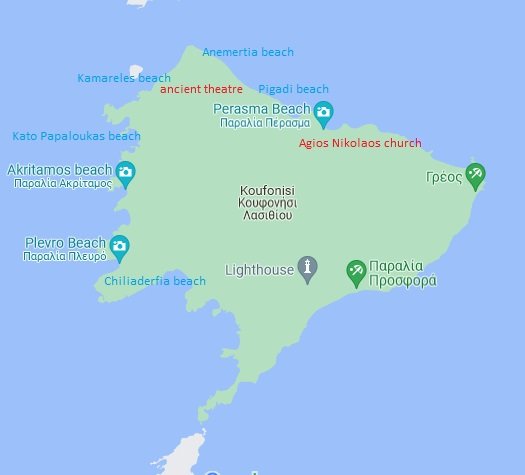
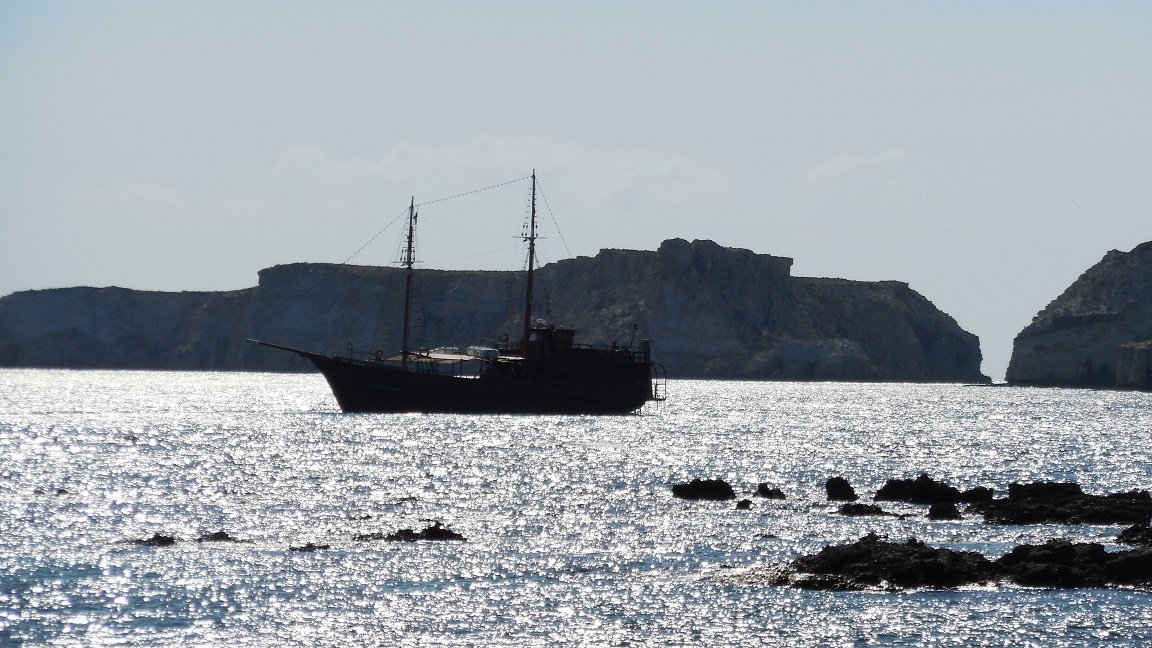
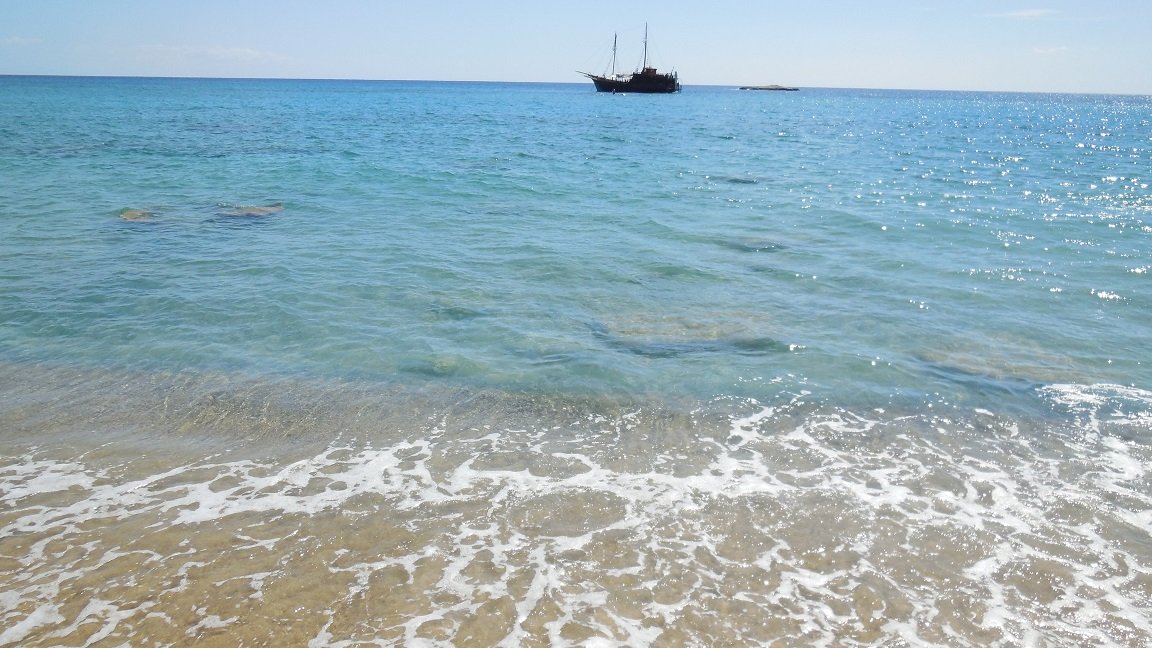
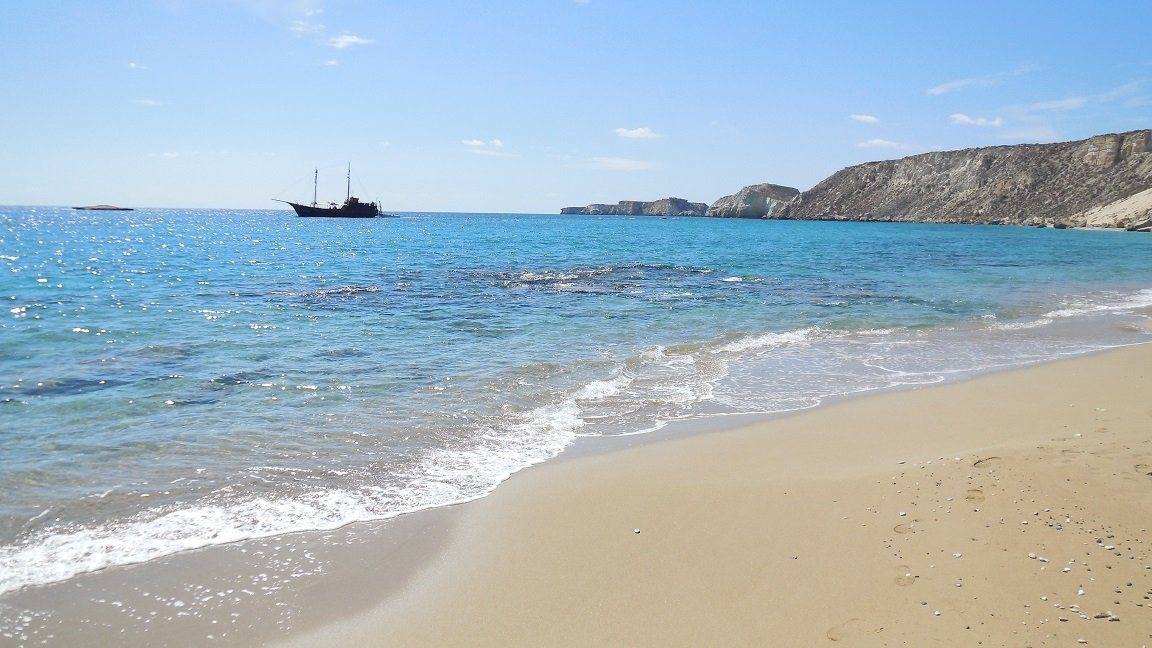
 The 5,25 km2 large Koufonissi or Koufonision is a small low lying, flat island off the coast of Crete (in the southeast). The island is situated opposite the village of Goudouras and there are organized boat trips to this island from Makrigialos. People can enjoy the pretty sandy beaches (no facilities), the sea caves, the excavations of antique buildings and a walk around the island (and end the last day of September). These excursions only take place during the high season. You leave Makrigialos in the morning and return late afternoon.
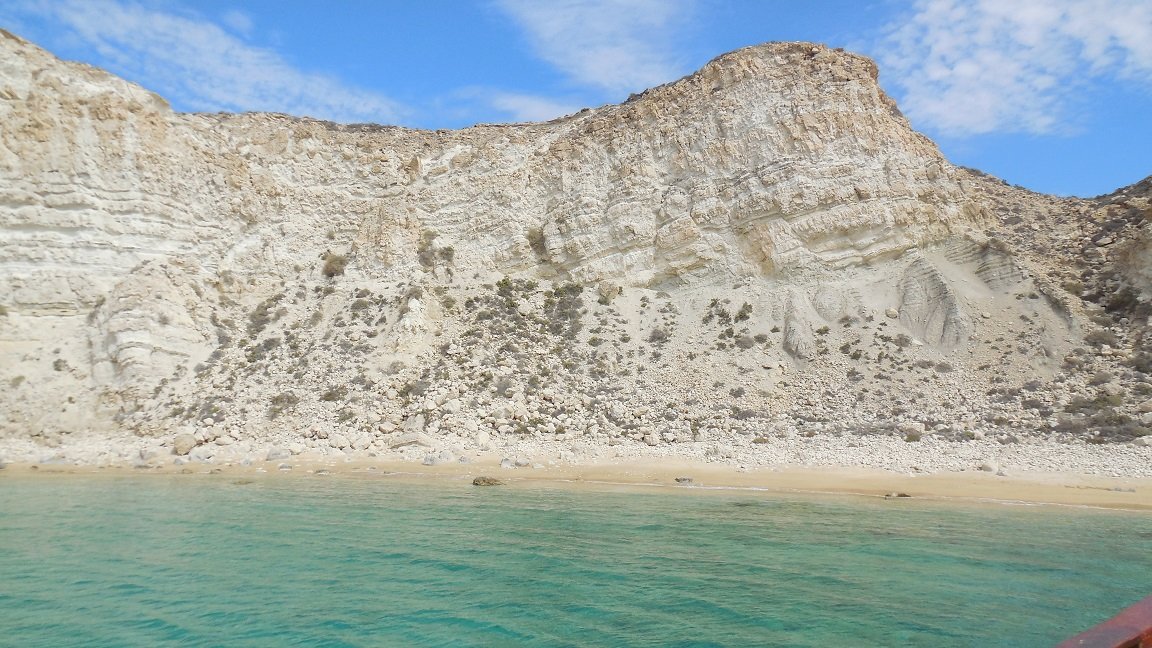
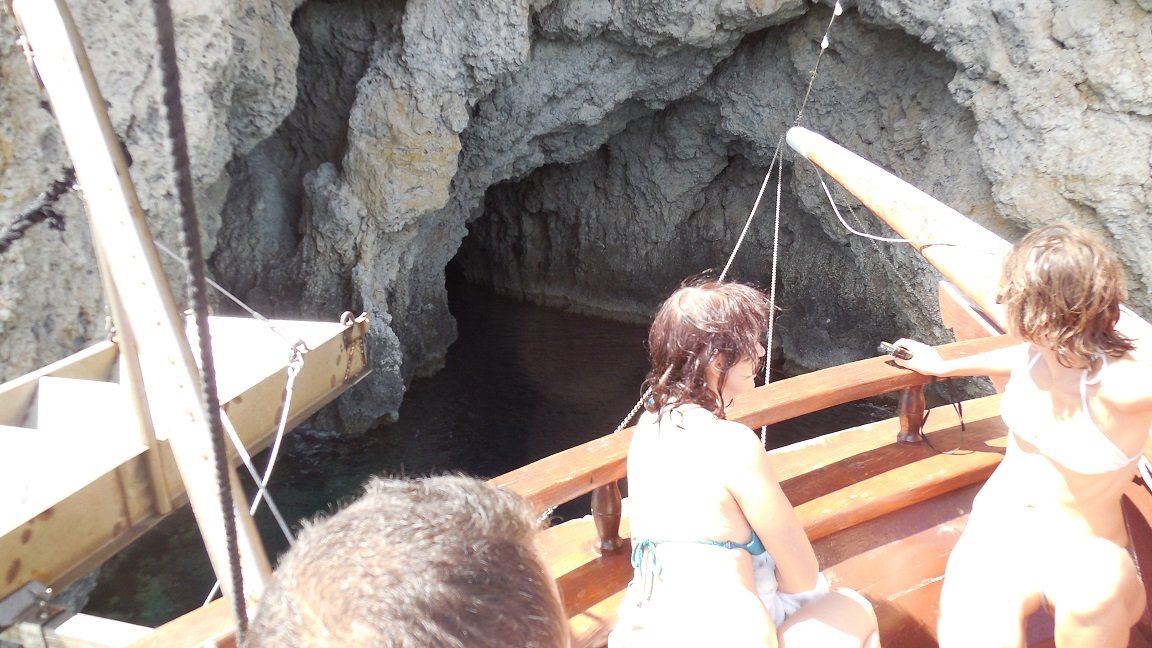
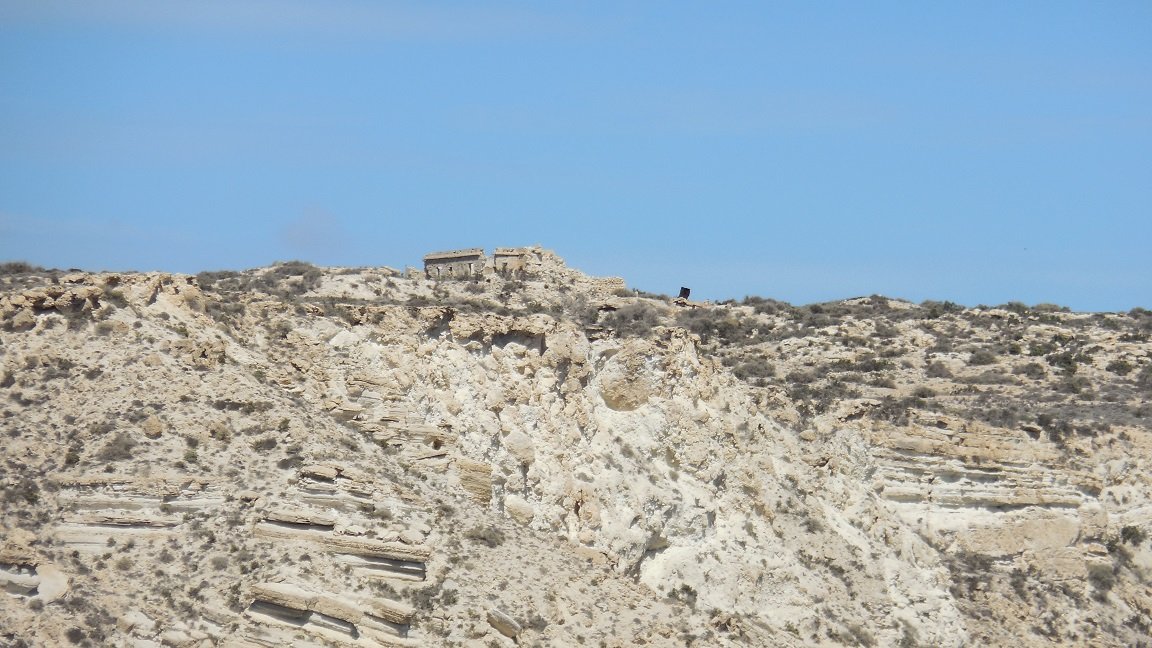
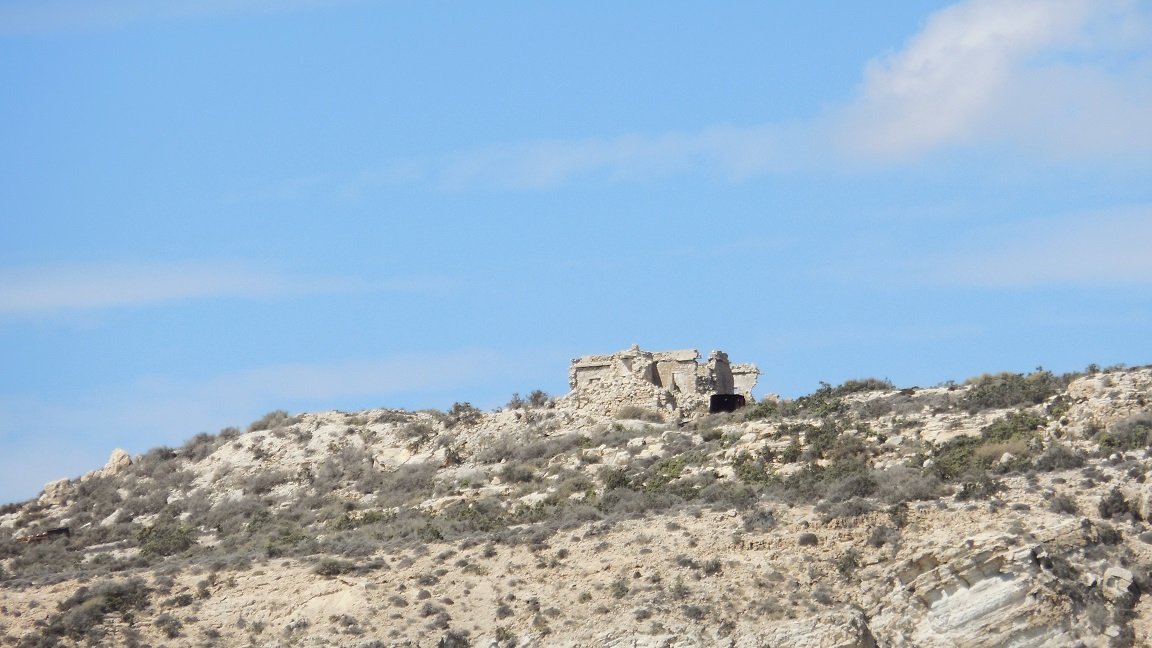
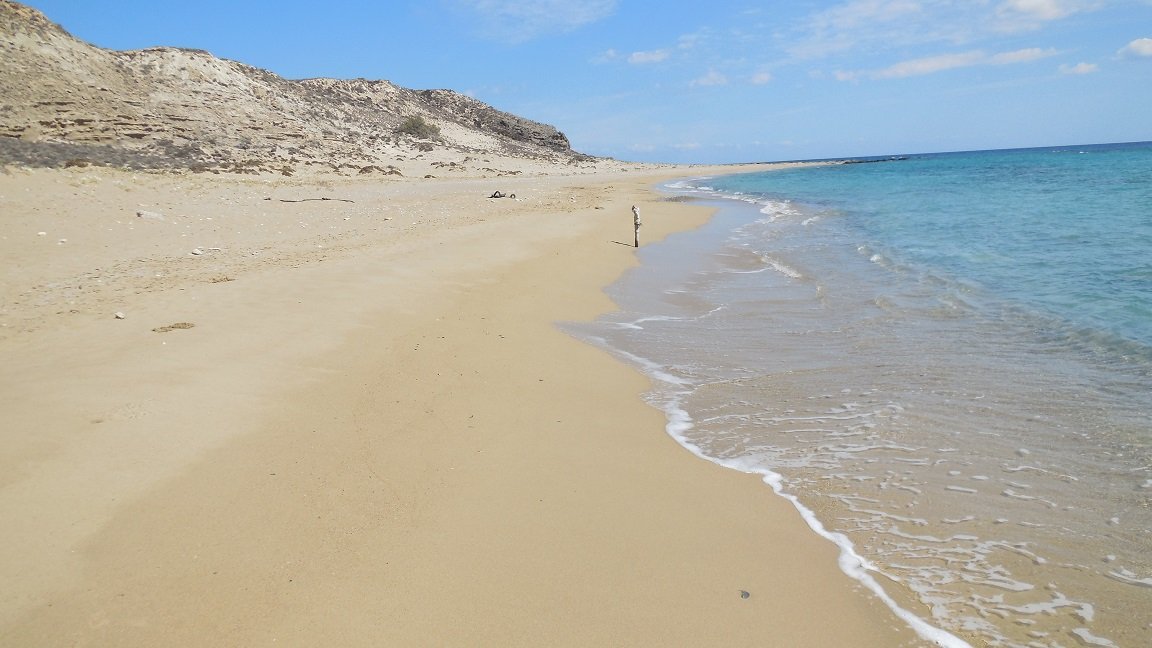
The trip we made went around the island and we made a stop at two beaches with the boat. The walk was limited to a large beach. It was surrounded by a cliff, a pretty high rock where sea birds were nesting and a steep dune wall. Remnants of the Minoan civilization we have not seen. What you did see atop of a rock was something that looked like an old dilapidated house. These are the remains of the lighthouse that was bombed by the Germans in the Second World War. The lighthouse was once built around 1920 with the remains of an ancient temple that stood here a few meters away. This temple was approximately 18 x 16 meters in size and dates from the Hellenistic era. Remains of a large marble statue and of some columns can still be seen. There are also pieces of the statue used in the construction of the lighthouse.
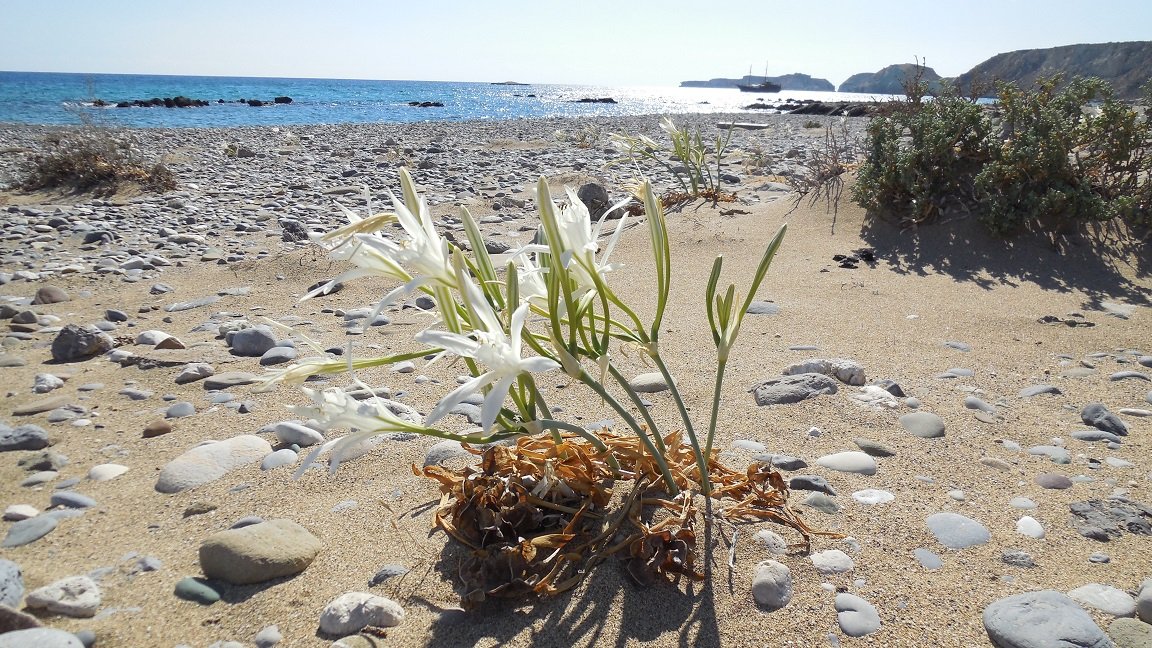
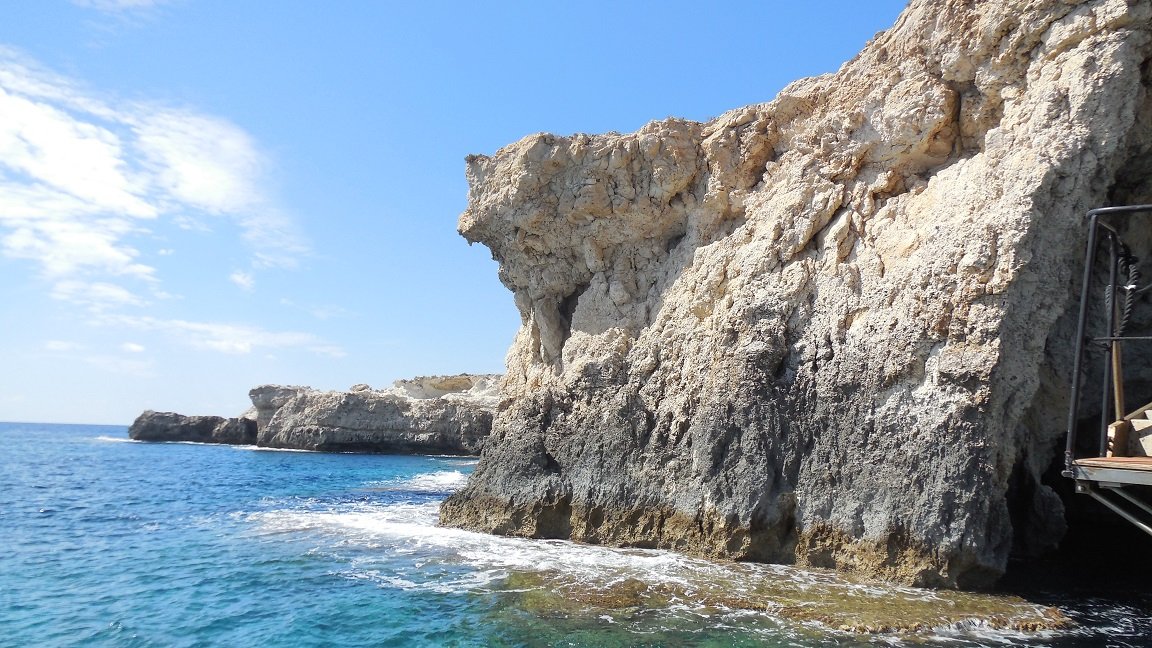
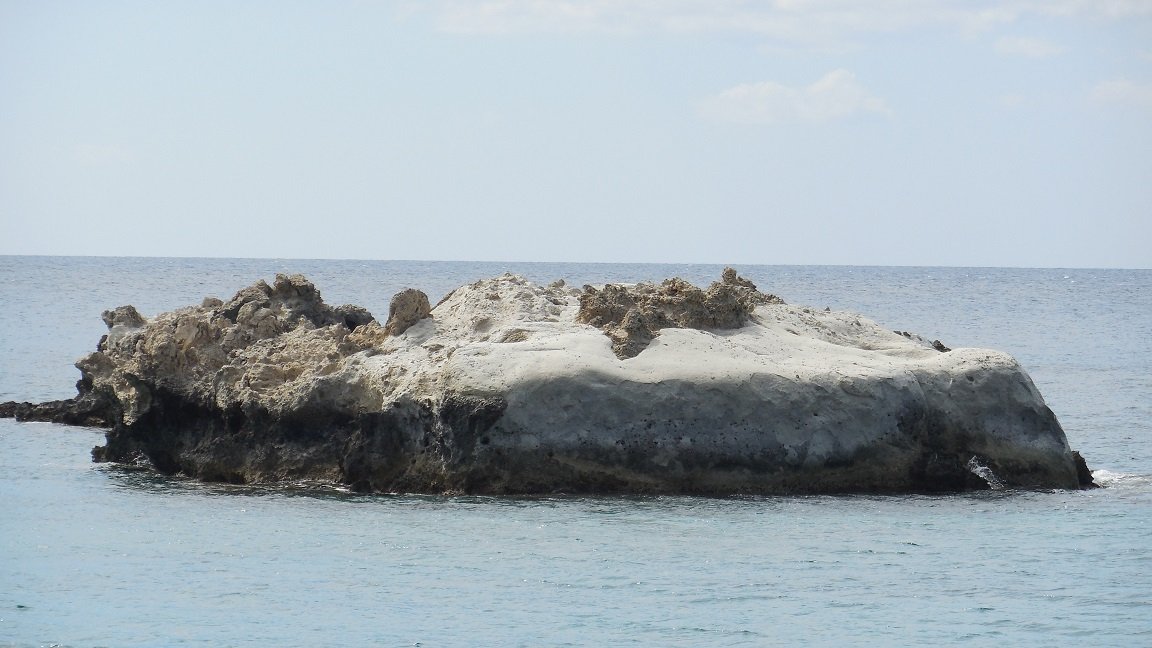
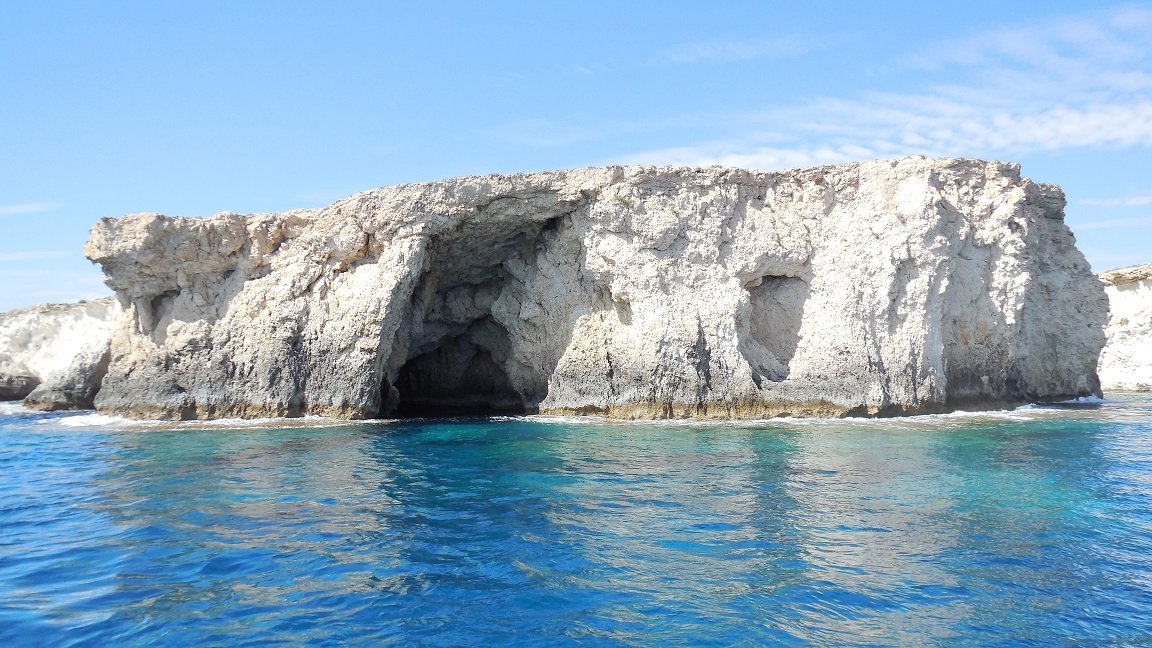
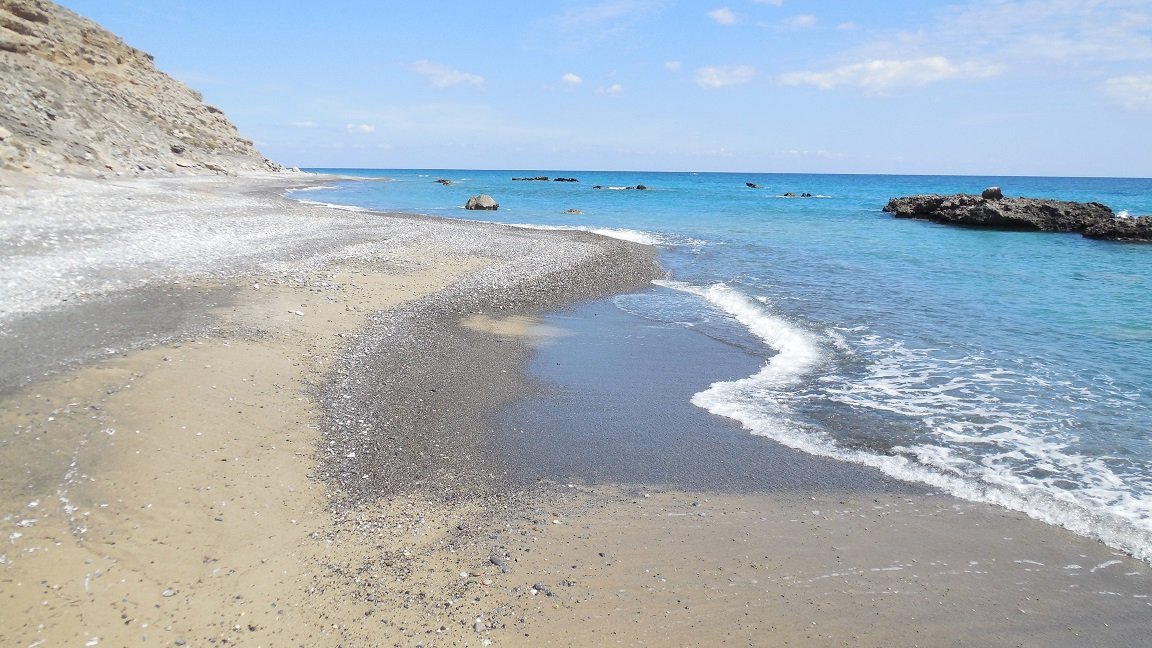
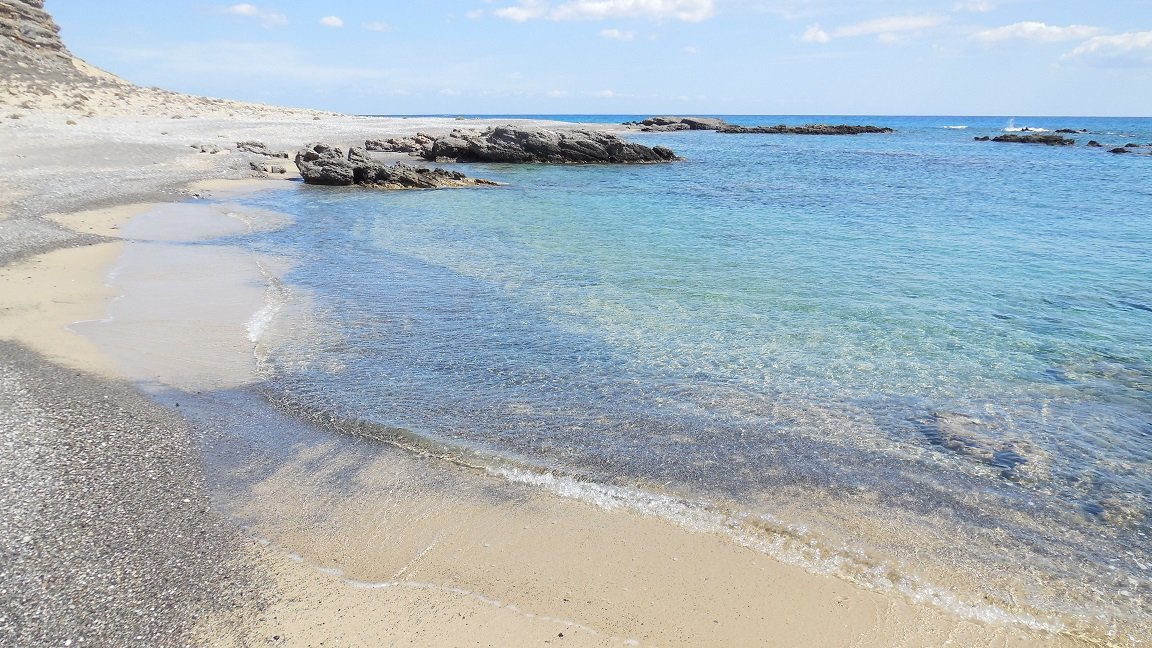
Koufonissi is an island which is covered in a thick layer of sand, just like any Chrissi island a bit further away. There are 36 beaches and there is a small church). The vegetation consists of low shrubs and there are almost no trees. The island is uninhabited and dry and there are no springs. The beaches are surprisingly clean. Around Koufonissi there are still four smaller islands such as Strogylli and Trachilos. Three of them are very small. Trachilos is the largest of the four, and here you find the sea cave that is stopped by with the boat.



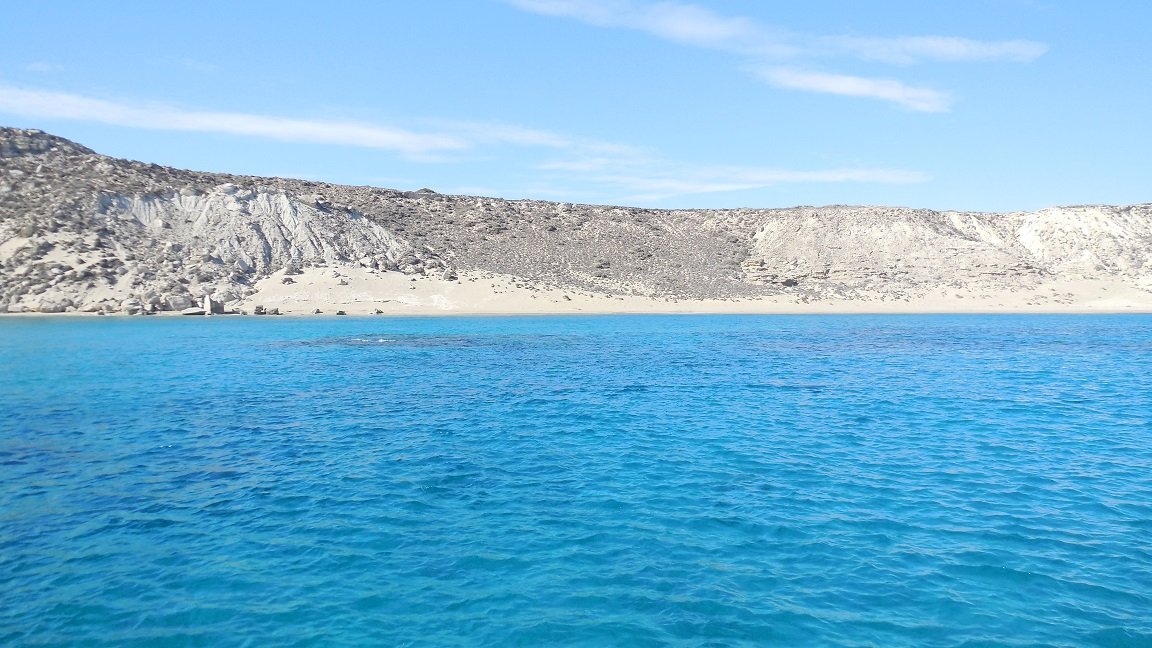

Previously the island was called Lefki, meaning "white", due to the white sand and the predominantly white cliffs of sandstone that dominate the landscape of Koufonissi. It was an important port and a place where people dived fore sponges and shells. From these shells a valuable purple dye was extracted. It is likely that the island also played an important role in the Minoan economy. The City states of Itanos and Ierapytna (the old Ierapetra) continually fought for the ownership of the island. This can be seen on plaques that have been excavated in Minoan Kato Zakros and in Asia Minor. One of these plaques is immured in the wall of the monastery church of Toplou. In 132 BC the island came into the hands of Itanos.




Excavations on the island have exposed buildings dating from the Minoan, Hellenistic and Roman times, but there are also caves that were used as a church during the Byzantine times and later during the Turkish domination by Christians. Because so many buildings have been uncovered from ancient times the island is also called "small Delos" (after the island of Delos near Mykonos in the Cyclades). The main building that has been found is a theatre that could house up to 1000 people. Also a temple, pieces of marble from a colossal statue, a villa with eight rooms and several cottages, probably where the fishermen lived, have been found. Pottery, coins, needles and fishing equipment have been dug up. There are also the remains of a lighthouse that was bombed by the Germans in the Second World War.