
Andros Sights: Paleopolis, the Chora Museums, Panachrantos & the Springs
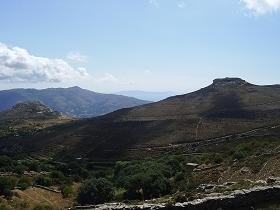
The sights of Andros gather around ancient Paleopolis on the west coast and the neoclassical Chora with its three museums. Beyond them the island keeps the Geometric site of Zagora, the mountain Monastery of Panachrantos, the Hellenistic Agios Petros Tower above Gavrio, and the springs and waterfalls that keep the interior green, from Menites to the Sariza spring at Apoikia. Waymarked footpaths, the Andros Route, tie the sights together. Hire a car to explore Andros at your own pace, covered in our Andros car hire guide.
- Ancient capital
- Paleopolis
- Museums
- Andros Chora
- Mountain monastery
- Panachrantos
- Springs
- Menites & Apoikia









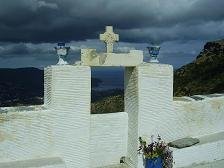
Paleopolis and its museum
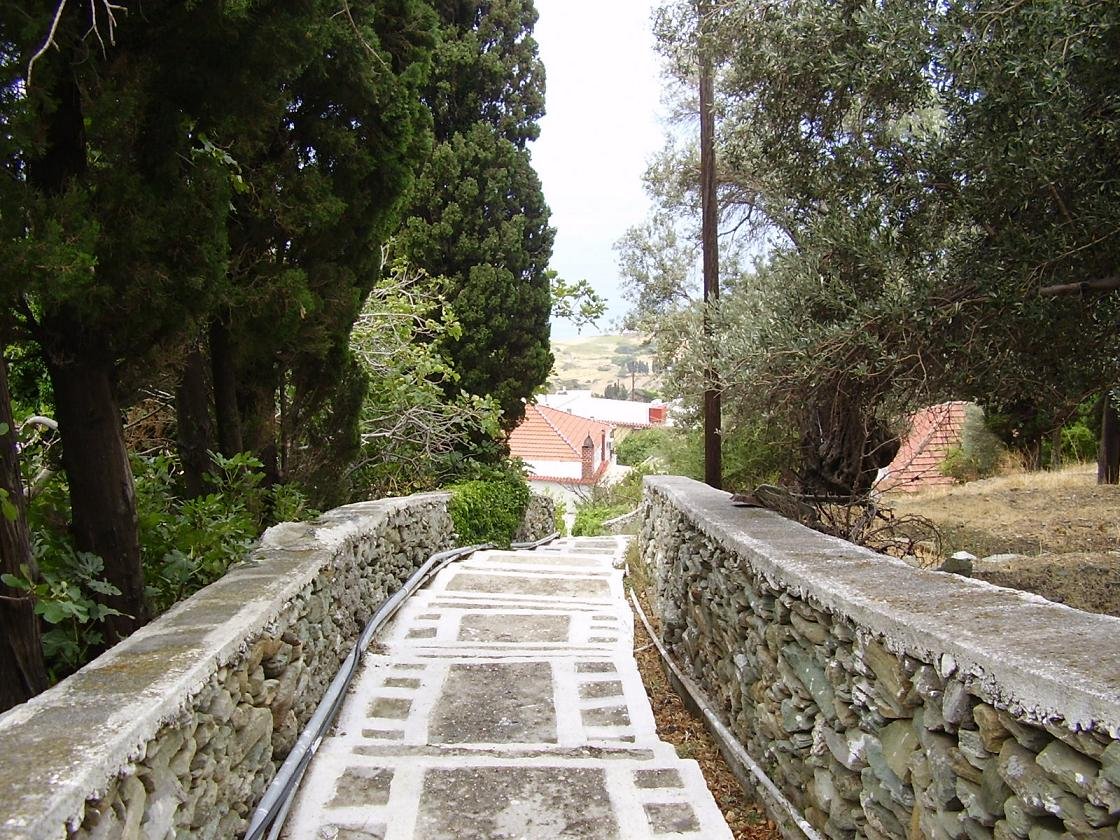
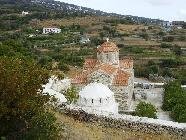
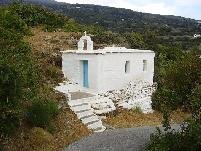
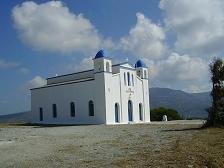
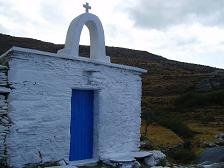
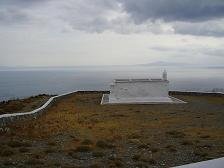
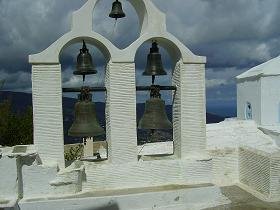
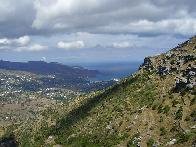
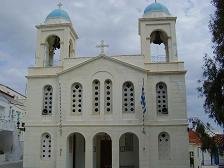
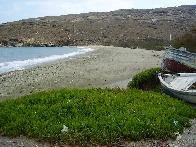
Paleopolis, a few kilometres south of Batsi on the west coast, was the capital of Andros for twelve centuries. Over a thousand steps lead down past a blue-domed church to the beach and the ancient harbour, where a sunken pier and other remains still lie in the shallows. Since 2013 an Archaeological Museum at the site displays finds from the ancient town. It is the island's principal archaeological sight, set on a steep, green slope above the sea.
Zagora
Zagora is an ancient settlement on a rocky headland on the west coast of Andros, south of Paleopolis. It is one of the more important sites of the Geometric period in the Aegean, a fortified early-Iron-Age town on a naturally defended promontory reached on foot. The site is unorganised and remote, so it draws visitors interested in the island's deep history rather than casual sightseers.
The museums of the Chora
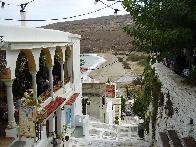
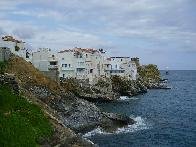
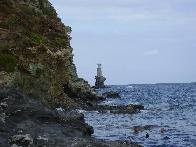
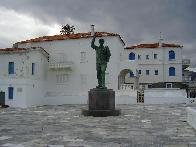

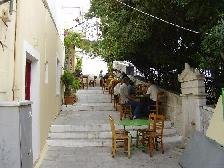

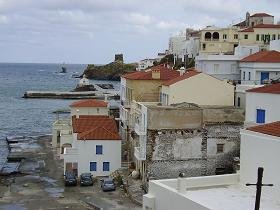
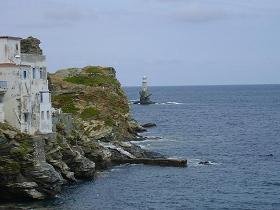
Andros Chora holds three museums. The Museum of Modern Art shows changing exhibitions of contemporary art, the Archaeological Museum displays finds from the island's excavations, and the Nautical Museum tells the story of Andros and its naval history. The Nautical Museum stands on the square with the statue of the Unknown Sailor: in the early 20th century Andros was an important maritime centre, and about 25% of the Greek commercial fleet was based on the island. The museums sit within the marble-paved old town, closed to cars.
Monastery of Panachrantos
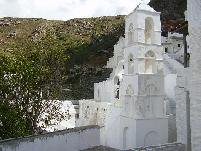
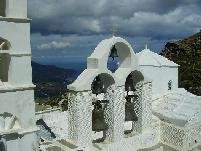
The Monastery of Panachrantos was built in the 10th century by the Byzantine emperor Nikiforos Fokas and stands at 750 metres in the south of Andros, with exceptional views over the island and the sea. It keeps strong defensive walls, 18th-century wall paintings and the relic skull of the martyr Agios Panteleimon. The climb to it is steep, and it is one of the island's most striking sights.
Agios Petros Tower
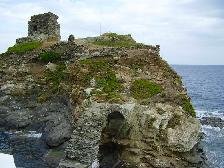
The Agios Petros Tower stands above the port of Gavrio, a cylindrical Hellenistic ruin about 20 metres tall on a base 9.4 metres across, dated to roughly the 4th or 3rd century BC. It is the best-preserved ancient monument on Andros, and it rewards the short walk up from the coast road with a wide view.
Church of Taxiarchis Melidas
In the cemetery of the village of Pitrofos stands the 11th-century Byzantine church of the Taxiarchis Melidas, which keeps 12th-century frescoes. It is one of the small medieval churches scattered through the green interior of Andros, worth a stop for travellers touring the island's old villages.
Menites springs and waterfalls
Menites is a green village in the hills above Andros Chora, known for its springs and small waterfalls that feed a row of stone fountains and water the surrounding gardens. Plane trees shade the running water, and it is a cool, shady stop in the interior, a reminder of why Andros is the greenest of the Cyclades.
Apoikia and the Sariza spring
Apoikia is a village in the hills above the Chora, home to the mineral-water spring of Sariza, whose water has long been valued and bottled on the island. The village and its spring make an easy excursion from Andros Town, part of the same well-watered belt of the interior as Menites.
Hiking the Andros Route
Andros is one of the best Greek islands for walking, crossed by a network of waymarked footpaths known as the Andros Route. The paths link the valleys, springs, old stone bridges and mountain villages of the interior, connecting places such as the Chora, Menites, Apoikia and the ancient sites. Spring and autumn suit the walks best, when the island is green and the temperatures are mild.