Sights of Gavdos
The main sight of Gavdos is Tripiti, the southern cape that marks the southernmost point of Europe, with three sea-carved arches and a giant wooden chair on the rock. Beyond Tripiti, the island keeps a lighthouse at Faros with a view to the islet of Gavdopoula, a small museum at Vatsiana, caves behind Agios Ioannis beach, and cedar-covered dunes that carry a long history from myth to piracy.
- Southern tip
- Tripiti
- Lighthouse
- Faros
- Museum
- Vatsiana
- Islet
- Gavdopoula



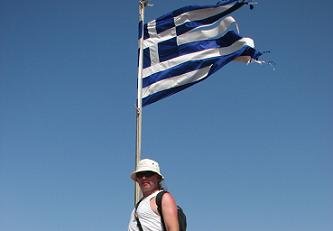
Tripiti and the southern cape
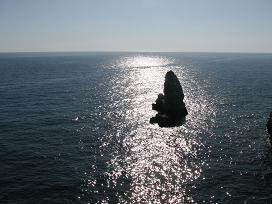
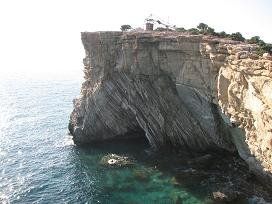
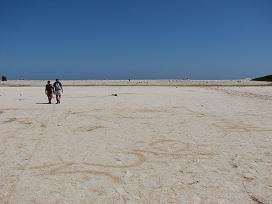
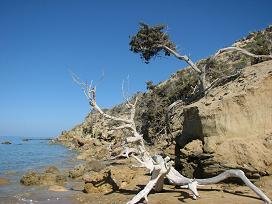
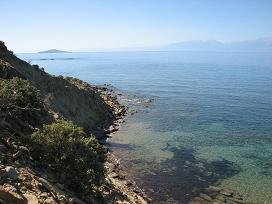


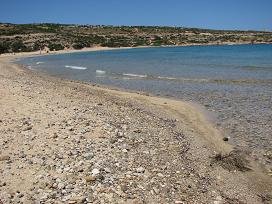
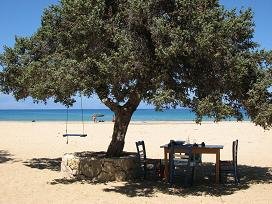

Tripiti is the southern cape of Gavdos and the southernmost point of Europe, so it is the island’s headline sight. Tripiti takes its name from the Greek “tripa”, meaning hole, after the three arches that the sea has carved through the rock as it runs out into the water.
A giant wooden chair stands on the rock at Tripiti, and climbing up to sit on it is the traditional way to mark reaching the edge of the continent. A signed footpath of about 3 kilometres, roughly an hour, leads here from Korfos past a small salt lake near the cape.
Faros lighthouse





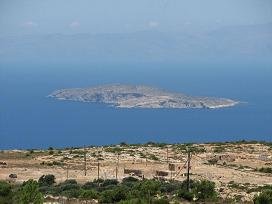
Faros is the lighthouse settlement on the east side of Gavdos, and its restored lighthouse is one of the oldest in the Mediterranean. Faros looks out across the water to the small uninhabited islet of Gavdopoula, and its sunsets draw walkers at the end of the day.
The lighthouse was rebuilt after wartime damage and now houses a small display about its history. The track to Faros crosses the cedar dunes of the interior, so it doubles as one of the island’s best walks.
Vatsiana and its museum
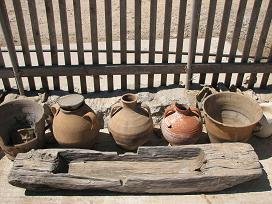
Vatsiana is the southernmost village of Gavdos and the nearest settlement to Tripiti. Vatsiana keeps a small folklore museum that gathers tools, photographs and everyday objects from the island’s isolated past.
The village is tiny and often quiet, with a handful of stone houses among the terraces. It makes a natural last stop before the walk out to the southern cape.
The caves of Agios Ioannis
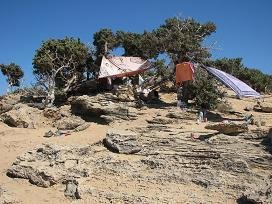
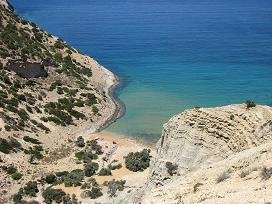
Agios Ioannis beach in the north of Gavdos is home to several impressively large caves in the cliffs behind the sand. The caves have sheltered shepherds, campers and long-stay visitors over the years, and they are easy to reach on foot from the beach.
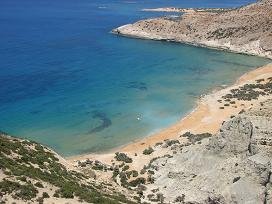
The beach itself was voted the second most beautiful in the world by the Travel Channel in 2007, so the caves come with a memorable setting. Bring a torch and firm shoes to explore them safely.
The nature of Gavdos
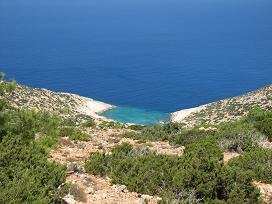
Gavdos is mostly covered with cedar and pine, sand dunes and low shrub, which gives the island an unexpectedly green, wild character. The coast breaks into steep rock, and goats, sea birds and wildflowers make up most of the wildlife you will meet.
The climate is hot and dry with little rainfall, so streams run only in winter and the island collects rainwater to drink. This scarcity is exactly what has kept Gavdos undeveloped and quiet.
The history of Gavdos
Gavdos has been inhabited since about 3000 BC, and Greek myth names it Ogygia, the island of the nymph Calypso in Homer’s Odyssey. The island’s population once passed 8,000 in the early Byzantine period, when Gavdos even had its own archbishop.
The Venetians later abandoned the island and pirates turned it into a stronghold, where Barbarossa sheltered in 1539, leaving Roman and Byzantine traces in the north and north-west. How to reach these places and where they sit is shown in the Gavdos island guide.