Kea Sights: The Lion of Kea, Ioulida, Karthea & Agia Irini
The famous sight of Kea is the Lion of Kea, a granite lion 6 metres long carved in the 6th century BC on a hill above Ioulida. The capital itself is a sight, a car-free hill town with a Venetian castle, old windmills and an Archaeological Museum. Beyond it, the island keeps the ancient city of Karthea, the Minoan settlement of Agia Irini and the monastery of Kastriani. This guide covers the sights one by one. Hire a car to explore Kea at your own pace, covered in our Kea car hire guide.
- Landmark
- Lion of Kea
- Carved
- 6th century BC
- Old capital
- Ioulida
- Ancient city
- Karthea

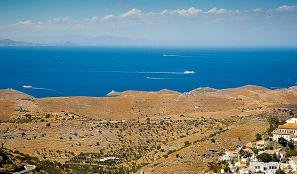



The Lion of Kea
The Lion of Kea is a large statue of a lion carved from granite in the 6th century BC. It lies on a hill among olive trees just outside Ioulida and measures 6 metres long. This is the island's main attraction and probably the most photographed object on Kea. Springs of good drinking water rise around the lion and the town, which is likely why the ancient city, and later the Chora, grew up in this spot.
Ioulida and its castle
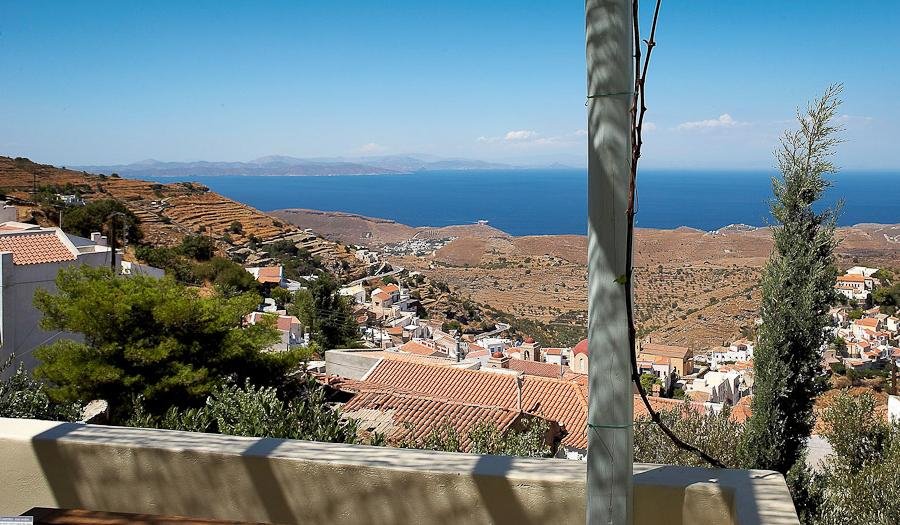
Ioulida, also called Ioulis or the Chora, is the capital of Kea, a car-free hill town of small old houses and narrow lanes. You enter through a gate, because the town was once walled, so it looks like a fortress, and cars stay on the edge because the streets are too narrow to drive through. Many lanes climb in small stairs across the hillside. Above the town stand old windmills; this hill was once called the mountain of the mills and carried 26 of them, of which a handful survive. A Venetian castle rises here too, built from the stones of a temple of Apollo, with pieces of the old defences and the remains of an ancient acropolis still in place.
The Archaeological Museum
The Archaeological Museum of Kea stands in Ioulida and displays the finds of the island. Because new houses may not be built in the town and old ones may only be restored, the Chora around the museum stays largely unspoiled. Squares with restaurants and cafes sit among the lanes nearby.
Karthea
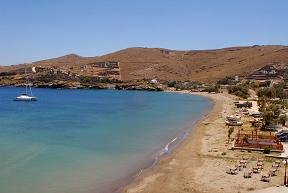
Karthea is one of several ancient cities on Kea, on the edge of a cliff in the south-east of the island. It keeps the remains of an Ionian town with temples of Apollo and Athena, stretches of city wall and a theatre. Karthea is reached only with your own transport, or on foot from the beaches of Mikres and Megales Poles, which lie below it. Remnants from antiquity still lie in the sea in front of the beach, and a road leads up from Megales Poles towards Ioulida.
Agia Irini
Agia Irini is a Bronze-Age settlement just north of Vourkari, in the Bay of Agios Nikolaos. The excavation uncovered the foundations of thick city walls, the remains of houses complete with cellars and water drainage, and streets with benches. A small white church with a red roof, the Agia Irini, stands on the site and gave it its name. The town shows that Kea was once an important island and one of the places where Greek civilisation began.
Kastriani monastery
The monastery of Kastriani stands in the north-east of Kea, above the coast a few kilometres from the beach of Otzias. Several small churches dot the surrounding area, and the paths around Otzias make good walks that pass them.
Agia Marina tower
A Hellenistic tower stands at Agia Marina, on a side road off the route between Korissia and Pisses on the west side of the island. It is one of the older monuments on Kea and sits away from the main road, so it is best reached with your own transport.
The watermills of Flea
The route from Ioulida to the village of Flea runs through a ravine that holds 13 old watermills. It makes a scenic walk for hikers and is one of the many numbered trails that lace the green interior of Kea, linking villages, chapels and ancient sites across the island.