Limnos Sights: Myrina Castle, Poliochni, Hephaisteia & the Gomati Dunes
The main sights of Limnos are its ancient sites, its castles and its volcanic landscape, led by the Kastro above Myrina and the ancient town of Poliochni. Poliochni is one of the oldest towns in Europe, Hephaisteia was the ancient capital, and the Kabeirio sanctuary lies close by. The island also keeps the Byzantine castle and Maroula monument at Kotsinas, two bird lakes, a petrified forest and the huge Gomati sand dunes. This guide covers the marquee sights one by one. Hire a car to explore Limnos at your own pace, covered in our Limnos car hire guide.

- Oldest town
- Poliochni
- Ancient capital
- Hephaisteia
- Castle
- Myrina Kastro
- Sand dunes
- Gomati

The Kastro of Myrina
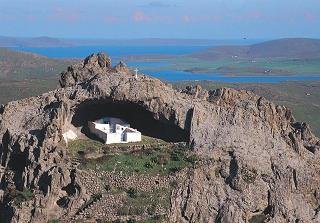
The Kastro of Myrina is a medieval castle built on the site of an ancient acropolis, on a rock between the two bays of the capital. The Kastro is one of the largest castles in the area: the Byzantine emperor Andronikos I began it in 1186, the Venetians who ruled the island between 1207 and 1269 completed it, and it was strengthened again when Byzantine rule returned. Much of its walls and gates was restored after the Russians damaged them during their siege of 1770. Deer now roam free inside the walled grounds, and on a clear day the climb rewards you with a view as far as the holy mountain of Athos, 2,033 metres high on the Chalkidiki peninsula. The old town below is covered in the Limnos island guide.
Poliochni
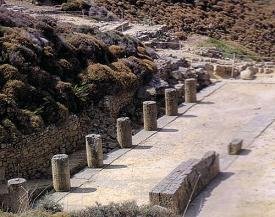
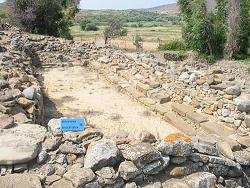
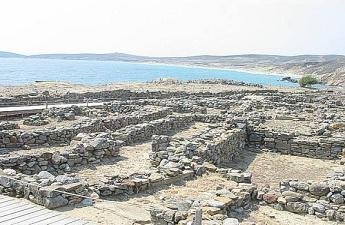
Poliochni is the most important archaeological site on Limnos and one of the oldest towns in Europe, in the south-east of the island 9 km east of Moudros. Poliochni dates from about 4000 BC and grew as a town of merchants rather than kings, trading with Crete, the Cyclades and the cities of the Asia Minor coast, among them Troy. The remains include walls, towers, houses and other buildings, and an earthquake around 1300 BC ended the town's prosperity. The site is open to the public for an entrance fee, from 9.00 to 15.30 and closed on Mondays, though opening times can change.
Hephaisteia (Ifestia)
Hephaisteia, also written Ifestia, is an ancient city in the north-east of Limnos, 9 km north-east of Moudros, that holds the remains of a temple to the god Hephaistos. Hephaisteia was the capital of the island between 1200 and 1000 BC, and in myth it marks the spot where Hephaistos landed after Hera threw him from Mount Olympus. The Persians destroyed the city in 511 BC and the Athenians later rebuilt it, so its remains of houses, a cemetery, a theatre and the temple lie spread across the hills, sometimes hard to read. It pairs naturally with a swim at the nearby beach of Neftina.
The Kabeirio sanctuary
The Kabeirio is an ancient sanctuary a little north-east of Hephaisteia, dedicated to the Kabeiroi, the children of Hephaistos and the nymph Kaviro. The Kabeirio honoured gods linked to the fertility of the earth and the protection of sailors, in a mystery cult like the one on Samothrace. Only part of its columns and a temple building have been excavated, so it is a quieter, less-visited site than Poliochni. The beach of Neftina lies close by, which makes the two easy to combine.
Kotsinas & Maroula
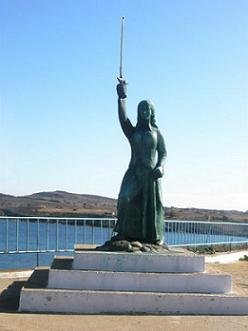
Kotsinas is a coastal village in the north of Limnos that keeps the Byzantine castle of Kotsinas and a monument to the heroine Maroula. The castle of Kotsinas was repaired in 1361 by the Gattilusi family, who ruled Lemnos until the Turkish conquest. Above the sea by the church stands a bronze statue of a woman raising a sword: in 1478 Maroula saw her father killed defending the fort against the Ottoman Turks, took up his sword and charged the enemy, and her courage helped drive the attackers back to their ships. The freedom was brief, the Turks returned the next year, and the island stayed under Ottoman rule until it joined Greece in 1912.
The lakes and flamingos
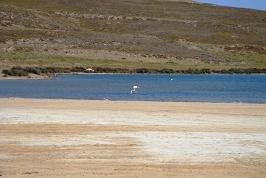
Limnos keeps two lakes in its flat east, Aliki and Chortarolimni, that form a small nature reserve for birds. Aliki is a salt lake from which salt was long extracted, while Chortarolimni now dries out completely each summer and turns white. In the winter months the wetland gives refuge to flamingos and other migrating birds, and in summer the dry lakebed makes a striking pale landscape. The beach of Aliki lies just east of the salt lake, so a swim and a spell of birdwatching combine easily.
The Petrified Forest
Limnos keeps its own Petrified Forest, like the larger one on neighbouring Lesbos, scattered across the centre of the island. The Petrified Forest survives as stone remnants around the villages of Varos, Rossopouli, Moudros, Thanos and Kontias. Between 23 and 18 million years ago a dense forest of palms, pines and giant redwoods covered the surface of Limnos and was buried under volcanic lava, which turned the wood to stone. The fossil trunks are a reminder of the island's volcanic past.
The Gomati sand dunes
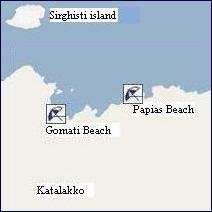
The Gomati sand dunes, known in Greek as the Ammothines, are the largest dunes in Greece, in the central north of Limnos near the village of Katalakko. The Gomati dunes stretch behind a quiet cove beach, and locals call them the only desert in Europe. The site is reached only over a dirt track from Katalakko, on foot or by four-wheel drive, so it stays empty and wild. The full description of the beach below the dunes is in the Limnos beaches guide.