Driving in Greece
Greece drives on the right, and driving here is straightforward once you know the rules. Roads range from smooth motorways between the big mainland cities to narrow, steep lanes on the islands. This guide covers the side of the road, the rules and signs, tolls, fuel and parking, so you can pick up a hire car and set off with confidence.
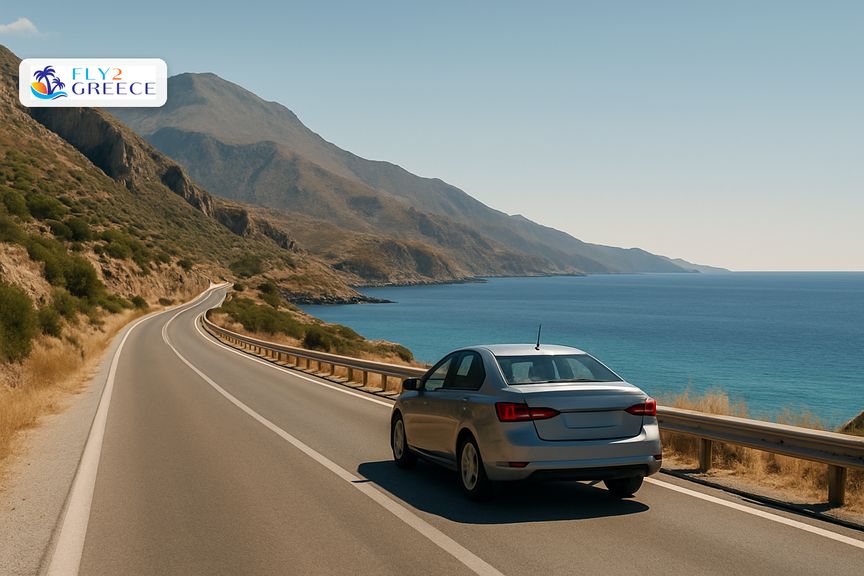
- Drive on the
- Right
- Speed, motorway
- 130 km/h
- Speed, town
- 50 km/h
- Alcohol limit
- 0.05%
Which side of the road does Greece drive on?
Greece drives on the right, so you overtake on the left and give way to the left at most junctions. Drivers from the UK, Ireland, Cyprus or Malta swap sides here, which feels odd for the first hour and then becomes natural. Take extra care pulling out of petrol stations and car parks, where it is easiest to drift onto the wrong side.
Rules and road signs
Greek traffic rules follow the standard European pattern, and the road signs use the same international symbols. Seat belts are compulsory in the front and rear, a handheld phone is banned, and children under 12 or shorter than 1.35 m need a child seat. Our driving rules and road signs guide lists the speed limits, priority rules and signs in detail.
Tolls and motorways
The main mainland motorways charge tolls at staffed booths, while the islands have none. You pay a few euros per section in cash or by card as you pass through, on routes such as the Athens to Thessaloniki motorway and the roads out of Athens, Patras and Corinth. The Greece toll roads guide shows which motorways charge and roughly what to budget.
Fuel and parking
Petrol and diesel are sold across the mainland and the larger islands, though stations thin out in the mountains, so fill up before a long inland drive. Parking in Athens and the bigger towns uses blue-line pay zones and white-line free bays, and island villages often ask you to park at the edge and walk in. The parking and fuel guide covers costs, fuel types and opening hours.
Driving on the islands
Island driving is slower and more scenic than the mainland, on roads that twist through hills to reach beaches and villages. A smaller car is the easier choice for narrow lanes, tight village streets and steep gradients. Fuel up when you can, watch for scooters and the occasional goat, and allow more time than the distance suggests.