Greece Toll Roads and Motorways
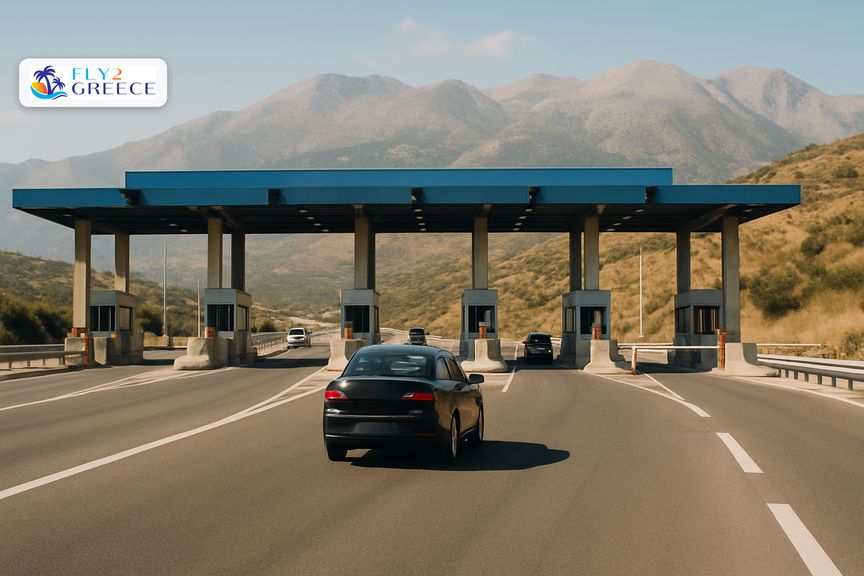
Greece charges tolls on its main mainland motorways, and you pay at staffed booths as you pass through each section. A typical section costs a few euros, paid in cash or by card, and there is no separate vignette to buy. The islands have no toll roads at all, so this only matters for mainland touring.
- Where
- Mainland motorways
- Typical section
- EUR 1.50 to 3.50
- Pay with
- Cash or card
- Islands
- No tolls
Which roads charge tolls
Tolls apply on the national motorways that link the big mainland cities, not on ordinary roads or the islands. The busiest tolled routes are the Athens to Thessaloniki motorway, the Athens to Patras and Corinth roads, and the Egnatia Odos across the north. You pass several booths on a long drive, paying for each section as you reach it.
How much do Greek tolls cost?
Each toll section for a normal car costs roughly EUR 1.50 to 3.50, so a long cross-country drive adds up to a handful of sections. Athens to Thessaloniki, for example, passes through several booths over its length. Rates are set per section and posted at each booth, and motorbikes pay less than cars.
How to pay Greek tolls
You pay at the booth in cash or by contactless card as you drive through, with no need to buy anything in advance. Use the lanes marked for cash or cards rather than the electronic-only lanes, which are reserved for pre-paid transponders. Keep a few euro coins handy in case a card reader is out of service.
Why the Greek islands have no tolls
The islands have no motorways and therefore no tolls, so driving on Crete, Rhodes, Corfu or any other island is toll-free. Island costs come from fuel and the hire itself rather than road charges. Tolls only enter the budget if you tour the mainland by car.