Parking and Fuel in Greece
Parking in Greece uses blue lines for paid bays and white lines for free ones, and island villages often ask you to park at the edge and walk in. Fuel is sold across the mainland and larger islands, with petrol and diesel priced a little above the EU average. This guide covers the parking rules, fuel types and costs, and station hours.
- Blue lines
- Paid parking
- White lines
- Free parking
- Fuel
- Unleaded 95/98, diesel
- Islands
- Fill up early
Parking rules in Greece
Blue-line bays are paid parking and white-line bays are free, while yellow lines mean no parking at all. In towns you buy a ticket from a machine or a kiosk and display it on the dashboard. Island villages usually keep cars out of the centre, so park at the edge and walk in on foot.
Parking in Athens
Parking in central Athens is tight and controlled, so most drivers use a paid car park or park away from the centre and take the metro in. Controlled on-street zones are for residents and short paid stays, and illegally parked cars are ticketed or towed. If you hire a car for day trips from Athens, keep it in a car park until you leave the city.
Fuel types and prices in Greece
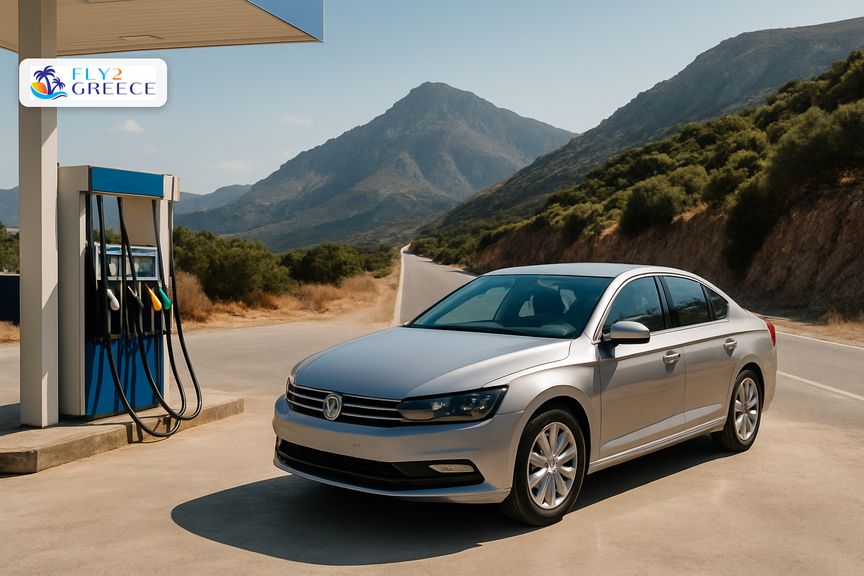
Greek stations sell unleaded 95 and 98 petrol and diesel, labelled in both Greek and Latin script, and most hire cars take unleaded 95. Prices sit a little above the EU average and rise on the smaller and more remote islands, where fuel is shipped in. Attendants usually fill the tank for you, and a small tip is welcome but not expected.
Station opening hours
Town and motorway stations often open long hours, but rural and island stations can close in the evening and on Sundays. A few motorway stations stay open around the clock, yet you cannot rely on that off the main routes. Fill up before a long inland or late drive rather than hoping to find an open station.