Corfu Sights: Palaces, Fortresses, Monasteries and Villages
Corfu's sights spread across the island, from the Achilleion palace and the fortresses of Angelokastro, Gardiki and Kassiopi to the monasteries of Paleokastritsa and Mirtiotissa, Mount Pantokrator, Mouse Island and the museums of Corfu Town. Corfu keeps ancient temples, Venetian and Byzantine castles, hilltop monasteries and deserted stone villages, most of them a short drive from the coast. The main town and its museums have their own guide in the Corfu Town page. Hire a car to explore Corfu at your own pace, covered in our Corfu car hire guide.
- Palace
- Achilleion
- Highest fort
- Angelokastro (305 m)
- Mountain
- Pantokrator
- Famous islet
- Mouse Island
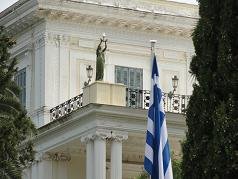
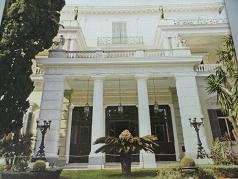
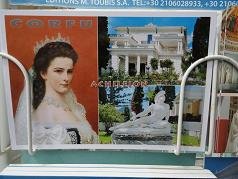
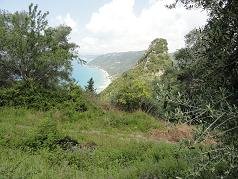
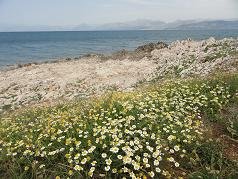
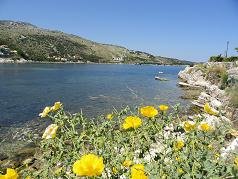
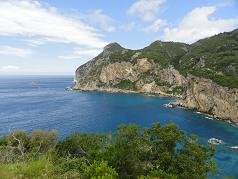
The Achilleion palace
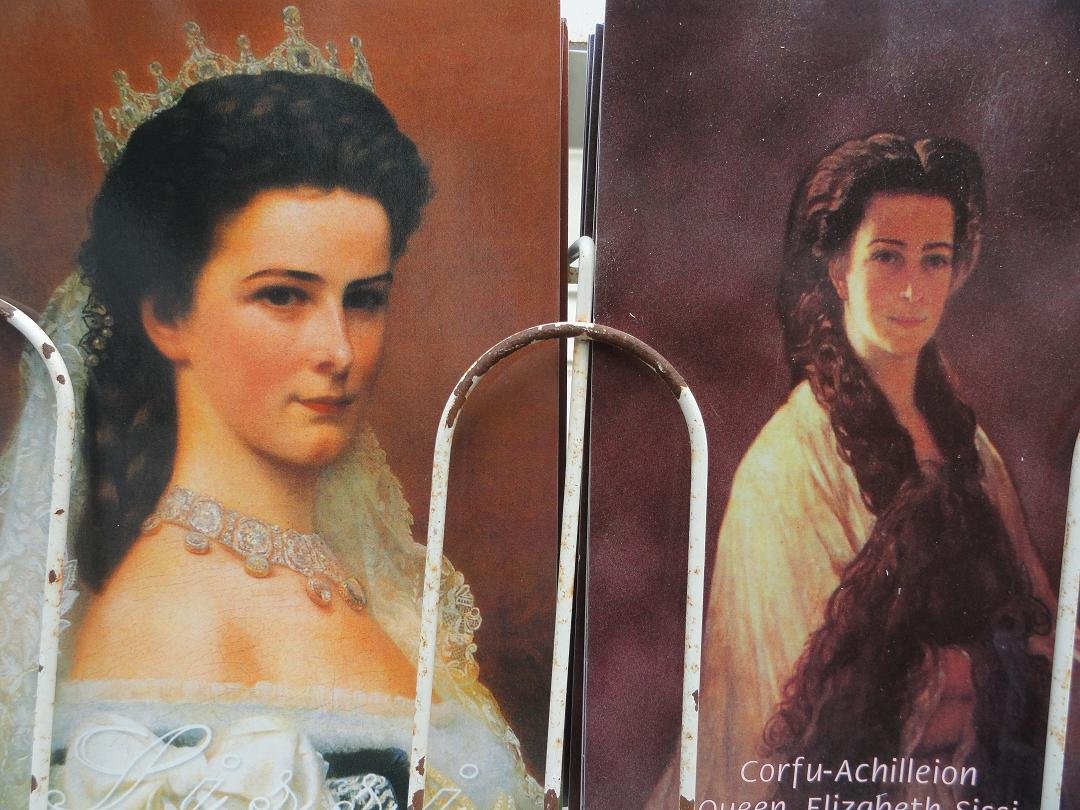
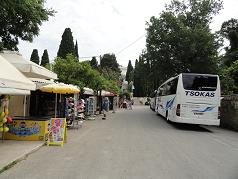
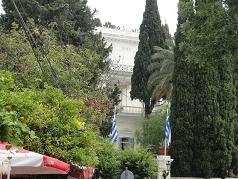
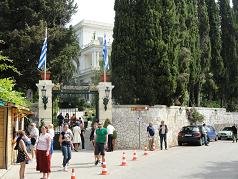
The Achilleion is the summer palace built for the Austrian empress Elisabeth between 1889 and 1892, after she came to Corfu for her health and grew fascinated by Greek mythology. The Italian architect Rafaele Carito designed the neo-classical building, and Elisabeth named it after her favourite hero, Achilles. After her death the palace passed to her daughter Gisela and then to the German emperor Wilhelm II, and after the First World War it became part of the Greek state; today it is a museum, with an entrance fee of 7 euros in 2012. Wilhelm II left two more marks on the south of the island: the Kaiser's Bridge near Perama, built so he could reach the beach without crossing the road and later half-demolished by the Wehrmacht in the Second World War, and the Kaiser's Throne, a viewpoint at 270 metres above the village of Pelekas with a 360-degree panorama over Corfu.
Castles and fortresses
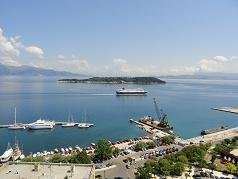
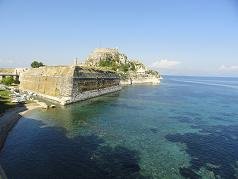
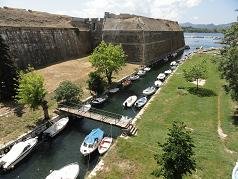
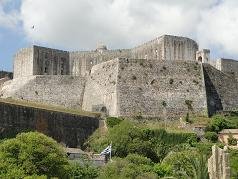
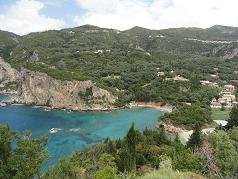
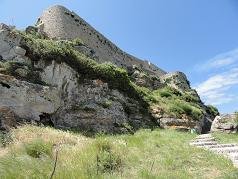
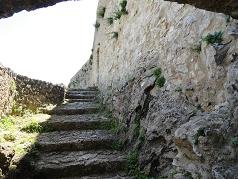
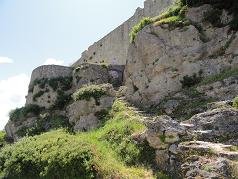
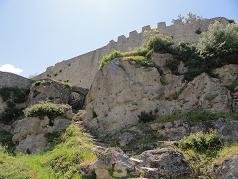
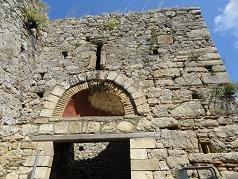
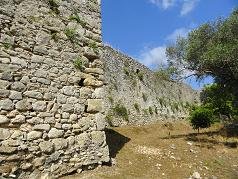
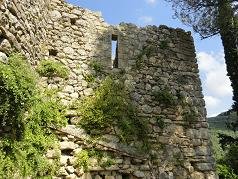
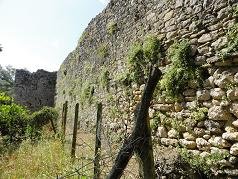
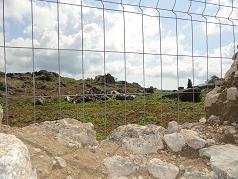
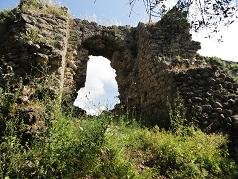
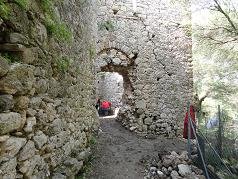
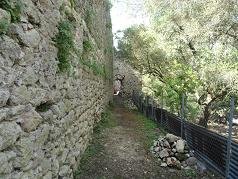
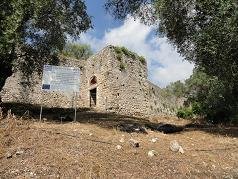
Corfu keeps several Byzantine and Venetian fortresses, built to hold off pirates and the Turks. The Byzantine Angelokastro, or "Fortress of the Angels", stands at 305 metres on a steep cliff near Paleokastritsa, named after Michael Angelos Komnenos who annexed Corfu in 1214; it passed to the Venetians in 1386 and held out against a Turkish attack in 1571, so Corfu never fell into Turkish hands. Entry is free and the fort opens 08:30 to 15:00, closed on Mondays. The 13th-century Gardiki castle in the south, near Agios Matthaeos, is a well-preserved octagonal Byzantine fort with thick outer walls, where finds show Corfu was inhabited 40,000 years ago. The castle of Kassiopi, built by a Byzantine emperor around 1140-1145 against pirate raids, has walls about a kilometre round; the Venetians partly demolished it, restoration began in 2007, and a 20-minute walk inside gives views over Kassiopi and the Albanian coast 2 kilometres away.
Monasteries and churches
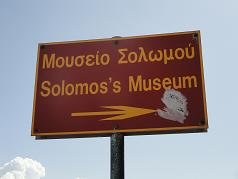
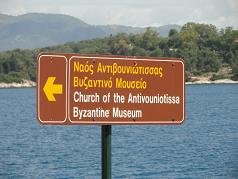
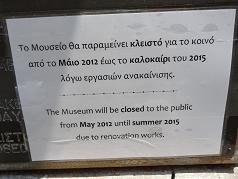
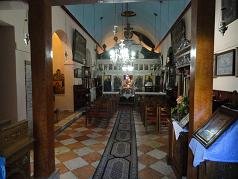
Corfu's monasteries and old churches sit on hills and headlands across the island. The Theotokos or Paleokastritsa Monastery crowns a hill just outside Paleokastritsa with fine views; originally Byzantine and dating from 1228, its present buildings are 18th-century, with a wishing well and a small free museum of rare books, icons and church treasures. The Mirtiotissa monastery in the west, near the beach of the same name, began in the 14th century where a monk is said to have found an icon in a cave, and a path from it leads to the ghost village of Trialos. The Panagia Kassopitra church in Kassiopi stands on the site of a temple of Jupiter and once rivalled Corfu Town for importance. The Ipapanti church in Gouvia sits in the sea on a 60-metre causeway, built in 1713 by a Cretan family and restored in 1996.
Ancient temples and Roman remains
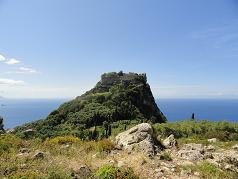
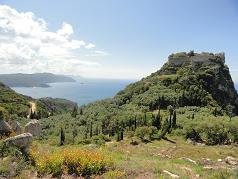
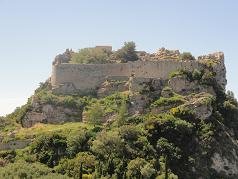
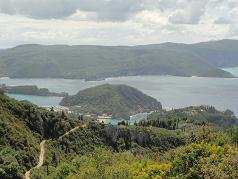
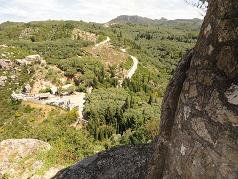
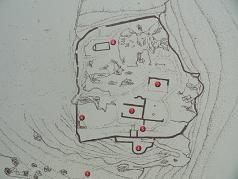
Corfu has only a few ancient sites, and much still lies buried. The temple at Analipsi, south of Corfu Town, is the best-preserved ancient building on the island, probably built in the 6th century BC and dedicated to Apollo; English soldiers found it by accident in 1822 while digging near a spring. In Roda stand the remains of a Doric temple from the 5th century BC, about 21.5 by 11.5 metres in sandstone near the beach, some pieces now in the Archaeological Museum. Along the main road in Acharavi lie Roman baths from the 3rd century AD, with their heating system and a water channel visible. Behind the harbour in Benitses a Roman villa and hot baths survive with mosaic floors, and in Gouvia the huge arches of an 18th-century Venetian shipyard stand by the beach, where the Venetians repaired their ships in the natural harbour.
Museums of Corfu Town
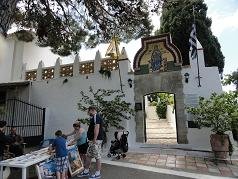
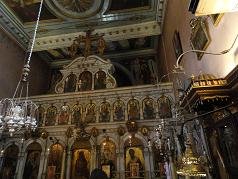
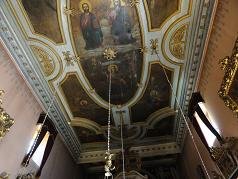
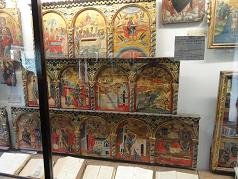
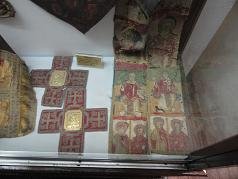
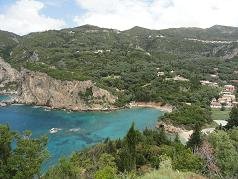
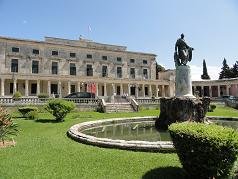
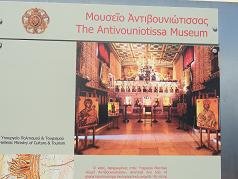
Corfu Town holds several museums worth an hour each. The Antivouniotissa or Byzantine Museum, in the 15th-century Panagia Antivouniotissa church, shows icons and wall paintings from the 15th to the 19th century, many of them brought from Crete. The Museum of Asian Art, in the Palace of St Michael and St George, gathers more than 10,000 objects from China, Japan, Tibet and Nepal, counted among the best collections of its kind and donated by the Corfu diplomat Gregorios Manos. The Banknote Museum, inside the Ionian Bank, displays the banknotes used in Greece and is free to enter. The Archaeological Museum keeps gravestones, statues and coins and, above all, the 17-metre Gorgon pediment of the Artemis Temple from 590-580 BC, the oldest stone pediment in Greece, plus a crouching stone lion from the 7th century BC found in 1843.
Historic villages
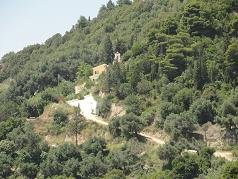
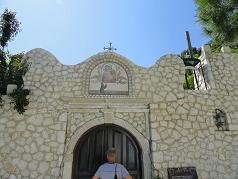
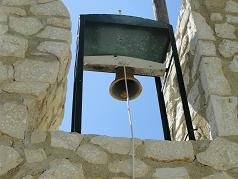
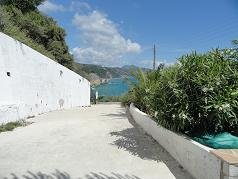
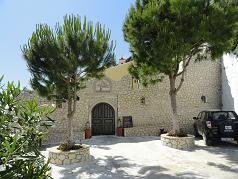
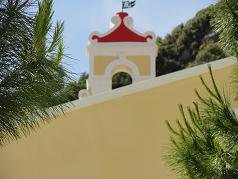
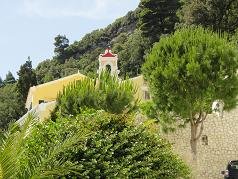
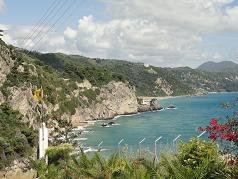
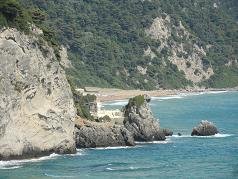
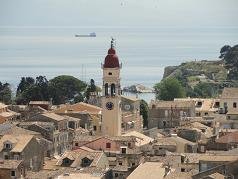
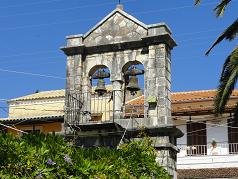
Corfu's old villages sit inland, built away from the coast in fear of pirate raids. Ano Perithia, on the slope of Mount Pantokrator in the northeast, dates from the 14th century and has about 130 houses, most now in ruins, with eight churches and a dozen tavernas around the square; it is a protected heritage site of outstanding natural beauty. Loutses, on the way there, keeps its Saint Athanasios church of 1907 and a cave of stalactites that fills with water in winter. Sinarades, one of the oldest mountain villages, stands in the west above Agios Gordis, with old houses, two fine churches and one of the highest bell towers on the island. Avliotes, near Agios Stefanos in the northwest, was built about 350 years ago and shows a real torpedo on its square and the yellow Saint Theodori church. Agios Markos, near Pyrgi, dates from the 11th century and was hit by an earthquake in the 1950s, keeping two churches with frescoes.
Mount Pantokrator and nature
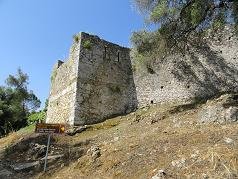
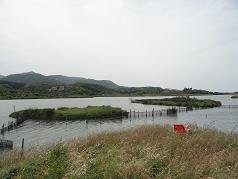
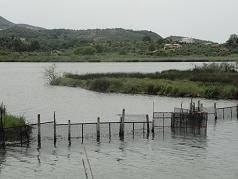
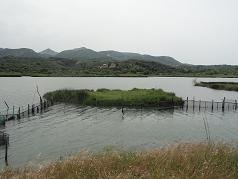
Mount Pantokrator is the greatest natural attraction on Corfu, giving a wide view over the bay toward Corfu Town, Albania and the smaller islands. Orchids and other flowers grow on its slopes, birds of prey such as falcons, hawks, eagles and vultures circle above, and an old monastery and a radio tower stand at the summit; you can climb it from the village of Pirgi or from a side road between Kassiopi and Acharavi, doing the last stretch on foot. Corfu stays green from its regular rainfall and shelters rare animals, including a small group of Mediterranean monk seals, the endangered caretta turtle and the jackal, a wild dog now seldom seen in Europe. The Antinioti lagoon in the north draws herons, nightingales and other birds and holds small marsh turtles, and the Loutses cave in the northeast has stalagmites and stalactites and fills with water in winter.
Mouse Island and the Canal d'Amour
Mouse Island, or Pondikonissi, lies in the bay south of Kanoni just below Corfu Town and is one of the most photographed places in all of Greece. It is often confused with the nearer islet of Vlacherna, linked to the mainland by a small dam and topped by a white monastery and a tall tree; from Vlacherna boats run in summer to Corfu Town and out to Pondikonissi, whose only building is a church hidden among the trees. The legend of Homer says Odysseus washed ashore here, and the trees on the islet vaguely resemble mice, which gives it its name. The Canal d'Amour at Sidari is a channel the sea has carved into the soft sandstone, wrapped in love legends: anyone who swims through it in the shade is said to stay forever happy in love.
Corfu Town
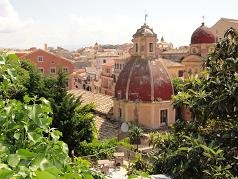
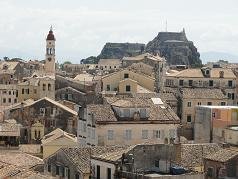
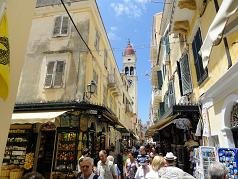
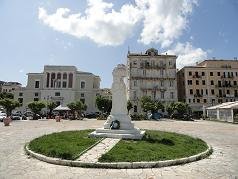
Corfu Town is the cultural highlight of the island, a town of about 35,000 people set between two Venetian fortresses, with the Palace of St Michael and St George, the Church of St Spiridon and the ancient site of Palaeopolis at Mon Repos. The old centre is car-free and packed with churches, museums and French-style arcades. Read the full guide on the Corfu Town page.