Corfu History, Greece: From the First Settlers to Venice and Modern Greece
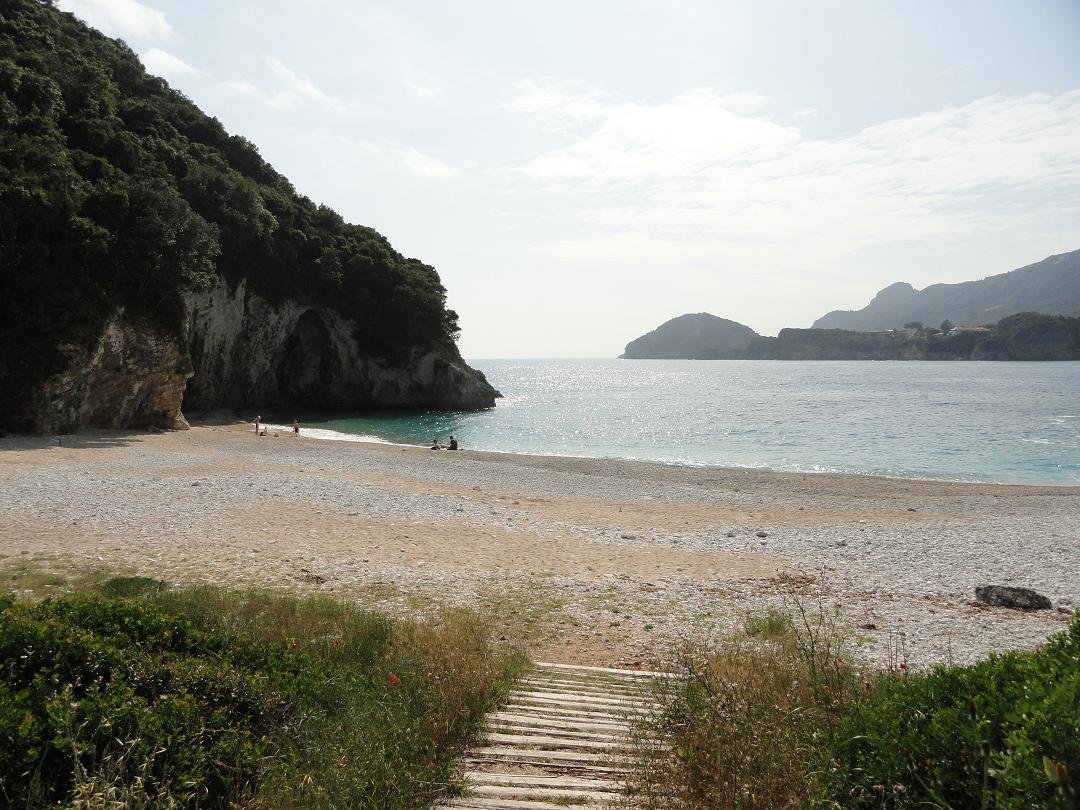
Corfu has been inhabited since about 40,000 BC, was colonised by the Corinthians from the 8th century BC, belonged to Venice from the 14th to the 18th century AD, and, unlike most of Greece, was never occupied by the Turks. Each ruler left its mark on the island, most visibly in the Venetian fortresses and the neoclassical Achilleion palace. You can see the surviving fortresses and the old town first-hand on the Corfu Town page. Hire a car to explore Corfu at your own pace, covered in our Corfu car hire guide.
- First humans
- ~40,000 BC
- Sidari settlement
- ~7000 BC
- Venetian rule
- 14th–18th c.
- Achilleion built
- 1890–1892
Prehistoric Corfu
People lived on Corfu from about 40,000 BC or earlier. Archaeological finds at the Gardiki castle, in the middle of the island, prove this early presence. At Sidari, on the north-west coast, a settlement has been uncovered that probably dates back to about 7000 BC. Several Bronze Age settlements, starting from about 2000 BC, have also been found on the island.
Ancient Corfu and the Corinthians
From the 8th century BC onward several peoples colonised Corfu, among them the Corinthians from the city of Corinth. These successive rulers left their mark on the island, above all on its architecture, which still shows the layers of its long history.
Venetian Corfu and the fortresses
Corfu belonged to the empire of Venice for more than four centuries, from the 14th to the 18th century AD. The Venetian influence on the island is therefore very strong. The Venetians made Corfu their most important arms centre and built many fortresses, and because of this the islanders could withstand the repeated attacks of the Turkish army in the 15th and the 18th century.
France, Britain and modern Greece
After Venetian rule, France and later Great Britain occupied Corfu for a while. The island then became part of modern Greece. Each of these rulers left traces on the architecture of Corfu, so the buildings of the island read almost as a record of who governed it.
The Achilleion palace
The Achilleion is one of the most important tourist attractions on Corfu. This neoclassical palace was built between 1890 and 1892 for Empress Elisabeth of Austria, known as Sisi. The empress gave the palace its name herself, in honour of the classical hero Achilles.
Why Corfu has no Turkish past
Corfu was never occupied by the Turks, which sets it apart from most of Greece. Two things still show this today. First, Corfu keeps large numbers of cypress trees, which were cut down elsewhere in Greece because the Turks believed the trees brought bad luck. Second, Corfu has no blue-and-white painted houses; in many other Greek places houses were painted in these national colours as a protest against the Turks, who did not allow the Greek flag.