Lesbos Sights: The Petrified Forest, Castles, Monasteries & Hot Springs
The rarest sight on Lesbos is a petrified forest of trees that turned to stone 20 million years ago. This guide covers the marquee sights of the island: the petrified forest and its museum in Sigri, the castles of Molyvos, Mytilene and Sigri, the Limonos Monastery, the Roman aqueduct at Moria, the ouzo museum of Plomari and the hot springs and birdwatching wetlands. Hire a car to explore Lesbos at your own pace, covered in our Lesbos car hire guide.
- Unique
- Petrified forest
- Tree age
- 20 million years
- Oldest monastery
- Limonos, 1523
- Hot springs
- Eftalou & Polichnitos
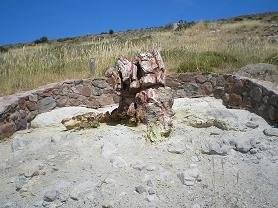
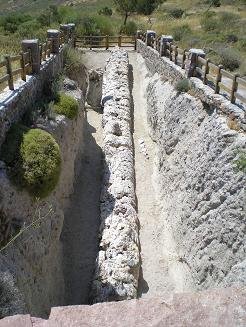
Petrified Forest
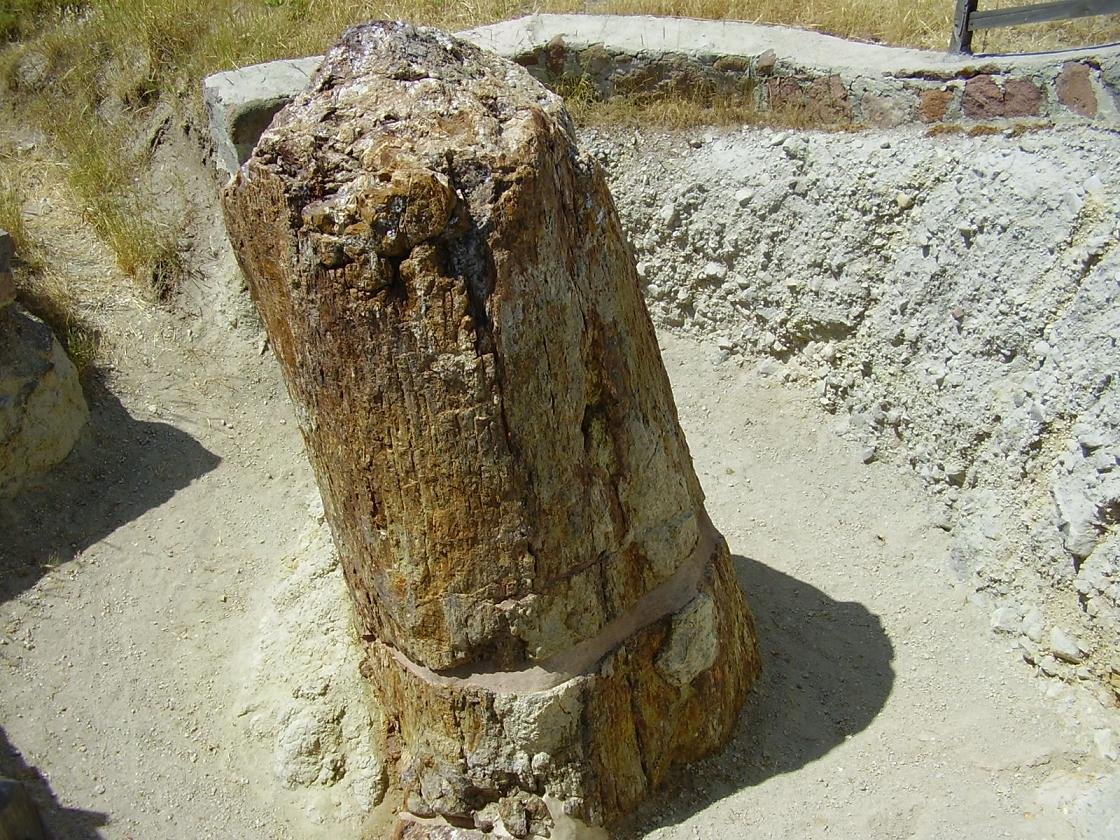
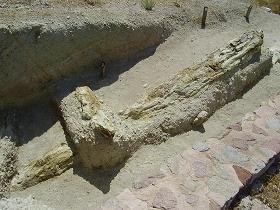
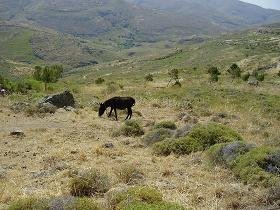
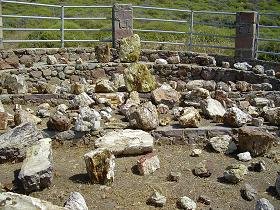
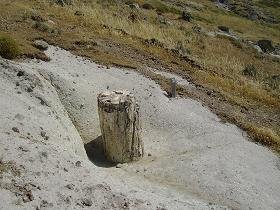
The petrified forest of Lesbos is a protected area of stone trees in the west of the island, at the end of a side road about 5 km long between the villages of Andissa and Sigri. The trees are 20 million years old and turned to stone after a volcanic eruption buried them in ash. Wide stairs lead down into a valley past fallen trunks and trees that still stand. On the island of Nisiopi in front of Sigri there are thousands more petrified trees. A taverna at the entrance has seats made from slices of trunk.
Sigri Natural History Museum
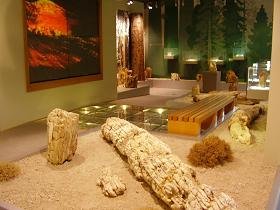
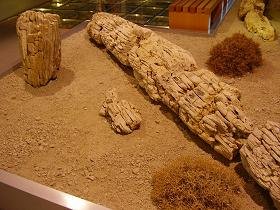
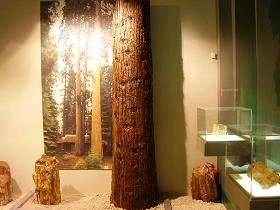
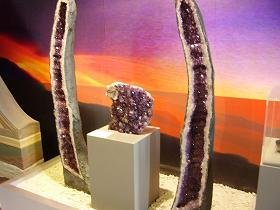
The natural history museum in Sigri explains the petrified forest and the volcanic processes that created it. It is small but fine, with slices of trunk, crystals, fossilised plants and trees, and an outdoor walking area of petrified wood. A snack bar serves drinks and food, and the garden holds more stone trunks. It makes the natural sense of the forest itself, which lies nearby, much clearer.
Molyvos Castle


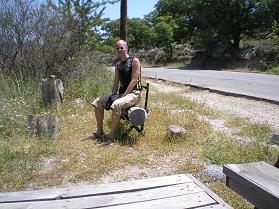

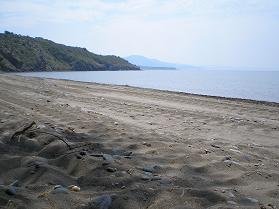
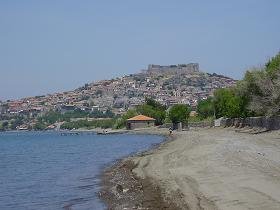


The castle of Molyvos crowns the hill above the town in the north of Lesbos. It began in the Byzantine period and was enlarged and strengthened by the Genoese Gattelusi family, who ruled the town from 1355 to 1462. Inside it feels like a labyrinth of walls and passages, and from the top there are wide views over the Bay of Petra, the north-east coast to Skala Sikamineas and across to Turkey. A small archaeological museum in the town hall shows finds including a 2,500-year-old statue of Aphrodite with Eros at her feet.
Mytilene Castle
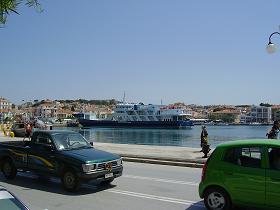
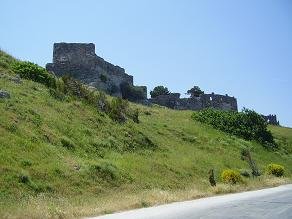
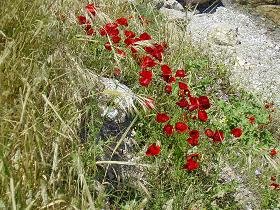
The castle of Mytilene stands on one of the seven hills of the capital, a large Byzantine fortress built on the ruins of an ancient fortification. The Byzantines raised it against pirate raids, and the Genoese later added to it as a defence against the Ottomans. Pine forest surrounds the walls and runs down to the shore and the public beach. Below it the town keeps an ancient theatre from the 3rd century BC that once seated 15,000 people.
Sigri Castle
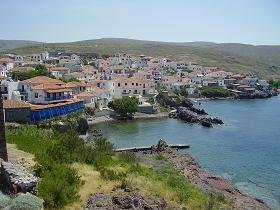
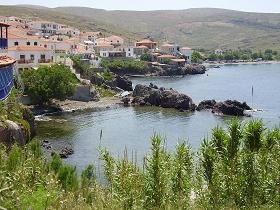
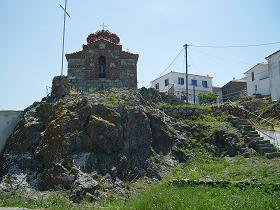
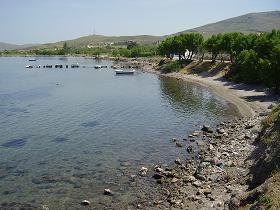
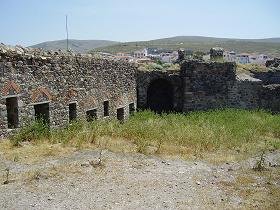
The fortress of Sigri dates from 1557 and stands over the harbour of the village in the far west of Lesbos. It was built on the foundations of an earlier Genoese fort and is open to the public. An island in front of the coast shelters the village from the waves. The castle is one of the best-preserved on the island.
Limonos Monastery
The Limonos Monastery lies a little north of Kalloni in the centre of Lesbos. It was founded in 1523 and became the intellectual centre of the island during the Ottoman occupation. The complex has expanded a great deal over the centuries and now holds several museums. By tradition the inner part of the monastery is closed to women.
Moria Aqueduct
The Roman aqueduct of Moria stands just north of Mytilene, at the end of a 500-metre path from the village. The path runs past farmland with goats and vegetable plots to a small river where the aqueduct crosses. The village of Moria itself is worth a look for its brightly coloured houses, a fine church, a yellow tower and busy tavernas. A sign on the main road points the way to the Roman site.
Polichnitos Hot Springs
The hot springs of Polichnitos, Thermopiges Polichnitou, lie a little south-east of the village and reach 94 degrees Celsius. The bath house joins a new building to an old Turkish part, and older buildings stand scattered nearby beside a river with a small bridge, where turtles swim. Organised bus tours already run to the site.
Eftalou Hot Springs
The hot springs of Eftalou lie 1 km east of Molyvos, where warm mineral water seeps through the rocks along the shore and mixes with the sea in hot pools. An old stone bath house here is impressive and very hot. The springs are recommended for rheumatism, arthritis and skin complaints, and the pebble beach and its surroundings are beautiful. Buses run between Eftalou and Molyvos, and the beach is set out in the Lesbos beaches guide.
Agiasos Church
The church of Panagia Vrefokratousa in Agiasos is the religious centre of Lesbos. It holds a collection of old icons, including an icon of the Mother and Child attributed to Saint Luke and brought to Agiasos from Jerusalem by a priest in the year 803. The village around it is famous for pottery and wood carving and keeps an Ecclesiastical and Folk Art Museum. The village is covered in the Lesbos villages guide.
Plomari Ouzo Museum

Plomari is the ouzo capital of Greece, and an ouzo museum stands on the road into the town. Several ouzo factories work here, alongside old factories and olive presses among the 19th-century mansions. A second ouzo museum sits by the beach at Agios Isidoros, next to an old factory, open through the tourist season with free entry, where you can see how ouzo is made. Plomari itself is covered in the Lesbos villages guide.
Skala Polichnitos salt pans
The salt pans near Skala Polichnitos, north of Vatera in the Bay of Kalloni, rise in white mountains of salt from the ground. The wetland draws great numbers of birds, even in winter, and is a good place to see the greater flamingo, great white egret, avocet, black stork and many others. It is the main stronghold for redshank on Lesbos, and the surrounding area is good for rollers, golden orioles and purple heron.
Ancient Pyrra
Ancient Pyrra was once one of the five cities of Lesbos and the centre of its region, near Achladeri on the Bay of Kalloni. An earthquake destroyed it and it sank beneath the sea, so its remains lie underwater rather than on land. What survives above water is a scatter of houses on a pebble beach. The drive east from Kalloni to Achladeri and Pyrra runs close to the gulf, with great views over the sea.
Birdwatching
Lesbos is one of the best places in all of Europe to see migrating birds. The varied landscape and the island's many wetlands draw birdwatchers in large numbers in spring, in late April and early May, when the wildflowers are also at their best. The finest areas are the marshes and flatlands around Kalloni, Skala Polichnitos, Skala Eressos and Sigri. Lesbos holds more water than most Aegean islands, which feeds its rich agriculture and its ponds.