Rhodes Sights: Old Town, Lindos, Kamiros & the Castles
Rhodes carries a dense layer of history, from a medieval Old Town to ancient acropolises and a ring of knights' castles. This guide covers the marquee sights of the island: the Old Town and Palace of the Grand Masters, the acropolis of Lindos, ancient Kamiros, the castles of Kritinia and Monolithos, the Ipseni monastery and the Butterfly Valley. Hire a car to explore Rhodes at your own pace, covered in our Rhodes car hire guide.
- Old Town
- Rhodes Town
- Ancient city
- Kamiros
- Best acropolis
- Lindos
- Castles
- Kritinia, Monolithos
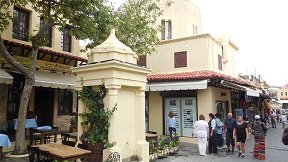
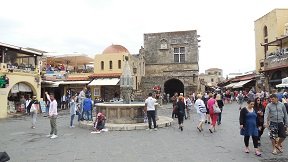
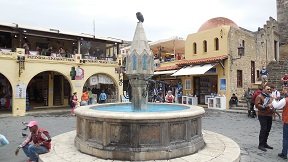
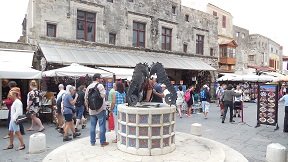
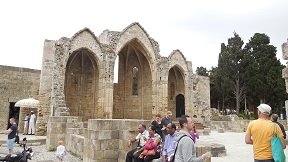
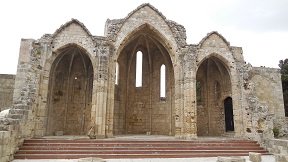
Rhodes Old Town
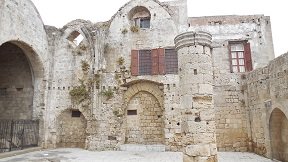
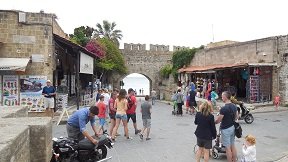
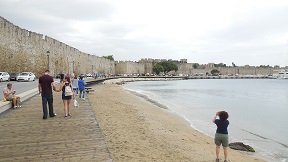
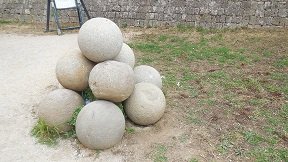
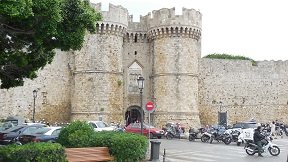
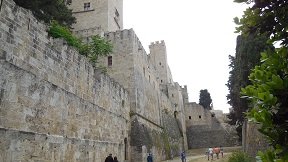
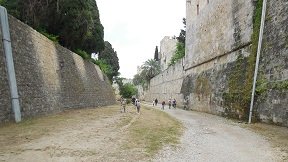
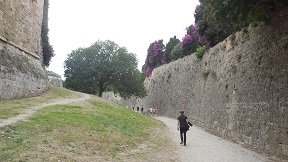
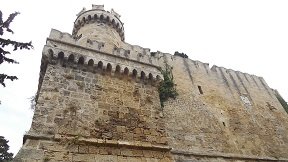
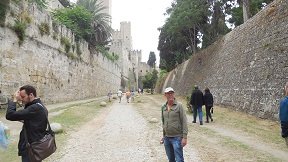
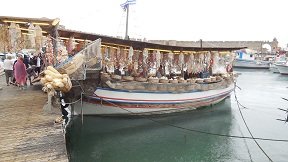
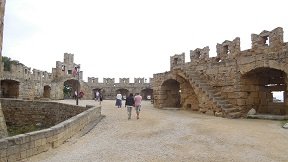
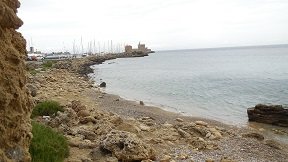
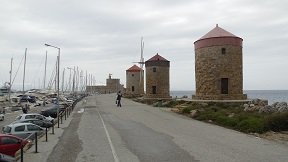
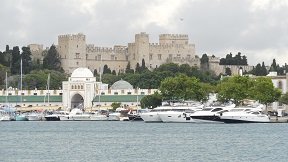
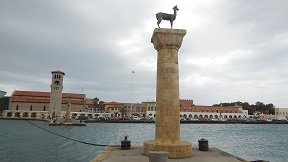
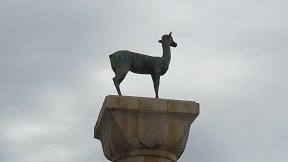
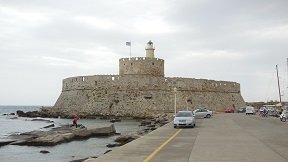
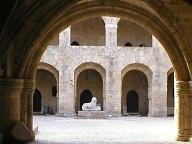
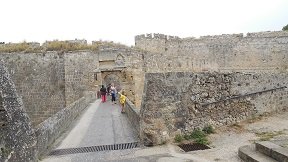
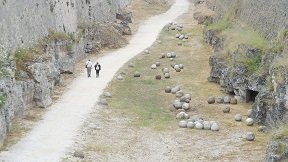
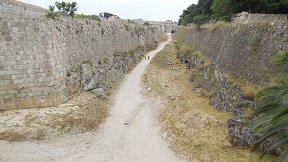
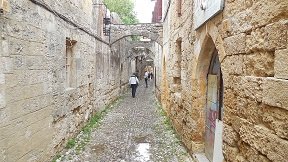
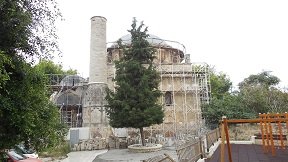
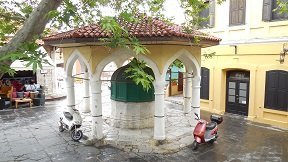
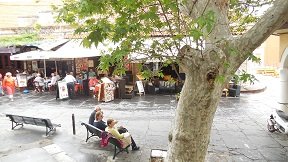
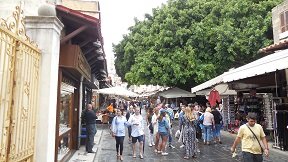
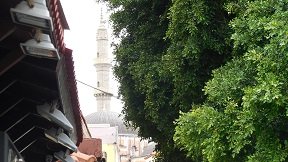
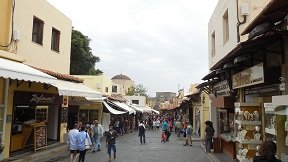
Rhodes Old Town is the best-preserved medieval walled town in Europe. It dates from the rule of the Knights of St John and is ringed by complete fortifications with several gates. In 1522 the town held out for 6 months against a large Ottoman siege before its defenders negotiated a surrender that kept the city intact. Inside stands the Palace of the Grand Masters, the largest building in the walls; the original was wrecked by an explosion in 1856 and rebuilt in the 1930s. The cobbled Street of the Knights runs uphill past the inns of the knights, grouped by nationality, to the old Hospital of the Knights, now the Archaeological Museum, which holds a marble Aphrodite and a head of Helios. Below the walls, the Mandraki harbour is guarded by the fort of St Nicholas and lined with medieval windmills.
Acropolis of Lindos


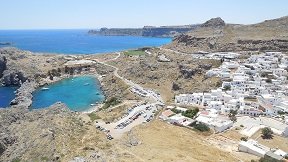
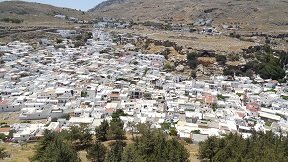
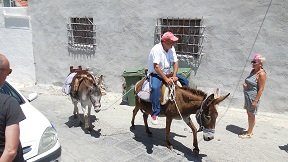
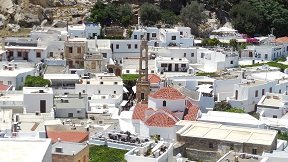


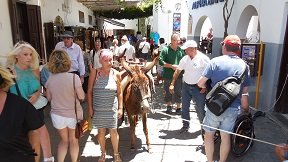


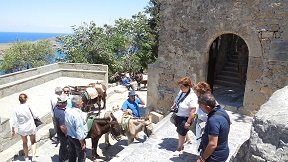
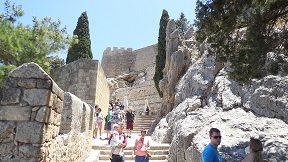
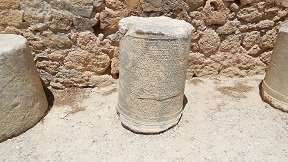
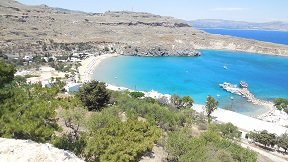
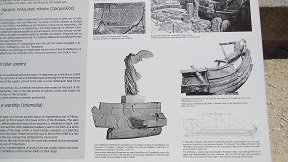

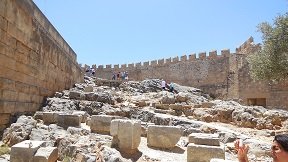
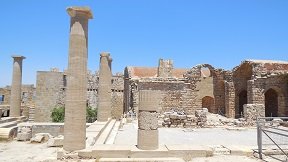
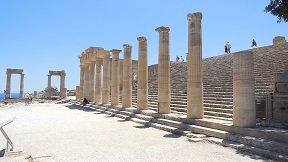
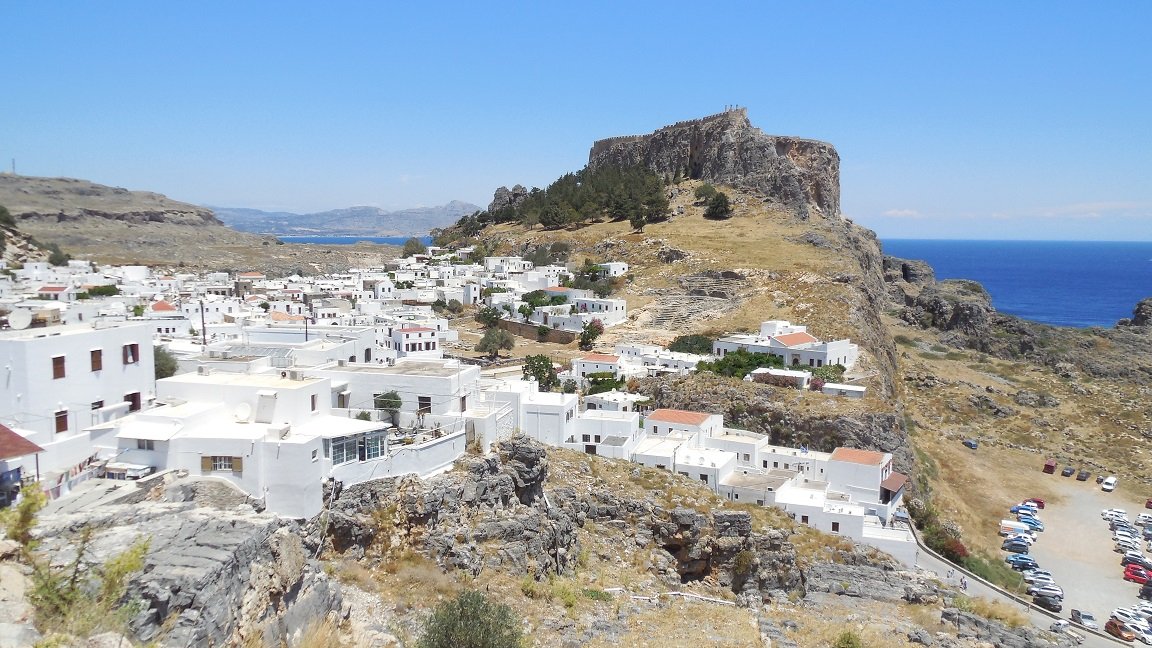
Lindos is the main sight of Rhodes after the capital, a white village below a fortified acropolis 55 km from Rhodes Town. On the hill stood the Temple of Athena Lindia, a Doric sanctuary famous across ancient Greece. The Knights of St John wrapped the site in massive walls in the 14th century, on Byzantine foundations. The village below keeps its cobbled lanes, 17th-century captains' houses and a 14th-century Panagia church with frescoes added around 1780. Stairs and signed paths climb from the village to the acropolis, which about 3,600 people live below.
Ancient Kamiros

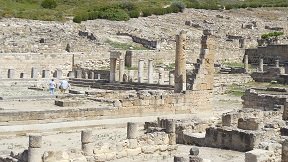
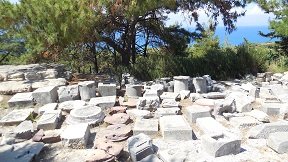
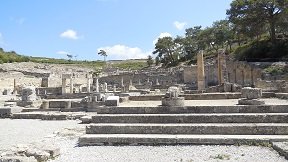


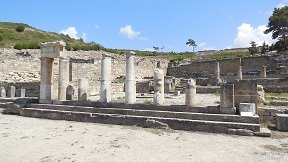


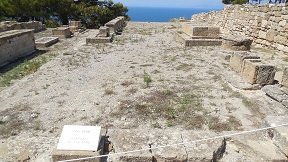
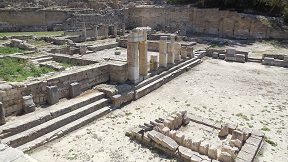


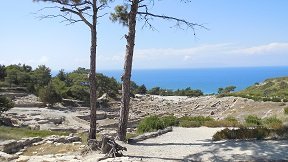
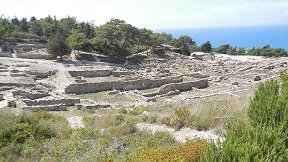
Ancient Kamiros is a well-preserved Dorian town in the north-west of Rhodes, 35 km from Rhodes Town. It is built on three levels: a temple to Athena and a large cistern on the acropolis at the top, Hellenistic and Roman houses in the middle, and the agora, a sanctuary and a spring at the bottom. The town had a sewerage system and a second, older Dorian temple. Kamiros was founded by the Dorians on a site already used by the Mycenaeans, and it was abandoned as people moved to Rhodes Town, founded in 408 BC. French, Italian and later Italian archaeologists excavated it from the 1850s onward.
Kamiros Skala
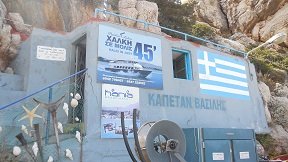
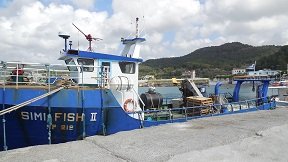

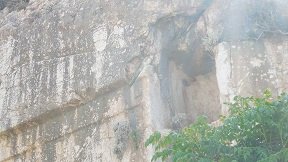


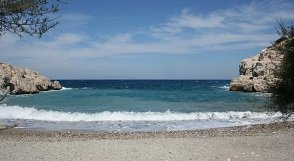
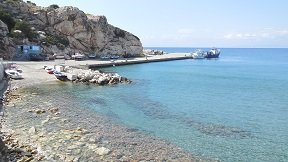


Kamiros Skala is a small fishing harbour on the west coast of Rhodes, a short way from ancient Kamiros. Small boats sail from here to the island of Halki, a crossing of about 45 minutes. The harbour is a cluster of houses with a few rooms to rent and a handful of restaurants. An unfinished rock-cut tomb, signed as a Lycian tomb, stands by the pier, and the surrounding fields are dotted with plastic greenhouses.
Kritinia Castle (Kastellos)
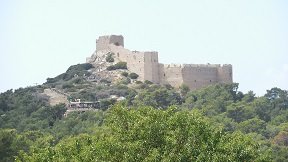
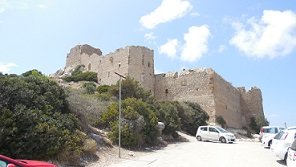
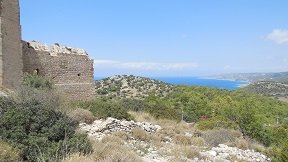
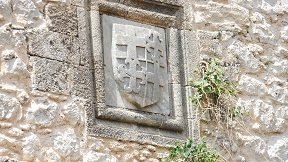
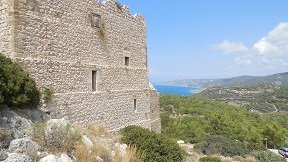
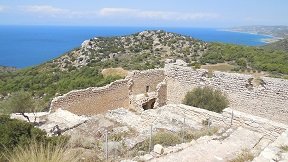
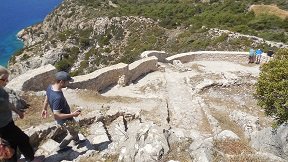
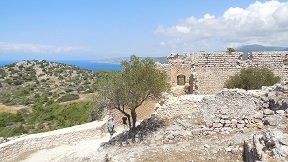
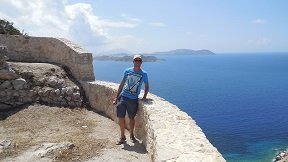
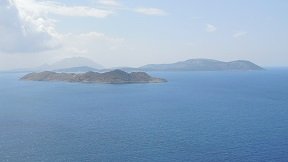
Kritinia Castle, known as Kastellos, stands on a hill about 4 km outside the mountain village of Kritinia in the west of Rhodes. The Knights of St John built it in 1472 to protect the surrounding villages against the Ottoman fleet. When the Ottomans besieged the island in 1480 with a large force, they failed to take the castle. Its walls still carry the coats of arms of the Grand Masters, and inside stand the remains of the church of Agios Pavlos. The castle is open, and it gives wide views over the sea and the offshore islands. The village of Kritinia has a folklore museum and a church with 16th-century murals.
Monolithos Castle
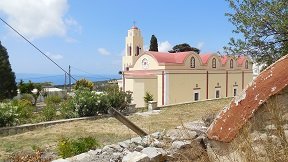
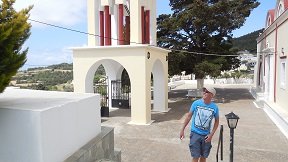
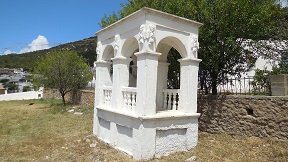

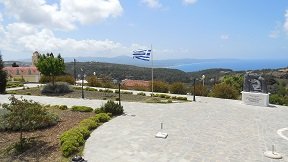

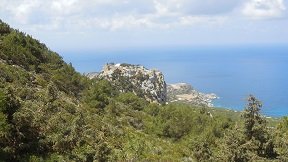

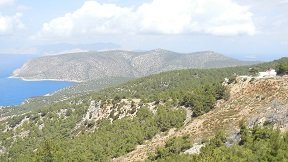
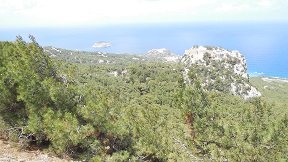

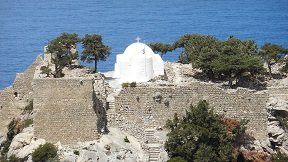
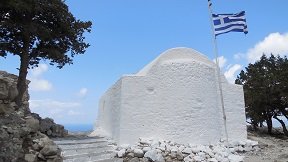
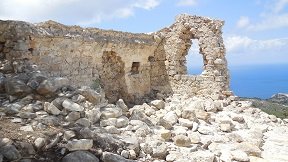

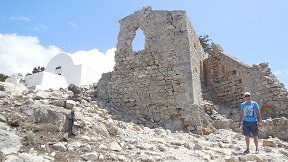

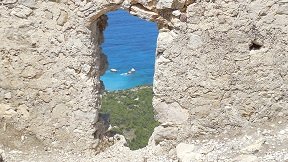

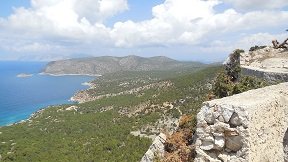
Monolithos Castle sits on a tall rock near the village of Monolithos in the south-west of Rhodes. The castle of St John was built on the remains of an older Byzantine fort, and though it is now mostly in ruins it was never conquered. Steps carved into the rock climb to the walls, where the small church of Agios Panteleimon dates from 1476. The setting is one of the finest on the island, and the view over the sea is wide. The road up passes stalls selling local olive oil, honey and souma.
Panagia Ipseni Monastery
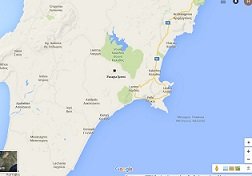
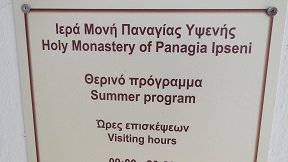

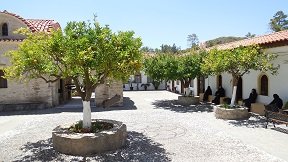

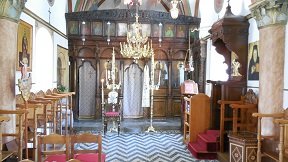

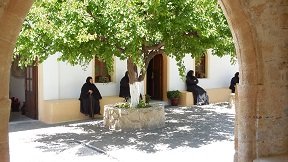

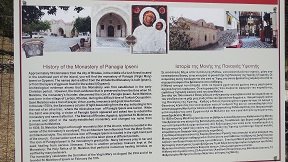
The Panagia Ipseni monastery lies in a forested area about 50 km south of Rhodes Town, reached by a turn off the village of Lardos. The present convent was rebuilt from 1839 by Saint Melitios, who was born in nearby Lardos and, the story says, found a buried icon of the Panagia beneath an olive tree. That icon is still the pride of the church, and pilgrims come to pray before it. The monastery is a peaceful place, home to a small community of nuns, and it sees few visitors.
Butterfly Valley (Petaloudes)
The Butterfly Valley, Petaloudes, is a wooded valley in the north of Rhodes that fills with insects each summer. Thousands of them settle on the trees and rocks from June to September, drawn by the resin of the storax trees. Despite the name they are Jersey tiger moths rather than butterflies. Petaloudes is one of the most popular natural sights on the island.