
Astypalaia Sights
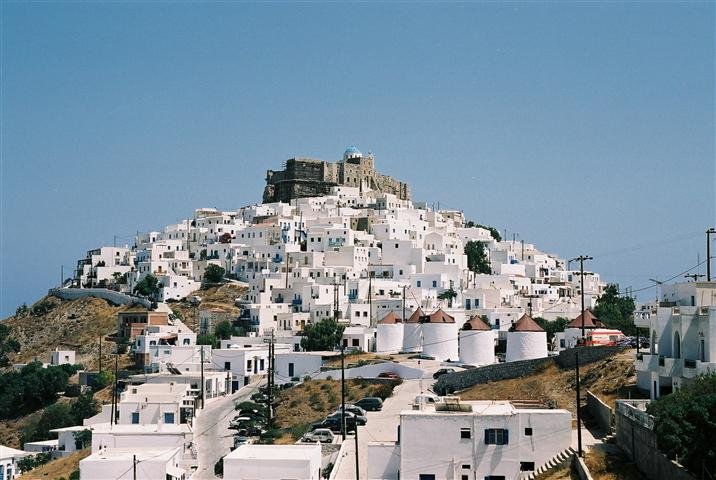
The Kastro, the Venetian castle crowning the Chora of Astypalaia, is the island's marquee sight, built on an ancient acropolis over a 9th-century Byzantine stronghold and expanded by the Venetians who ruled from 1207 to 1522. Below and beyond it lie the row of old windmills of the Chora, the Roman-era Tallaras baths with their mosaics at Maltezana, the Archaeological Museum at Pera Gialos, and the Agios Ioannis monastery with its waterfall, a two-hour walk west of the windmills.
- Castle
- 9th-C · Venetian
- Baths
- Tallaras mosaics
- Museum
- Pera Gialos
- Monastery
- Agios Ioannis

The Kastro (Venetian castle)
The Kastro crowns the Chora of Astypalaia, built on the remains of an ancient acropolis. The Byzantine stronghold beneath it dates from the ninth century and was later expanded and strengthened by the Venetians, who ruled the island between 1207 and 1522 and used the castle mainly as protection against pirate attacks. It once had four floors and, in Venetian times, some 4,000 people lived within its walls. Over the centuries parts of it fell, and the earthquake of 1956 destroyed much and brought down walls, leaving only a small part of the fortress and the two 14th-century churches inside, the Panagia Portaitissa and the Agios Georgios; instead of four floors, three remain.
The Chora and its windmills
The Chora itself is a sight, an amphitheatrically built town of old whitewashed houses and many staircases that climbs the hill to the castle, completed by a row of old stone windmills near its entrance. As you keep climbing you reach the Kastro with its white church inside and splendid views over the sea and the neighbouring islets. On the hillside below, where the Chora blends into the port of Pera Gialos, stands the blue-domed church of Agios Nikolaos, and the whole white town shaped like an amphitheatre is one of the most photographed scenes in the Dodecanese.
The Tallaras baths at Maltezana
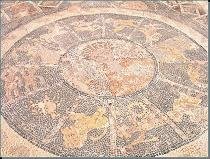
At Maltezana (Analipsi), about 9 kilometres east of the Chora, are the well-preserved Tallaras baths of the Hellenistic period. Their floors keep blue and red-terracotta mosaics with images of the constellations and the seasons of the year, dating from the 5th century AD. Maltezana, said to be named after Maltese pirates who once sheltered in its bay, also keeps a memorial to the French admiral Bigot, who blew up his ship's powder room here in 1827 to avoid capture, with ancient pillars standing around it.
The Archaeological Museum
In the harbour of Pera Gialos, below the Chora, the Archaeological Museum displays excavations spanning from prehistoric times to the Middle Ages, including pottery, jewellery, coins, inscriptions and bronze and stone tools from the Mycenaean period. Among its finds are objects, mainly coins, from the Negro Cave near Vatses Beach, a cave used as a shelter by pirates in the Byzantine period.
The Agios Ioannis monastery
A walk of about two hours westwards from the windmills of the Chora reaches the Agios Ioannis monastery, set by its own waterfall in the barren hills of the western wing of the island. It is one of several churches and chapels scattered across Astypalaia, among them the cross-shaped, blue-domed Agios Ioannis Prodromou above Agios Ioannis Beach, and makes a rewarding target for walkers exploring the quiet interior.