Heraklion Sights: Minoan Palaces & Ancient Cities
The Heraklion region holds the three greatest Minoan palaces on Crete, the Roman capital of Gortyn, and the museum in Heraklion city that keeps the Phaistos Disc. This guide covers the marquee sights of central Crete, from Knossos and Heraklion city to the palaces of Phaistos and Malia, ancient Gortyn, the Minoan villa of Vathypetro and the monasteries at Zaros and Fodele. Hire a car to explore Crete at your own pace, covered in our Crete car hire guide.
- Region
- Central Crete
- Largest palace
- Knossos
- Roman capital
- Gortyn
- Famous find
- Phaistos Disc






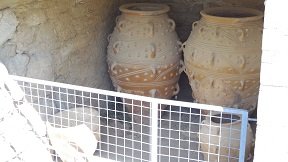


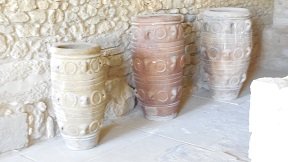
Knossos
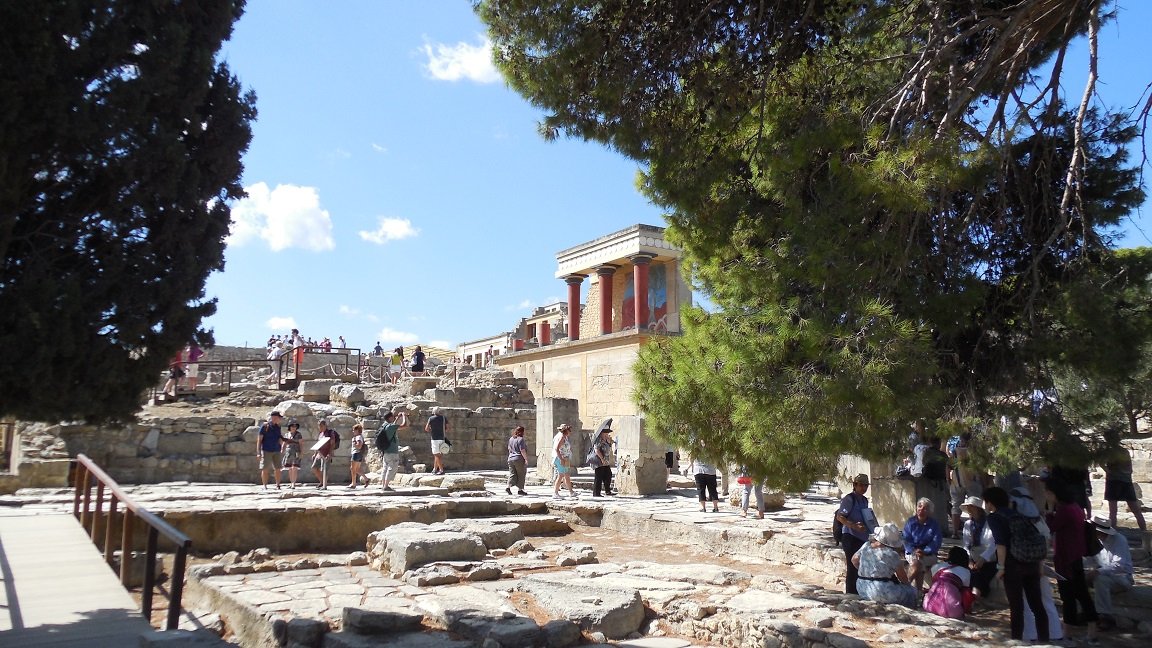
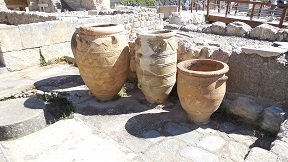
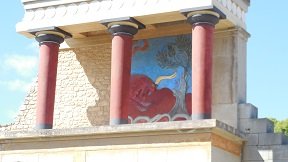
Knossos is the most important archaeological site on Crete and the largest Minoan palace. It covers 22,000 m2 and holds about 1,500 rooms. The site lies about 20 minutes' drive south of Heraklion. The archaeologist Arthur Evans began the excavation, and his imagination shaped much of what stands today. There are large car parks, an entrance fee and excursion buses, so it is now a busy, commercial site where you may queue to see the main rooms. Go early to avoid the crowds.
Heraklion City & the Archaeological Museum
Heraklion is the capital of central Crete and the base for reaching the region's sights. The Archaeological Museum of Heraklion holds the most important Minoan finds on the island, including the Phaistos Disc from the palace of Phaistos. The disc is a clay tablet stamped with 45 different symbols, thought to date from about 1600 BC, and it carries one of the oldest known forms of writing. The museum also keeps the finds from Knossos and from other palaces across the region.
Phaistos
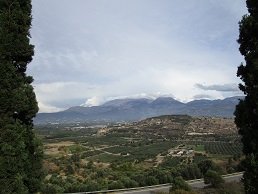


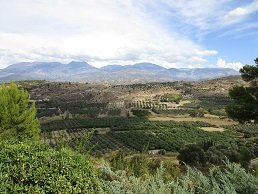

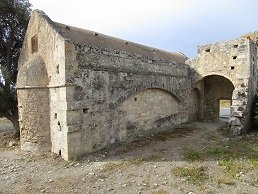


Phaistos is the second-largest Minoan palace on Crete, after Knossos, on the west side of the Messara Plain in the south of the Heraklion district. The fertile plain is green, and the views across it are wide. Unlike Knossos the palace stands in its original state and stays much quieter. A new palace was built about 1700 BC on the ruins of an older one, and it was destroyed in 1450 BC with the other Cretan palaces. The most important find, the Phaistos Disc, is kept in the Archaeological Museum in Heraklion. Three signed exits off the Mires - Timbaki road reach the site.
Palace of Malia
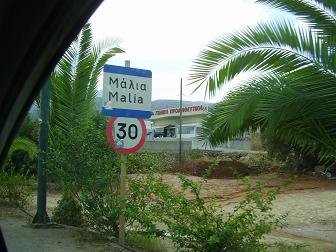
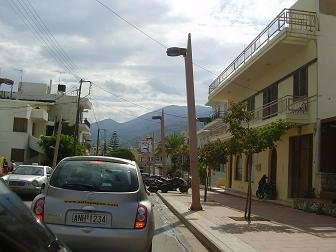


The palace of Malia is the third-largest Minoan palace on Crete, near the beach just outside the resort of Malia, 34 km east of Heraklion. It dates from about 1900 BC, was destroyed by an earthquake two centuries later, and was rebuilt. Nothing has been reconstructed here, so the site stays in its original state. The palace covers 7,400 m2, and the visible remains date from about 1650 BC. It was destroyed again in 1450 BC with the other Minoan palaces. It is named after the nearby village because its original name is unknown.
Gortyn
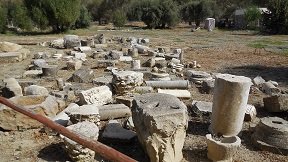
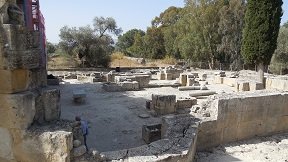
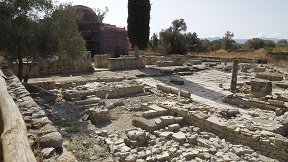
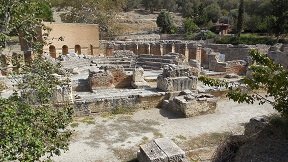


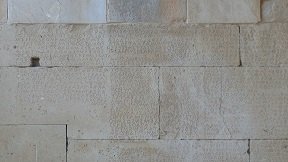

Gortyn, also called Gortys, is an ancient city just outside Agii Deka on the Messara Plain. It has been inhabited since 3200 BC, first by the Minoans and later by the Dorians, who built temples to Athena and Apollo in the 7th century BC. Under Roman rule Gortyn became the capital of Crete and of the province that included Cyrenaica. The remains include the Titus church of the 6th century, a theatre, a stadium and sanctuaries. The Law Code of Gortyn, the first written laws in Europe, is set into a wall on the site. The remains spread far beyond the fenced area.
Vathypetro
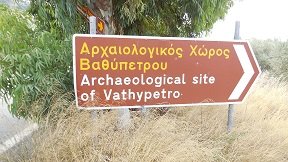
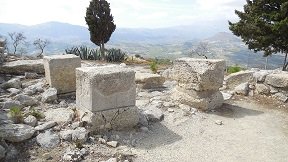
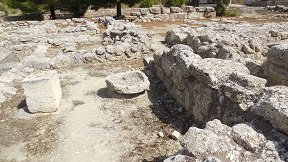
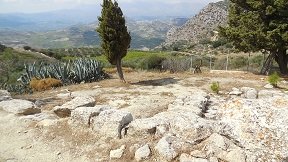
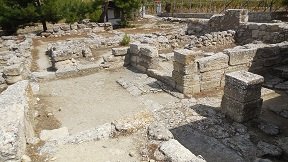
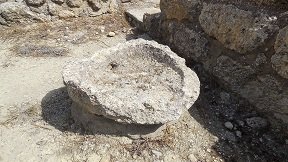
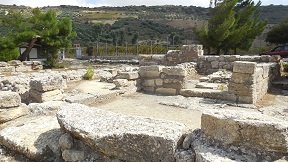
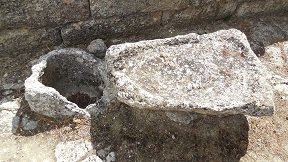
Vathypetro is a Late Minoan villa 5 km south of Archanes on the route to Choudetsi. It dates from about 1580 BC and once spread over three hills. Wine was made and pots were fired here, and many stone jars for storing olive oil were found on the site. A mansion with a surviving wine press still stands. It may have been a summer residence of a king of Archanes, though that is not certain, and one theory holds that an earlier building on the spot was a temple.
Agios Nikolaos Monastery, Zaros
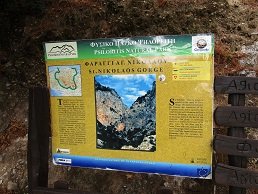
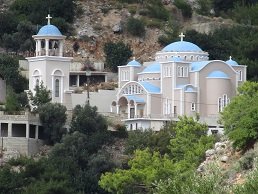
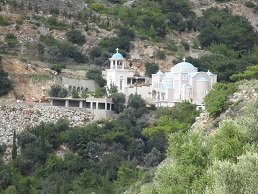
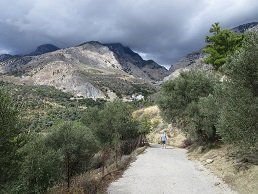
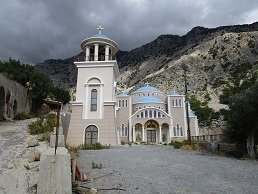
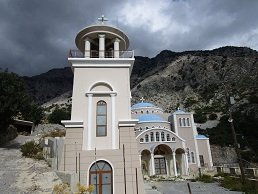
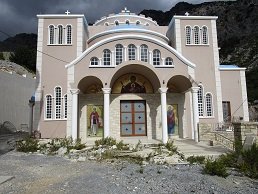
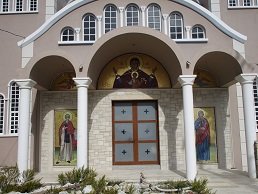
The Agios Nikolaos monastery lies in the south of the Heraklion district, about 3 km north of the village of Zaros. It stands at the mouth of the Agios Nikolaos gorge and is reached on the Agia Varvara - Gergeri - Zaros road or on a walking route from Lake Zaros. Behind the newer buildings stands the original Byzantine church of Agios Nikolaos, which dates from the 14th century, keeps preserved frescoes and has a bell tower with three bells. The small cave church of Agios Eftimios, with more frescoes and an inscription from 1438, lies 500 m to the east.
Agios Panteleimon Monastery, Fodele
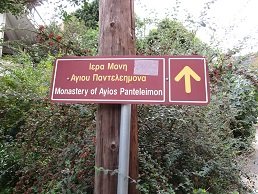
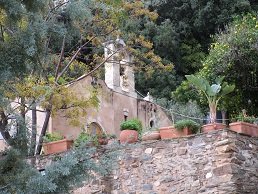
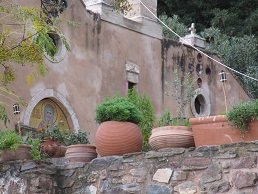
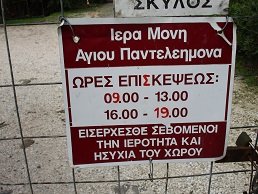
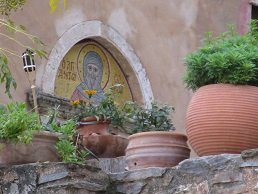
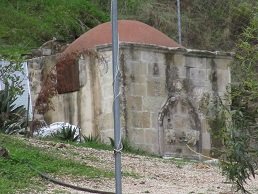
The Agios Panteleimon monastery stands in the north of the Heraklion district, 25 km west of the capital and about 5 km south of the village of Fodele. It is reached on a signed dirt road through woods, olive groves and orange plantations. The monastery dates from the 15th century and was first built as a fortress against pirate raids. Little of the surrounding wall survives, but the monastery church remains, and icons from the 17th century are kept inside. During Turkish rule it served as a centre of resistance.