Kassandra, Halkidiki: Beaches, Resort Villages, Sights & Hotels
Kassandra is the westernmost of the three peninsulas of Halkidiki in northern Greece, a busy beach-resort leg reached across the Nea Potidaia canal and edged by long sandy beaches and lively resort villages. Kassandra runs its resorts down two coasts, the north-east shore on the Gulf of Toroneos and the south-west shore on the Gulf of Thermaikos, with pine and olive woods behind the sand. Afitos, Kallithea, Kriopigi, Polychrono, Chaniotis, Pefkochori, Sani and Possidi hold most of the hotels, beaches and tavernas, and Thessaloniki and its airport lie about 75 to 100 kilometres north.

- Region
- Halkidiki
- Peninsula
- Westernmost of 3
- Gateway
- Nea Potidaia canal
- Airport
- Thessaloniki ~75 km
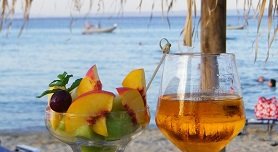
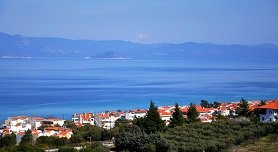

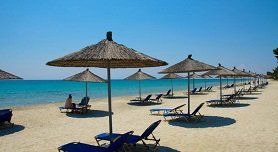
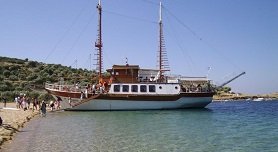
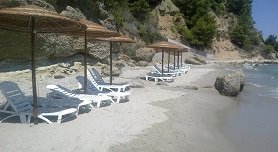
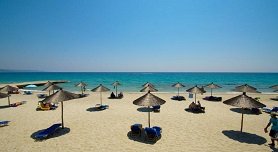
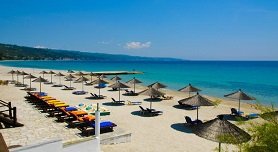
The Kassandra peninsula
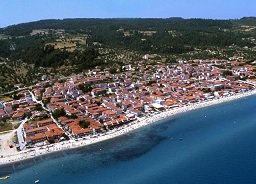
Kassandra, also spelled Kassandria, is the westernmost of the three fingers of Halkidiki, a peninsula that the canal at Nea Potidaia separates from the rest of the region. Kassandra became in effect an island once the canal was dug, and two bridges now carry the road across the water to the resorts. About a million years ago the Petralona cave near the base of the peninsula held one of the oldest hominid skeletons ever found in Europe, unearthed from an ice-age layer. The land is green and wooded, with pine and olive groves running down to long sandy beaches, and the villages line the north-east coast on the Gulf of Toroneos and the south-west coast on the Gulf of Thermaikos. Thessaloniki and its international airport stand about 75 to 100 kilometres to the north, roughly a 90-minute drive from the far tip at Cape Paliouri.
Kassandra resort villages
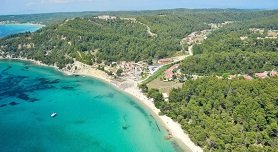
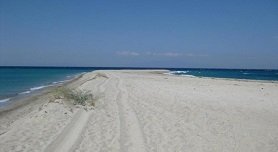

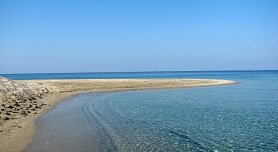
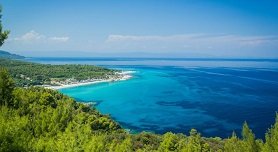
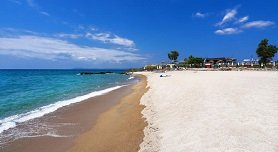
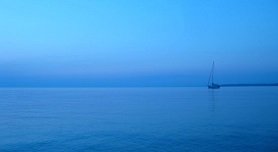
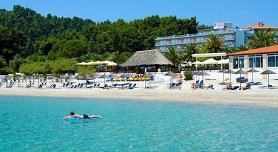
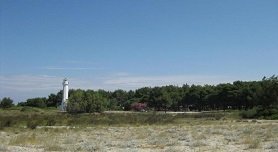
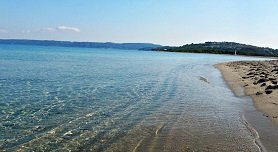
Kassandra gathers its resort villages along both coasts of the peninsula, from Nea Fokea and Afitos in the north-east to Cape Paliouri at the southern tip and Sani on the north-west shore. Nea Fokea, Afitos, Kallithea, Kriopigi, Polychrono, Chaniotis and Pefkochori line the north-east coast on the Gulf of Toroneos, while Paliouri, Nea Skioni, Possidi, Kalandra, Mola Kalyva, Loutra, Skala Fourkas, Siviri and Sani face the Gulf of Thermaikos in the west and south-west. Nea Potidaia guards the canal at the base, with Nea Moudania, Nea Kallikratia and Flogita on the western approach just outside the peninsula.
Nea Fokea
Nea Fokea (Nea Fokaia) is a small harbour town in the north-east of Kassandra, a little north of Afitos and about 80 kilometres from Thessaloniki. Nea Fokea keeps a port of colourful fishing boats, a long sandy beach with clear water, and a well-preserved Byzantine tower of 1407 beside a small church of the Apostle Paul. The seafront makes a fine spot for the sunset, and fish tavernas, cafes and a supermarket sit along the harbour.
Afitos
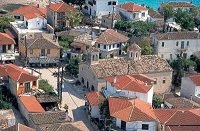
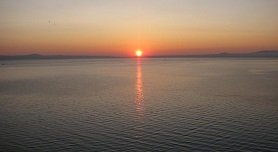
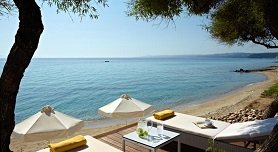
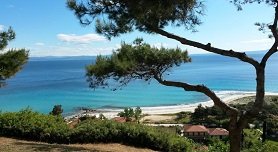
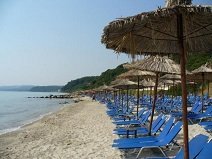
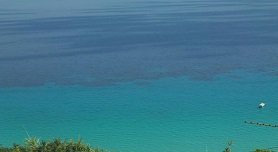
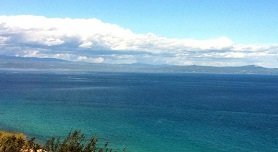
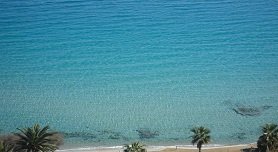
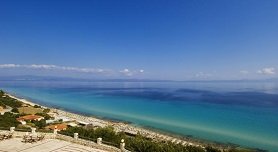
Afitos, also spelled Afytos or Athitos, is a traditional stone village on the north-east of Kassandra, built on a 75-metre cliff called the balcony of Kassandra. Afitos dates from the early 19th century and keeps natural-stone houses, narrow streets and the 1858 church of St Demetrius on its square, the only domed basilica on the Halkidiki peninsula. The sandy Aristoteles beach lies about 500 metres below the village, reached by a steep road and steps, and Kallithea stands 3 kilometres to the south.
Kallithea
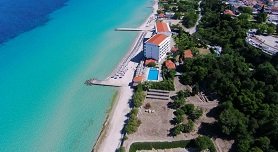
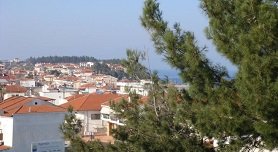
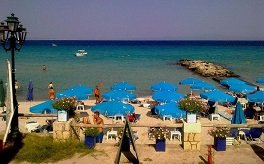
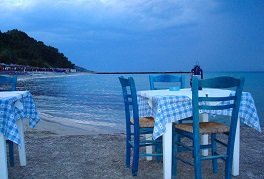
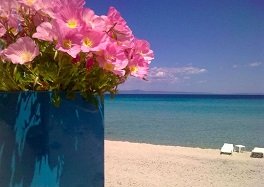

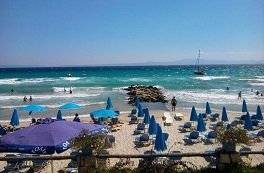
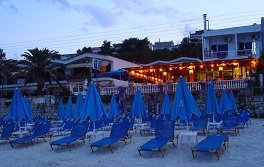
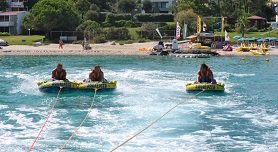

Kallithea is a lively resort of about 500 permanent residents in the north-east of Kassandra, just south of Afitos and around 90 kilometres from Thessaloniki. Refugees from Asia Minor founded Kallithea in 1922, and today the village draws visitors for its sandy beach, the ruins of ancient temples and the murals of the small church of Agios Panteleimon. Several large hotels stand almost on the sand, the rest of the village sits behind a strip of pine, and the clubs and DJs make Kallithea the nightlife centre of the peninsula.
Kriopigi
Kriopigi is an old hill village in the north-east of Kassandra, just south of Kallithea, with about 500 residents and the airport around 85 kilometres away. Kriopigi takes its name from a cold spring (krio means cold, pigi means source), and olive groves, fruit trees and woodland keep the setting lush. Its Blue Flag beach, Pigadakia, is white sand ringed by pine-covered hills, and the older stone houses and a remnant of an ancient theatre stand higher up the slope.
Polychrono
Polychrono (Polykhrono) is a fairly quiet resort of just over 1,000 residents in the south-east of Kassandra, between Kriopigi and Chaniotis and about 90 kilometres from Thessaloniki. Polychrono holds one of the best beaches on the peninsula, a 1-kilometre Blue Flag strip of fine white sand on the Gulf of Toroneos, shallow and good for snorkelling and water sports. The village keeps an Ethnographic Museum, two churches from 1912 and 1860, and a nature reserve with a freshwater-turtle lake at Mavrombara 3 kilometres away.
Chaniotis
Chaniotis (Hanioti) is a tourist resort of about 1,000 residents on the south-east side of Kassandra, between Polychrono 4 kilometres north and Pefkochori 3 kilometres south. Tradition names Chaniotis after its first settler from Chania on Crete, and an earthquake in 1930 rebuilt most of the village in modern style around a central square, a market and a white Orthodox church. Its Blue Flag beach is long fine white sand with some shingle, backed by pines and tamarisk trees, with sunbeds, tavernas and water sports.
Pefkochori
Pefkochori (Pefkohori) is a large resort of about 1,700 residents in the south-east of Kassandra, 3 kilometres south-east of Chaniotis and around 105 kilometres from Thessaloniki. Pefkochori takes its name from the pine forest around it (pefko means pine, chori means village), and its long white-sand beach carries cafes, restaurants, sunbeds and water sports. Excursion boats leave the village pier each day for other Halkidiki beaches and for the Sithonia and Athos peninsulas.
Paliouri
Paliouri (Paliourion) is a picturesque village of stone houses at the southern tip of Kassandra on Cape Paliouri, about 112 kilometres from Thessaloniki and 7 kilometres from Pefkochori. Paliouri itself stands on low hills 2.5 kilometres from the coast, with no high-rise buildings and beautiful beaches below, including the well-known Chrousso beach and the sheltered Glarokavos. The area holds the remains of the ancient city of Theramvos and, near Cape Kanistro, the site of the temple of Apollo Kanastreos.
Nea Skioni
Nea Skioni is a coastal resort of about 750 residents in the south-west of Kassandra, 7 kilometres south-west of Chaniotis and surrounded by pine forest good for walking. Mountain people settled Nea Skioni around 1918, and the village is named after the ancient city of Skioni founded by colonists from the Peloponnese. On the site 2 kilometres away stands the Panagia Faneromeni church, which keeps a marble icon of the Virgin and wall paintings from the 16th century.
Possidi and Kalandra
Possidi and Kalandra sit in the south-west of Kassandra, about 95 kilometres from Thessaloniki, next to some of the finest sand on the peninsula. Possidi nestles among pine trees on a triangular point that runs a sandy spit hundreds of metres into the clear sea, with an organised beach, tavernas and beach bars. Kalandra beach is broad golden sand backed by olive groves and pine, in sight of the castle of ancient Mende and its sanctuary of Poseidon.
Loutra, Mola Kalyva, Skala Fourkas and Siviri
Loutra, Mola Kalyva, Skala Fourkas and Siviri are quieter west-coast villages that spread the resorts down the Gulf of Thermaikos. Loutra (Loutra Agias Paraskevi) draws visitors to sulphur hot springs of 39 degrees and a Blue Flag beach among cliffs and forest, while Mola Kalyva keeps two peaceful sand-and-pebble beaches east of Possidi. Skala Fourkas has about 700 residents, a large Blue Flag sandy beach and a small fishing harbour, and Siviri, with about 500 residents and the smaller Elani 3 kilometres north, holds a pine-shaded main beach and secluded coves behind it.
Sani
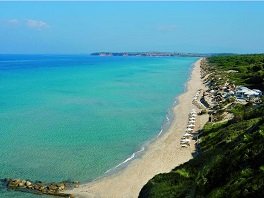
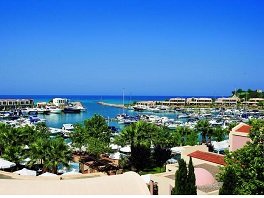
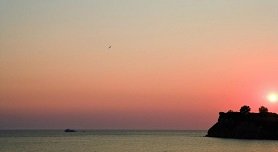
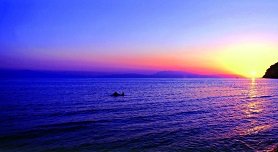
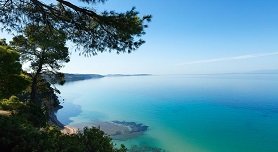

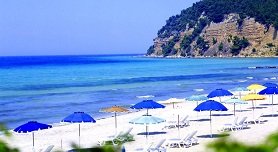
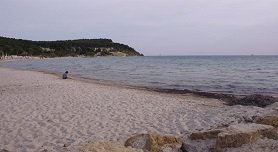

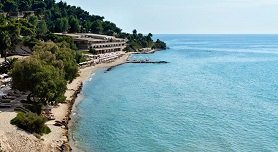
Sani is a lively upmarket resort on the north-west of Kassandra, about 80 kilometres from the airport, set among olive and pine woods around a marina. Sani beach runs 7 kilometres of golden sand into shallow blue water, backed by luxury resorts, villas and moored yachts, with water sports from the sand. On a headland stands the tower of Stavronikita, built against pirate raids, and the protected Stavronikita wetland just inland draws birdwatchers.
The western approach: Nea Potidaia to Nea Kallikratia
The western approach carries the road to Kassandra through Nea Potidaia and the resort towns of north-west Halkidiki. Nea Potidaia sits on the canal itself, the door to Kassandra, with a 5-kilometre sandy beach called Golden Beach and the remains of ancient walls and Byzantine fortresses. Nea Moudania, the second-largest town in Halkidiki with about 10,000 residents, is a major fishing port with a long sandy beach and the region's biggest open market each Wednesday, while Nea Kallikratia holds the wide Kyani Akti beach and the acropolis of ancient Antigonia, and Flogita keeps a sandy beach 6 kilometres north of Nea Moudania.
The beaches of Kassandra



Kassandra edges both its coasts with long sandy beaches, several of them Blue Flag, from the 7-kilometre golden strand at Sani to the sandy spit of Possidi. The north-east coast holds the Blue Flag sands of Kriopigi, Polychrono and Chaniotis and the busy beaches of Kallithea and Pefkochori, while the south-west coast runs the beaches of Nea Skioni, Kalandra, Loutra and Skala Fourkas. Aristoteles beach below Afitos and the coves of Siviri suit families and quieter days. See the full guide to the beaches of Kassandra.
Sights of Kassandra
The sights of Kassandra mix Byzantine towers, ancient cities and coastal churches with the fossil cave at the base of the peninsula. Nea Fokea keeps a Byzantine tower of 1407, Afitos its 1858 domed basilica of St Demetrius, and Kalandra the castle and Poseidon sanctuary of ancient Mende. Nea Skioni guards the marble icon of Panagia Faneromeni, Paliouri the ruins of Theramvos and the temple of Apollo Kanastreos, and Sani the Stavronikita tower and wetland. These are gathered in the Kassandra sights guide.
Where to stay
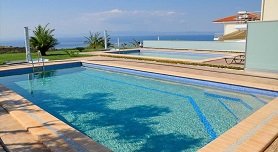
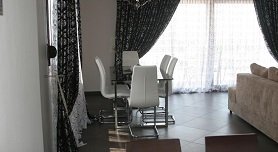
Accommodation on Kassandra runs from five-star beach resorts to family studios, apartments and villas along both coasts. Sani and Kalandra hold the luxury resorts such as Sani Beach Club and Hotel Mendi, Kallithea, Polychrono, Chaniotis and Pefkochori concentrate the mid-range hotels near the sand, and Afitos, Kriopigi, Nea Fokea and the quieter west-coast villages keep self-catering villas and studios. Compare the options in the Kassandra hotels & villas guide, which covers the resorts and the self-catering apartments, studios and villas.
Where to eat
Kassandra serves its best food at the fishing harbours and along the beaches. The harbours of Nea Fokea, Siviri, Skala Fourkas, Possidi and Nea Moudania grill the day's catch, the beach tavernas of Kallithea, Polychrono, Chaniotis and Pefkochori feed the resorts, and the square at Afitos lines up bars and restaurants above the bay. Where to eat by area is set out in the Kassandra restaurants guide.
Getting to Kassandra
Kassandra is reached by road from Thessaloniki, across the canal at Nea Potidaia rather than by ferry. Drivers follow the motorway south-east from Thessaloniki, about 75 to 100 kilometres depending on the resort, and cross one of the two bridges over the Nea Potidaia canal onto the peninsula. Thessaloniki International Airport (SKG) is the nearest airport, roughly a 60-minute drive to the north end of Kassandra and about 90 minutes to Cape Paliouri at the southern tip, and buses run from Thessaloniki to the main resort villages.