Skyros Sights: The Chora Castle, Palamari, Ponies & Rupert Brooke
The main sight of Skyros is the Chora itself, a car-free hill town below a Byzantine castle and the monastery of Agios Georgios. Beyond it, the island keeps the Bronze-Age town of Palamari, its own endangered breed of small pony, the rock-cut church of Agios Nikolaos at Pouria, and the grave of the poet Rupert Brooke in remote Tris Boukes Bay. This guide covers the marquee sights one by one. Hire a car to explore Skyros at your own pace, covered in our Skyros car hire guide.
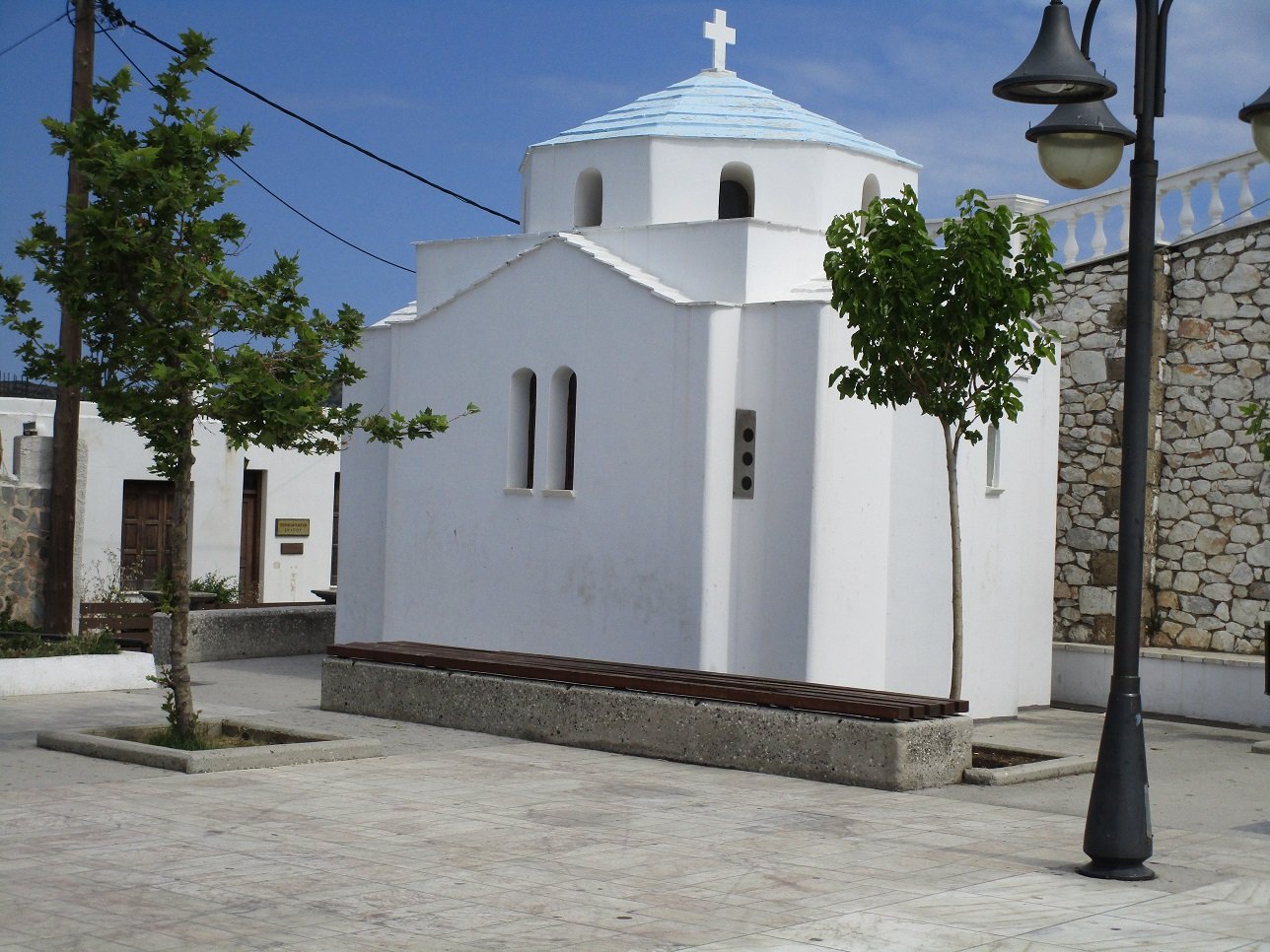
- Old town
- Skyros Chora
- Bronze-Age site
- Palamari
- Native breed
- Skyrian pony
- Poet's grave
- Tris Boukes
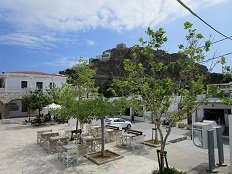
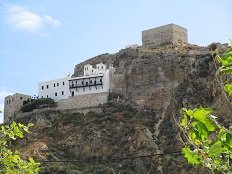
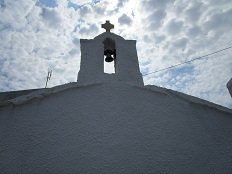
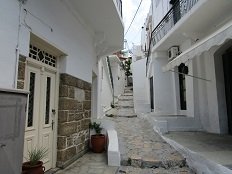
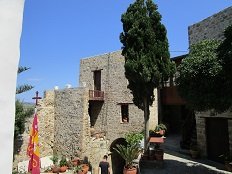
Chora and the castle
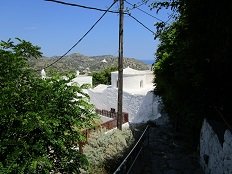
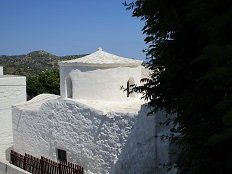
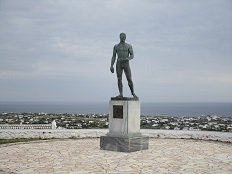
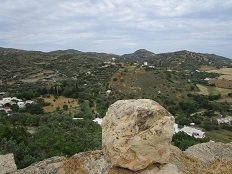
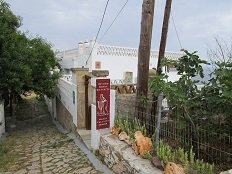
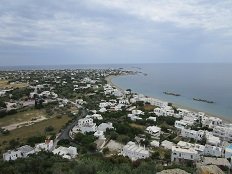
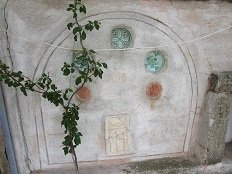
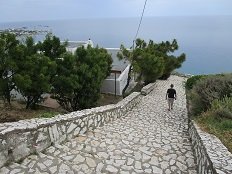
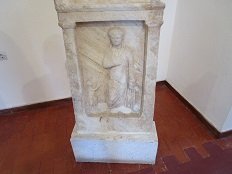
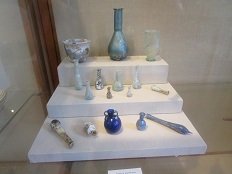
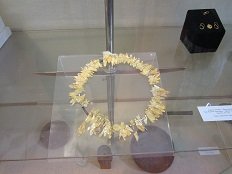
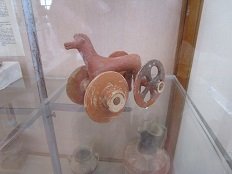
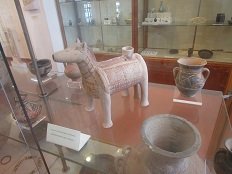
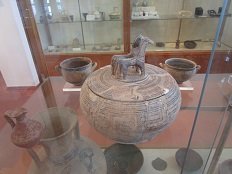
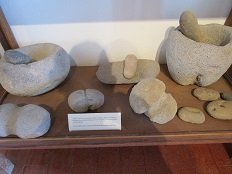
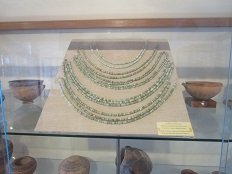
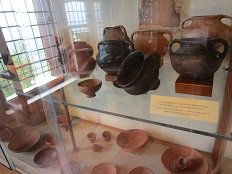
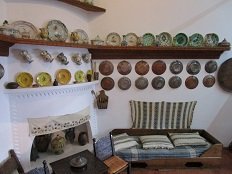
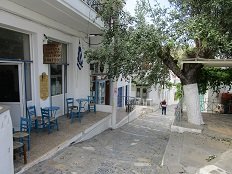
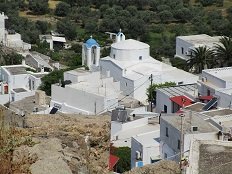
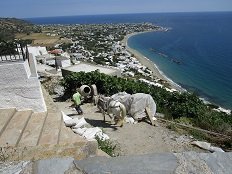
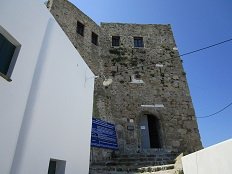
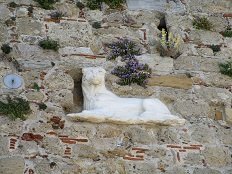
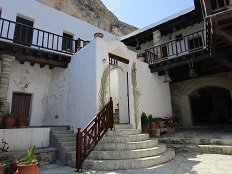
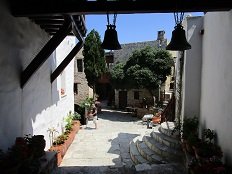
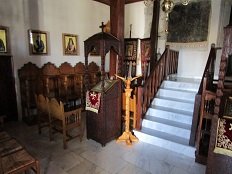
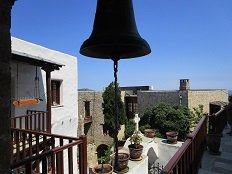
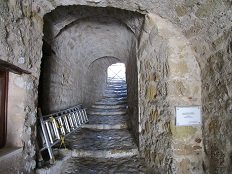
The Chora of Skyros is a car-free hill town of narrow cobbled streets, pretty squares and white houses, crowned by a Byzantine castle. The monastery of Agios Georgios sits inside the castle at the top; it was probably founded around 960, its church was built between 1599 and 1602, and after an earthquake damaged it in 2001 it was restored over 15 years and reopened in 2015. A marble lion above the fort gate survives from the ancient acropolis that once stood on the same spot. In the town, the Archaeological Museum on Brooke Square holds finds from 2800 BC to Roman times, many from Palamari, and the Manos Faltaits Museum fills the largest tower of the old walls with folk art, costumes and historical documents. The town is covered in the Skyros villages guide.
The Skyrian ponies
The Skyrian pony is an endangered breed of very small horse found only on Skyros, mainly in the mountainous south. Because the ponies have never been crossed with other horses they stay a distinct breed, standing 90 cm to 1.15 m tall, in colours of brown, reddish-brown or grey. About 150 survive on the island, most of them in the wild, and winter is hard for them, so some farmers give them extra food. On the narrow waist of the island, on the route from Achilli to Kalamitsa, Mouries Farm keeps a few dozen of these ponies with volunteers who work to preserve the breed.
Grave of Rupert Brooke
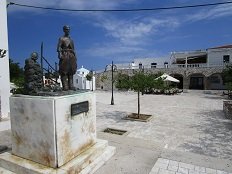
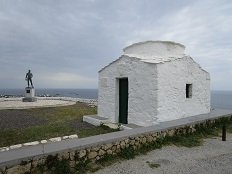
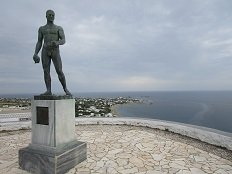
The grave of the English poet Rupert Brooke lies in a remote olive field in Tris Boukes Bay in the south-west of Skyros. Brooke died near the island in 1915 and was buried here; the boat route from Linaria is now closed by the Greek Navy, so the grave is reached only over land, on the road south from the Chora past Kalamitsa where the tarmac gives way to a dirt track. The tomb sits about 45 metres from the road and carries the poet's most famous poem, cut by a Greek sculptor. His statue, a nude figure of eternal poetry unveiled in 1931, stands on Rupert Brooke Square at the top of the Chora.
Palamari
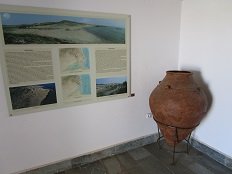
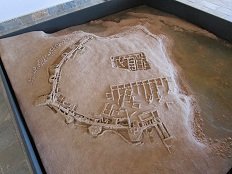
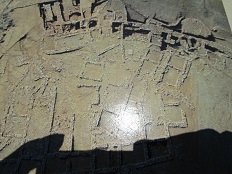
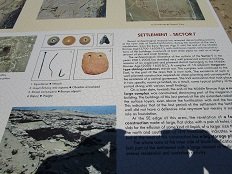
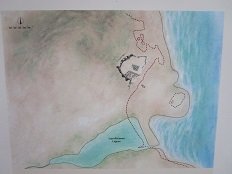
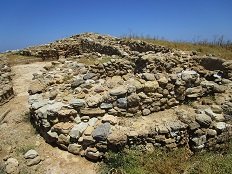
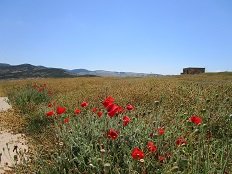
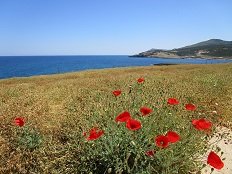
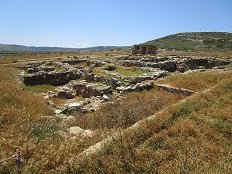
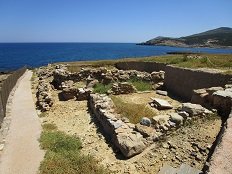
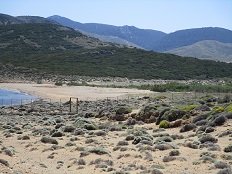
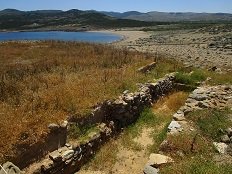
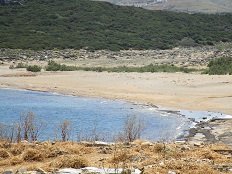
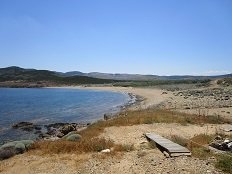
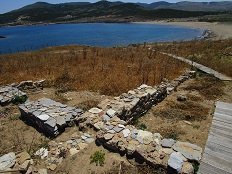
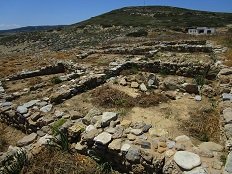
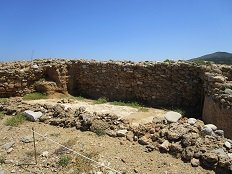
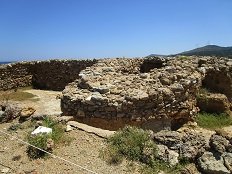
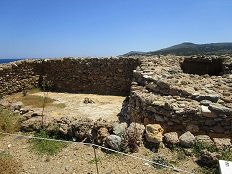
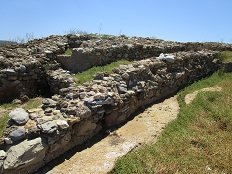
Palamari is a Bronze-Age town in the north of Skyros, 13 km from the Chora and close to the airport, that dates from 2500 to 1800 BC. It was a large fortified settlement of about 20,000 m2, important to the island and the wider region, with a port that linked it to the Cyclades, the north Aegean and the mainland. The remains include houses, large buildings, roads and defensive walls, though part of the town has vanished into the sea. Finds from the site are displayed in the Archaeological Museum in the Chora, and the quiet beach next to the excavation is described in the Skyros beaches guide.
Agios Nikolaos at Pouria

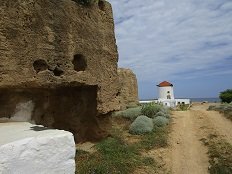
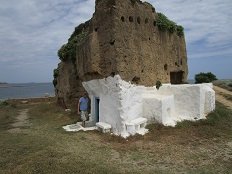
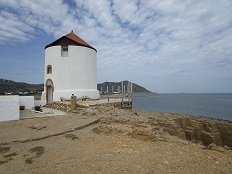
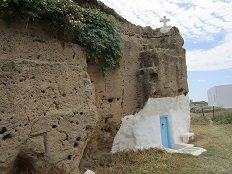
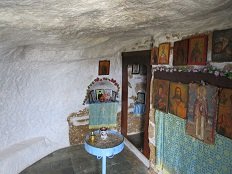
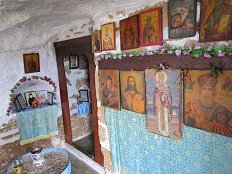
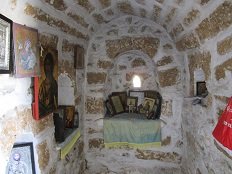
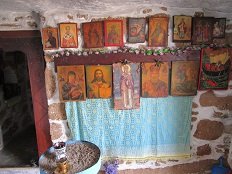
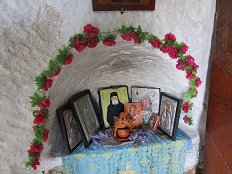
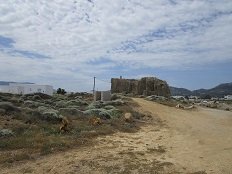
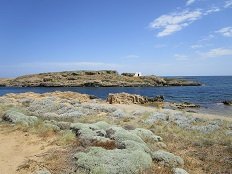
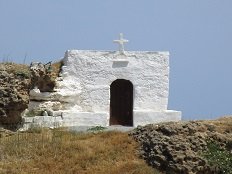
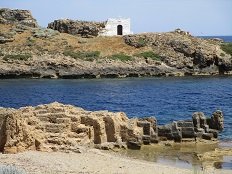
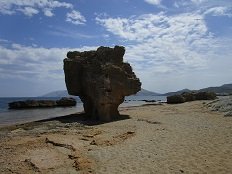
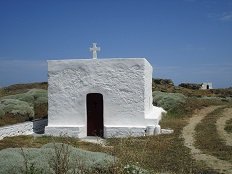
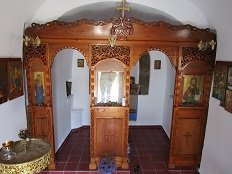
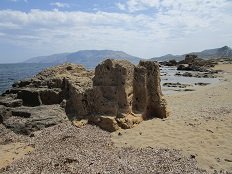
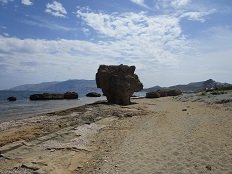
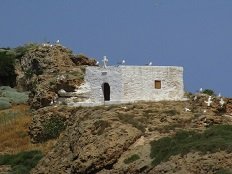
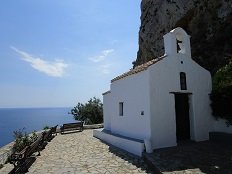
Agios Nikolaos is a tiny church built into a limestone rock on the coast at Akra Pouria, north of Molos beach and just north of the Chora. The rock was quarried in ancient times for its reddish stone, and the cut faces are still visible behind the church. The church looks out to the small Vrikolakonisia islets, one of which carries the photogenic chapel of Agios Ermolaos. Nearby stand a mushroom-shaped rock and an old windmill. The church itself is very small and holds only a few people.
Agios Dimitrios monastery
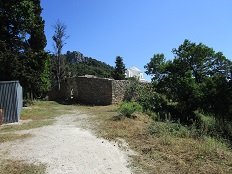

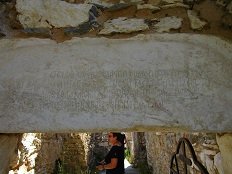
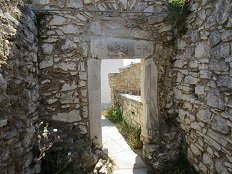

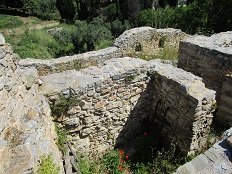
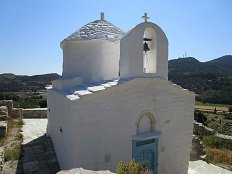
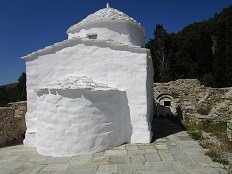
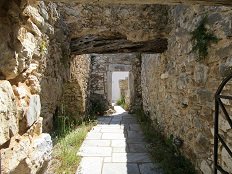

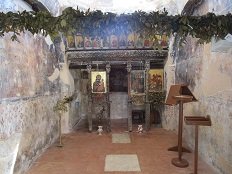
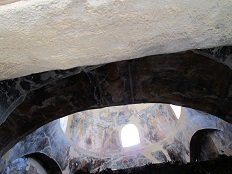
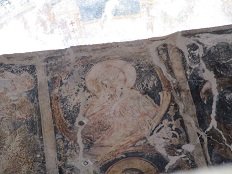
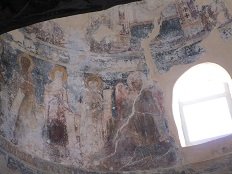
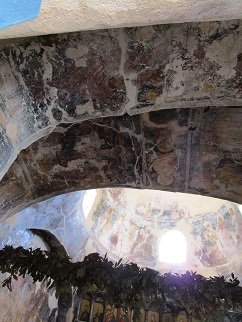
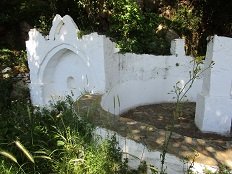
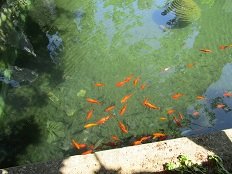
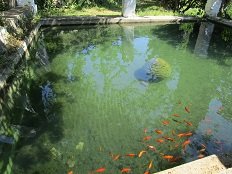

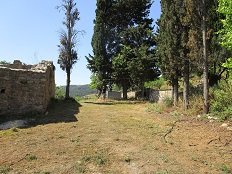
The Agios Dimitrios monastery stands in the mountainous interior of Skyros, about 6 km from the Chora. Its surrounding wall was built in 1611, and the church, dated to the late 16th century, rises on the site of an older church and, before that, an ancient temple to the goddess Demeter. Pieces of the temple were reused at the entrance, including the relief of a reclining lioness. The interior carries frescoes painted in 1691 by a monk from Ioannina, mixing Christian and mythological images.
Agios Ioannis church
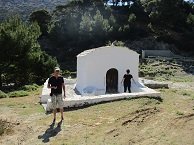
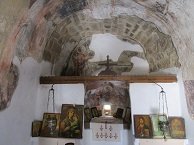
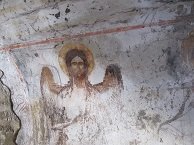
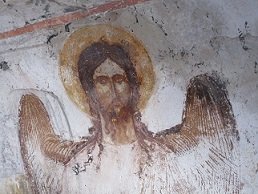
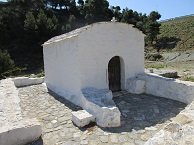
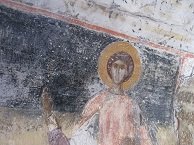
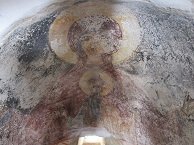
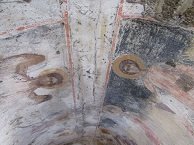
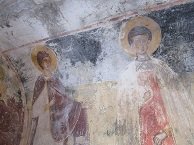
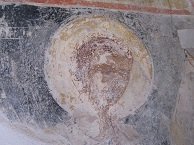
Agios Ioannis is a small Byzantine church south-west of the Chora, reached on the road towards the Agios Dimitrios monastery. The route passes a fine view over the Chora and the sea before reaching an artificial reservoir, near which the church stands. Inside are well-preserved frescoes of Jesus and the Virgin Mary with child.
The Agalipa shipwreck
A stranded boat lies on the isolated beach of Agalipa in the north-west of Skyros, near the airport. Agalipa is made up of two beaches in a bay ringed by oak trees; the larger has golden sand and clear water, and the smaller, darker beach holds the wreck. The boat carried close to a hundred migrants from Turkey towards Kimi on Evia, but a storm forced its captain to run it aground on Skyros instead. The beaches are unorganised and hard to reach, so they stay very quiet, reached by boat or on foot along a narrow path through the woods.
Lithari lighthouse
The Lithari lighthouse stands on Cape Lithari in the south-east of Skyros. Built in 1894 of rough stone, it is round, 12.5 m high, with a green-painted roof and a keeper's house below, and it gives three white flashes a minute. The lighthouse cannot be reached by road; the nearest road ends about 5 km away in rough country, so it is best seen from the sea. In 2012 the Greek Ministry of Culture declared it a historical monument.