


 <
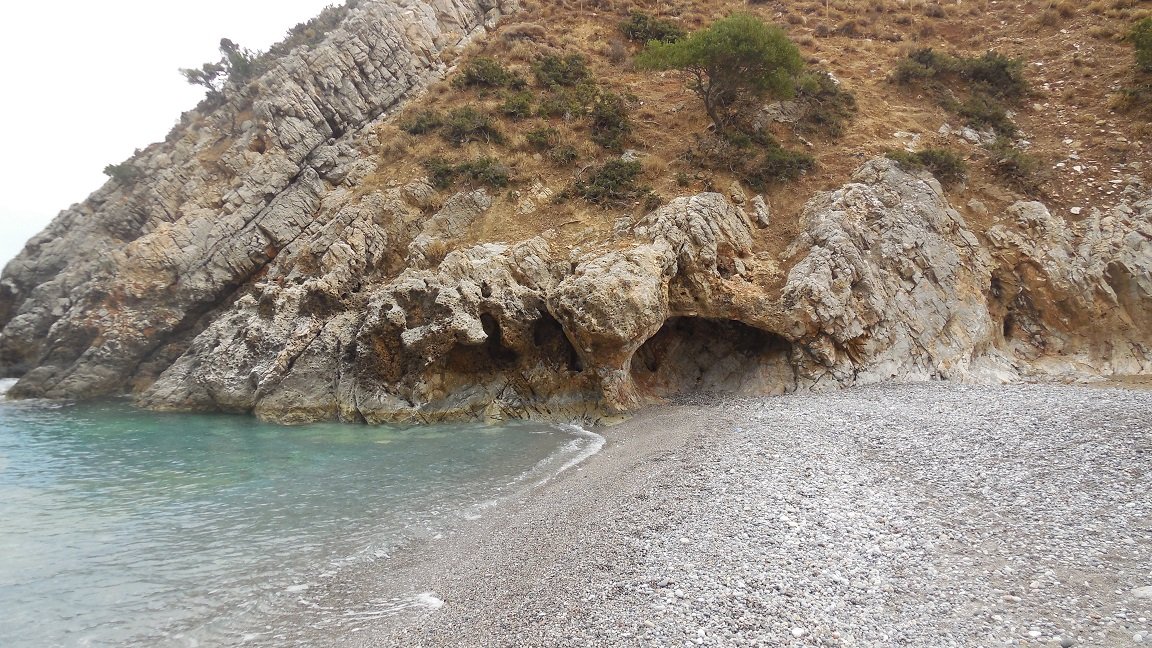
<The Diktynna Sanctuary and the beach of Menies on the Rodopos Peninsula - Crete






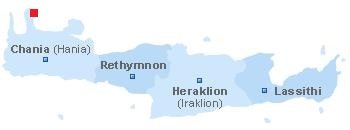 From Rodopos there is a path leading to the extreme north where you can see the Diktynna Sanctuary. On the way you will pass the Ellinospilos cave which was already inhabited in prehistoric times.
The sanctuary in the north of the Rodopos peninsula was dedicated to the daughter of Zeus. The myth tells that she had to escape from King Minos and jumped into the sea at this spot. Fishermen supposedly picked her up in their nets and brought her to the island Aegina, where she was honoured as a goddess. The people of Crete called her Diktynna (which means "net").
From Rodopos there is a path leading to the extreme north where you can see the Diktynna Sanctuary. On the way you will pass the Ellinospilos cave which was already inhabited in prehistoric times.
The sanctuary in the north of the Rodopos peninsula was dedicated to the daughter of Zeus. The myth tells that she had to escape from King Minos and jumped into the sea at this spot. Fishermen supposedly picked her up in their nets and brought her to the island Aegina, where she was honoured as a goddess. The people of Crete called her Diktynna (which means "net").
 The first sanctuary dates from 700 BC and as good as nothing is left of it. Two centuries later the sanctuary was rebuilt. During the Roman period emperor Hadrianus had it enlarged. During the later centuries a lot of the buildings disappeared, mostly by people that wanted the stones to build their own houses.
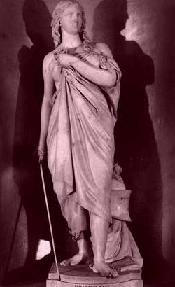
The Roman temple was surrounded by columns. Places where water was saved have also been found. Statues of the Roman emperor and of the goddess that have been found here can be seen in the Museum of Chania.
The walk to the sanctuary over the coastal road is long and tiring and is better not made when it is too hot. The option is to go to the Diktynna sanctuary by boat from the nearby village of Kolimbari. As I understand it there are also boat trips from Platanias (and maybe from Chania?).
The first sanctuary dates from 700 BC and as good as nothing is left of it. Two centuries later the sanctuary was rebuilt. During the Roman period emperor Hadrianus had it enlarged. During the later centuries a lot of the buildings disappeared, mostly by people that wanted the stones to build their own houses.
The Roman temple was surrounded by columns. Places where water was saved have also been found. Statues of the Roman emperor and of the goddess that have been found here can be seen in the Museum of Chania.
The walk to the sanctuary over the coastal road is long and tiring and is better not made when it is too hot. The option is to go to the Diktynna sanctuary by boat from the nearby village of Kolimbari. As I understand it there are also boat trips from Platanias (and maybe from Chania?).
Diktynna was a Minoan mountain goddess who loved hunting and nature. According to the myth she was a beautiful woman that was born in western Crete, at the Samaria Gorge and the White Mountains, and she remained a virgin by choice. King Minos fell in love with her and pursued her for nine months all over the island until Diktynna jumped off the cliff where the sanctuary now stands. The fisherman who saved Diktynna and brought her to Aegina fell in love with her as well. Diktynna didn't answer his advances and fled to the sanctuary of Artemis. The goddess Artemis rewarded Diktynna for keeping her virginity and made her immortal.




The goddess Diktynna was worshipped throughout the island of Crete, but mainly in the west, where most temples were built in her honour. The sanctuary of Diktynna was the largest and richest. People walked barefoot to the sanctuary with their offerings. Thus they were more in contact with the nature that Diktynna loved so much.
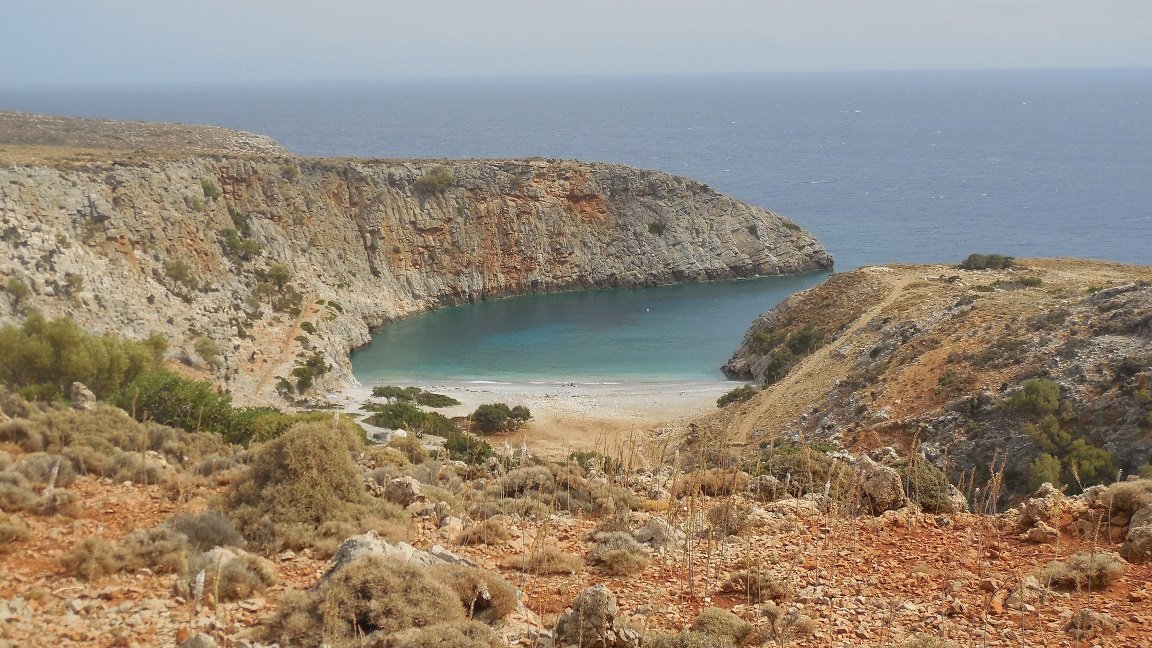
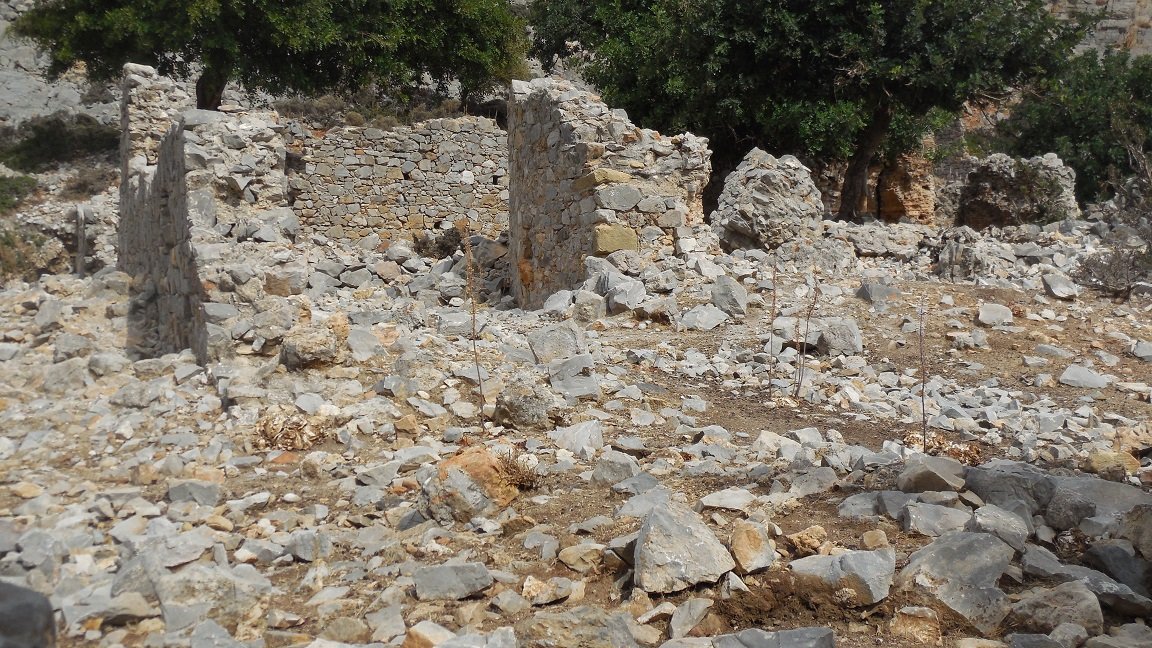
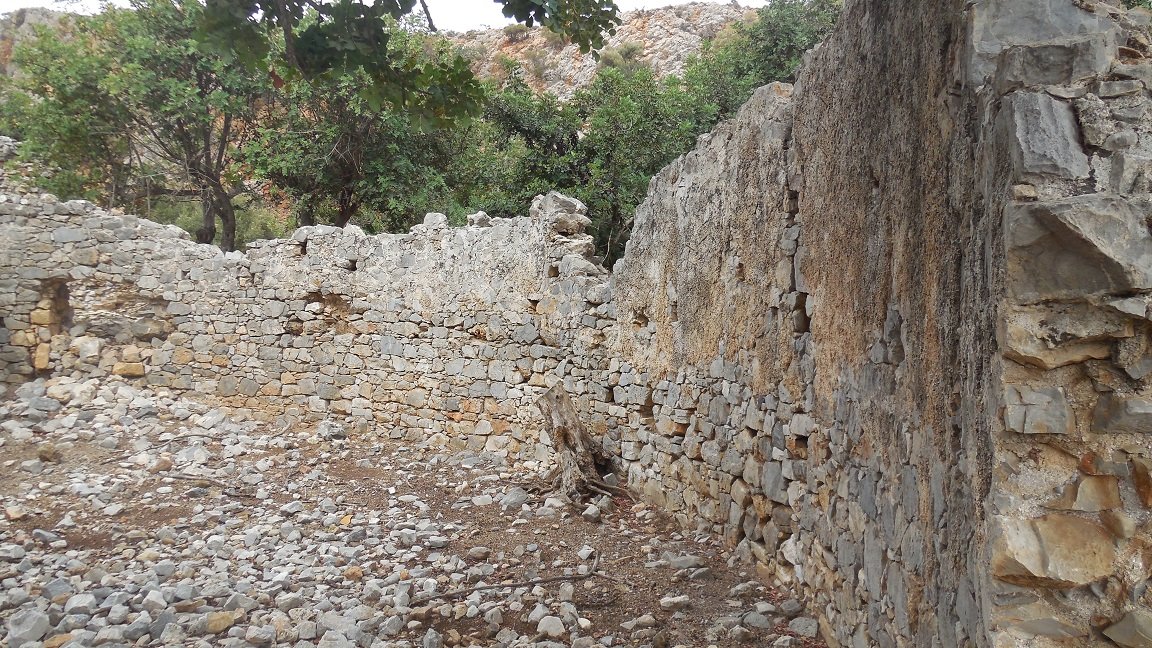
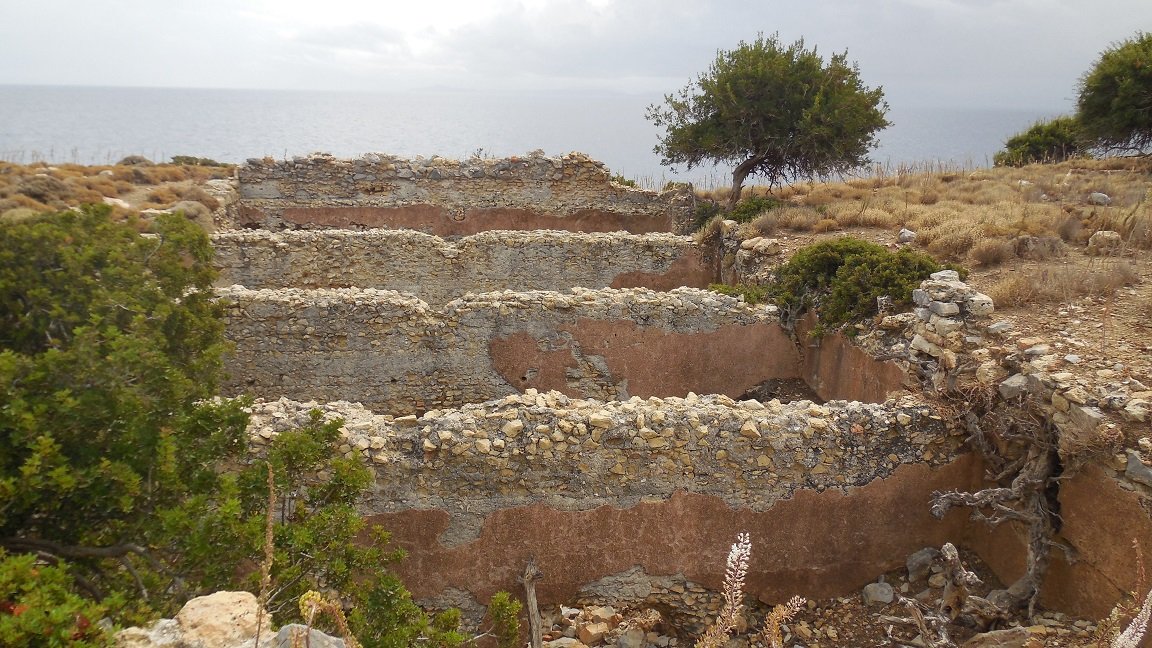
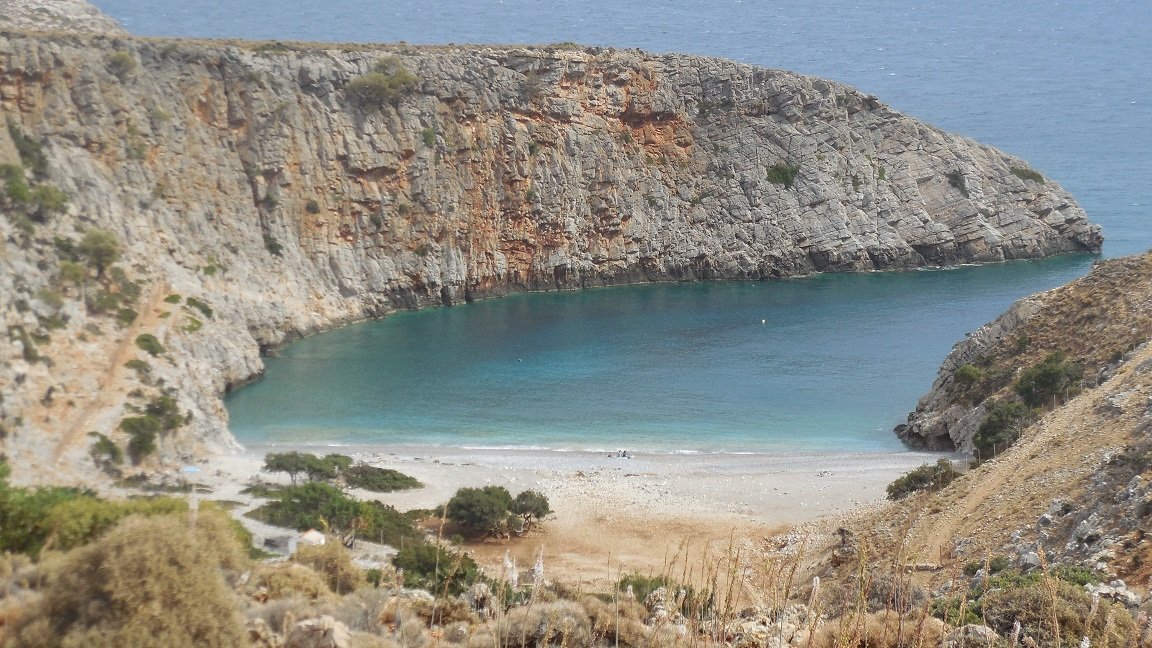
At the end of the peninsula above a bay with a beautiful beach are on a rocky plateau the remains of a temple and an altar that were built in 123 AD during the reign of Hadrian. There are also remains of an aqueduct and other buildings. After the fall of the Roman Empire, the temple was looted and abandoned. The area at Diktynna was never really well explored or excavated by archaeologists so there could be even more under the ground.


If you want you can also drive to Diktynna. A good four-wheel drive is recommended, but it is also possibly with a normal car if you drive a little careful.
 You have to go to the village of Rodopos. You come riding into Rodopos from the south and go out again on the north side of the village following the asphalt road (it's really only one road, just continue straight ahead).
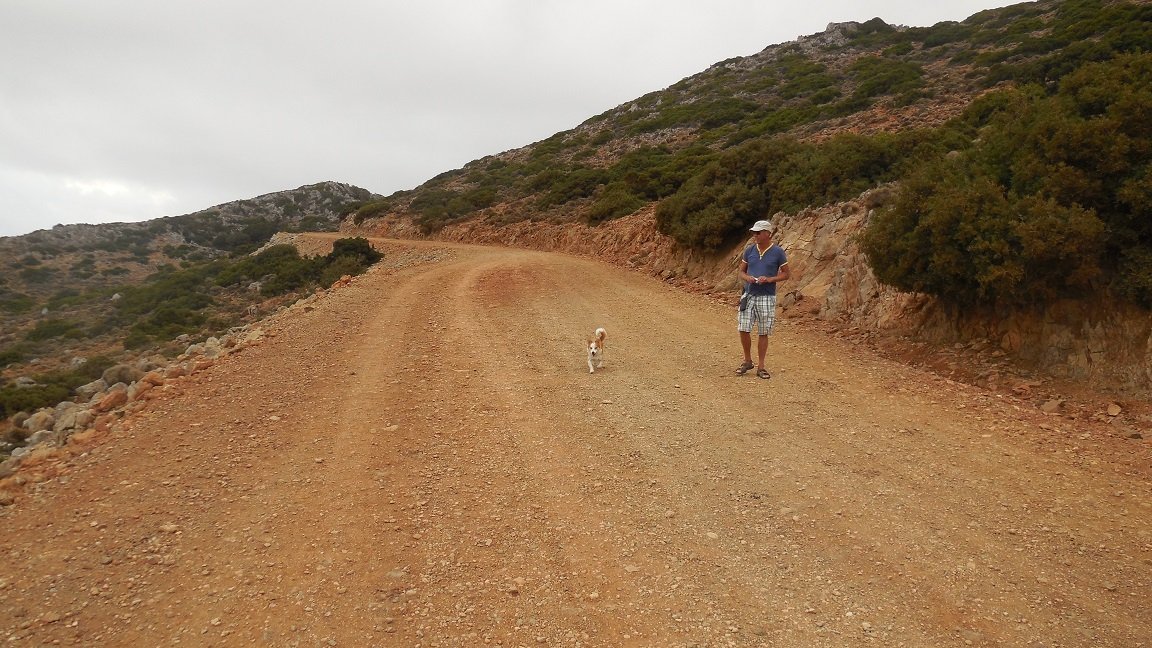
Keep following the road. In the beginning it is a good asphalt road. You'll pass a small church on the right hand side and a little later the asphalt road turns into an unpaved road. In the beginning (and over the greater part) this is still a relatively wide and easy road.
You keep driving straight ahead. At some point you get a split in the road. There are rusted signs with names on them (2014). The exit on your left goes to a church and so you should ignore this exit. On one of signs it says "Menies" (but hard to read). So you keep right here.
You have to go to the village of Rodopos. You come riding into Rodopos from the south and go out again on the north side of the village following the asphalt road (it's really only one road, just continue straight ahead).
Keep following the road. In the beginning it is a good asphalt road. You'll pass a small church on the right hand side and a little later the asphalt road turns into an unpaved road. In the beginning (and over the greater part) this is still a relatively wide and easy road.
You keep driving straight ahead. At some point you get a split in the road. There are rusted signs with names on them (2014). The exit on your left goes to a church and so you should ignore this exit. On one of signs it says "Menies" (but hard to read). So you keep right here.
Actually it's a matter of constantly driving straight ahead and ignore the smaller paths you occasionally encounter. You always chose the widest and therefore the most logical route. At the end the road narrows, and because sometimes you do not always know what is around the corner, it might feel a little uncomfortable for some people, but the road remains good. Depending on your speed (20 to 30 kilometers per hour), the trip takes about an hour to an hour and a half. The last piece to the beach is quite steep, but also doable. You end up at the excavation, where there is a parking space.
Here below on either side of the parking lot are the remains ancient Diktynna, including on the left the remains of a half oval building (the only complete oval building of antiquity can be found in Hamezi in Crete). If you walk towards the beach, you see on the right a path that climbs up the mountain where the remains of the temple is that is dedicated to Diana (the goddess of the hunt). You can see the remains of the pillars and there are pieces of marble. The view of the beach of Menies is magnificent. You will also find an ancient staircase that leads to a large building consisting of three rooms that are stuck together.