>
> <
<Phaistos or Faistos on Crete, the palace and the disk of Phaistos -the Agios Georgios Phalandras church


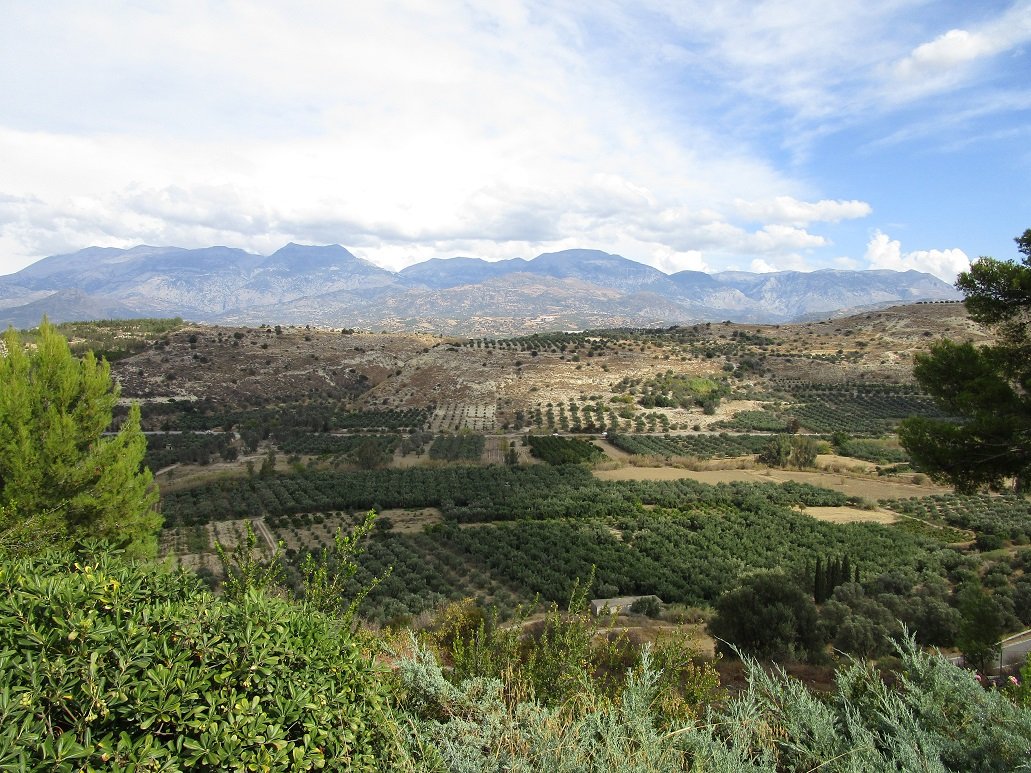


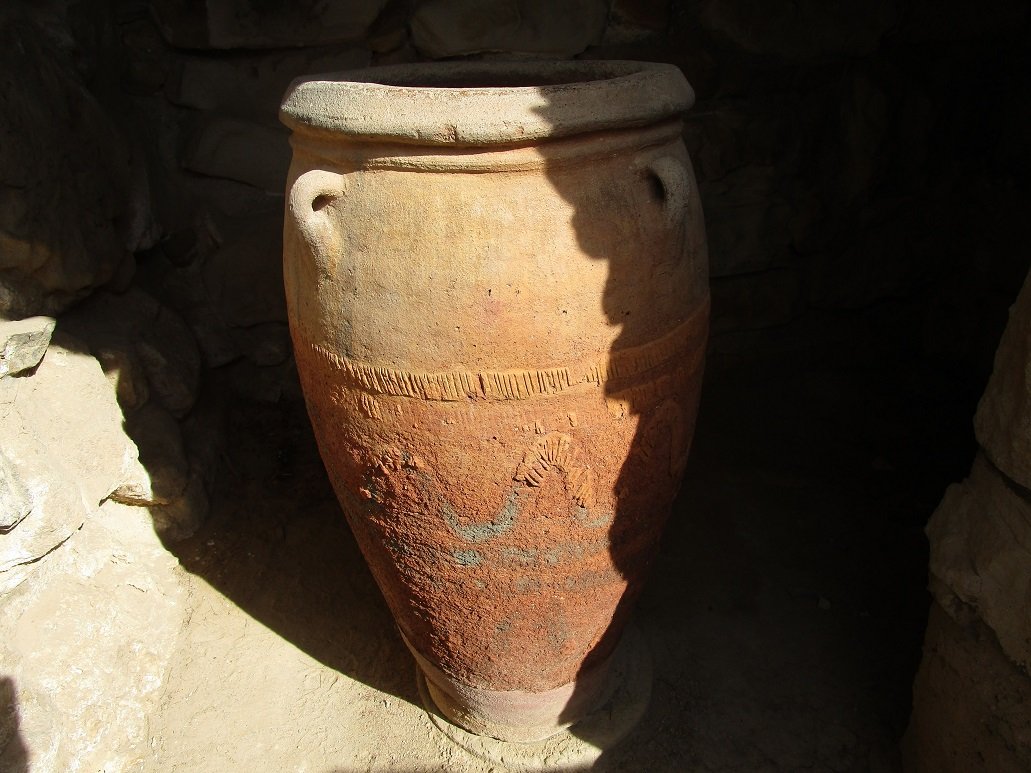
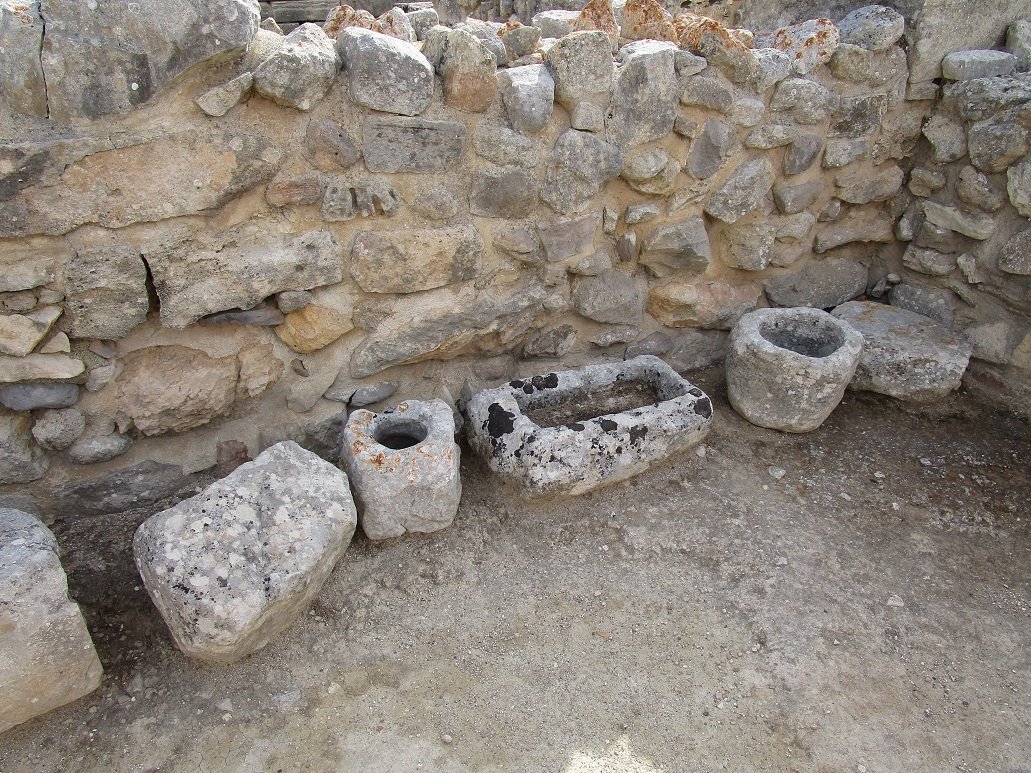
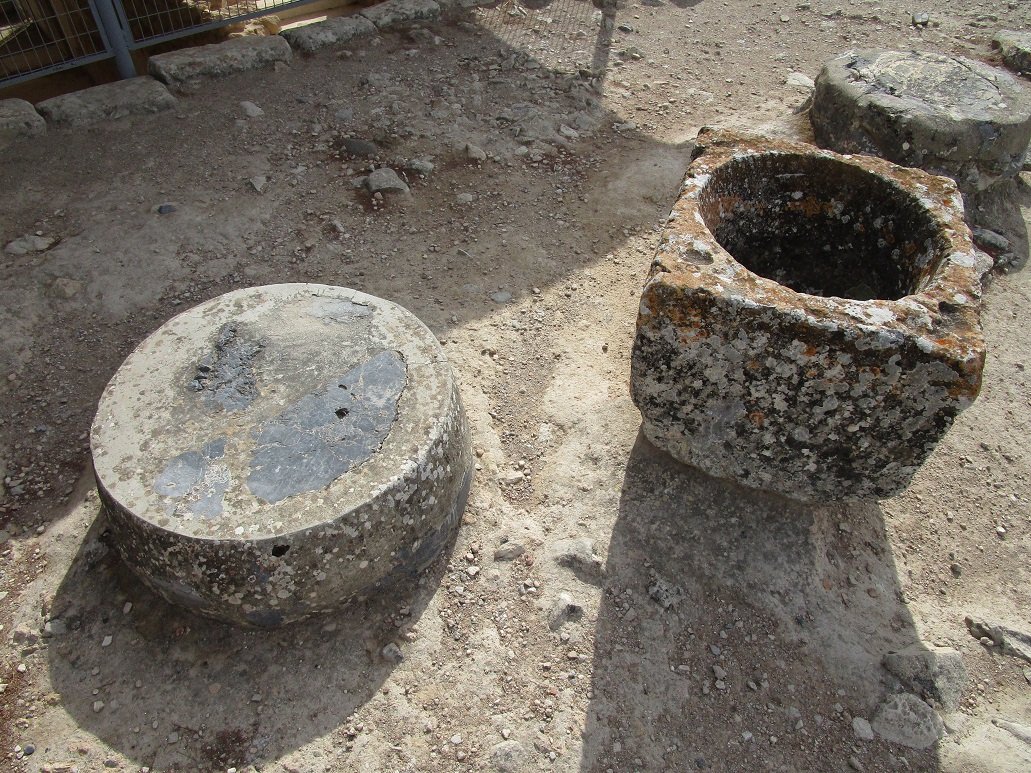
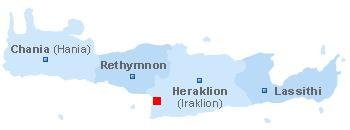 The palace of Phaistos, after Knossos the biggest Minoan palace on Crete, was situated on the west side of the Messara or Mesara Plain in the south of the island in the Heraklion district. The area is very fertile and green, and the views over the plain are very impressive. The palace of Phaistos can be reached via three exits from the road that runs between the small towns of Mires and Timbaki.
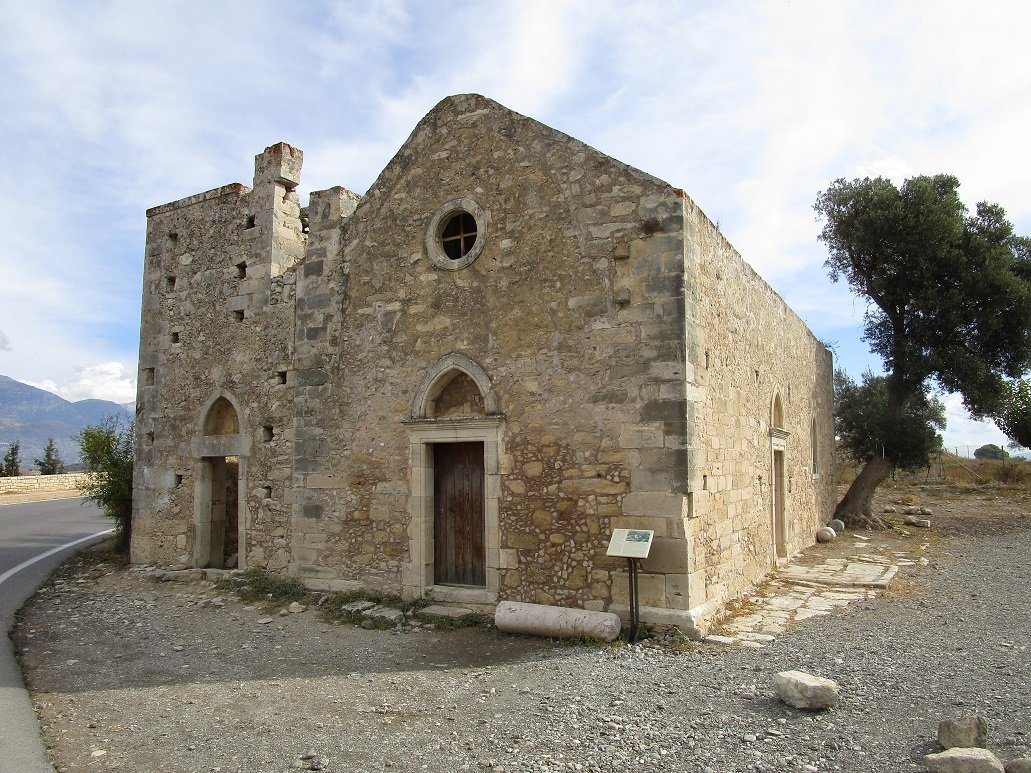
Next to the excavation of the Phaistos palace, on the south side, is the Agios Georgios Phalandras church (16th century), which originates from the Venetian era and was part of a monastery located in this place.
Unlike Knossos this old palace is still in its original state. It is also a lot quieter than in Knossos, but also here there are excursion buses that arrive around an hour or 11. It is therefore wise to visit the excavation early if you want to look around while it is not that busy.
The palace of Phaistos, after Knossos the biggest Minoan palace on Crete, was situated on the west side of the Messara or Mesara Plain in the south of the island in the Heraklion district. The area is very fertile and green, and the views over the plain are very impressive. The palace of Phaistos can be reached via three exits from the road that runs between the small towns of Mires and Timbaki.
Next to the excavation of the Phaistos palace, on the south side, is the Agios Georgios Phalandras church (16th century), which originates from the Venetian era and was part of a monastery located in this place.
Unlike Knossos this old palace is still in its original state. It is also a lot quieter than in Knossos, but also here there are excursion buses that arrive around an hour or 11. It is therefore wise to visit the excavation early if you want to look around while it is not that busy.


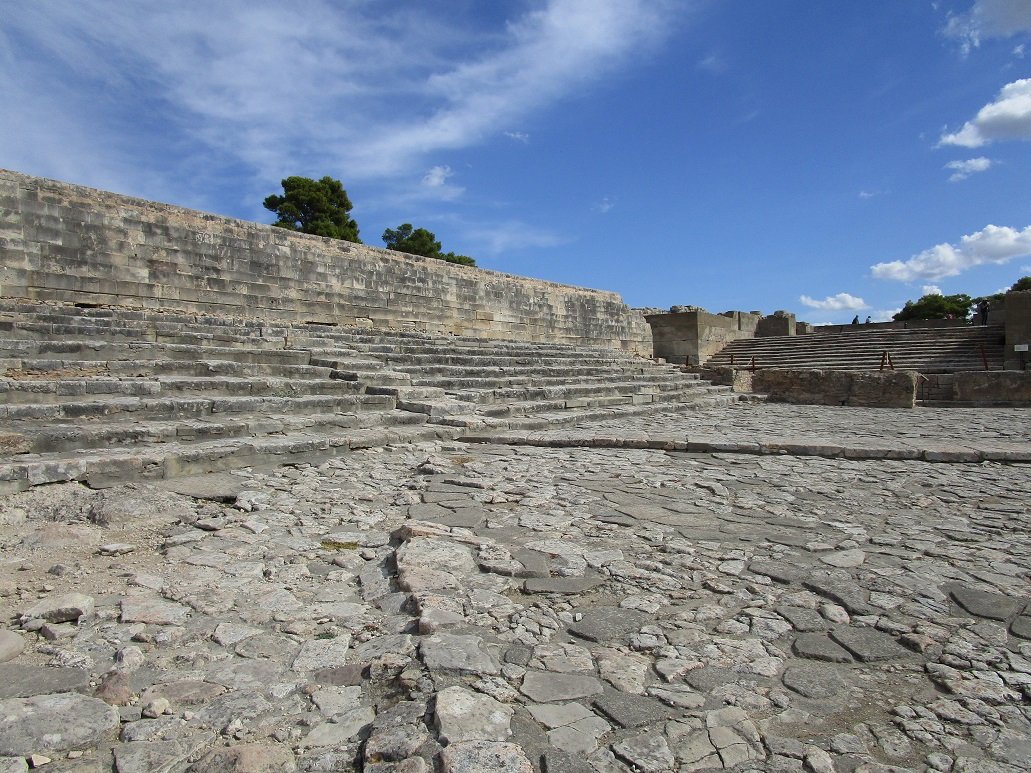

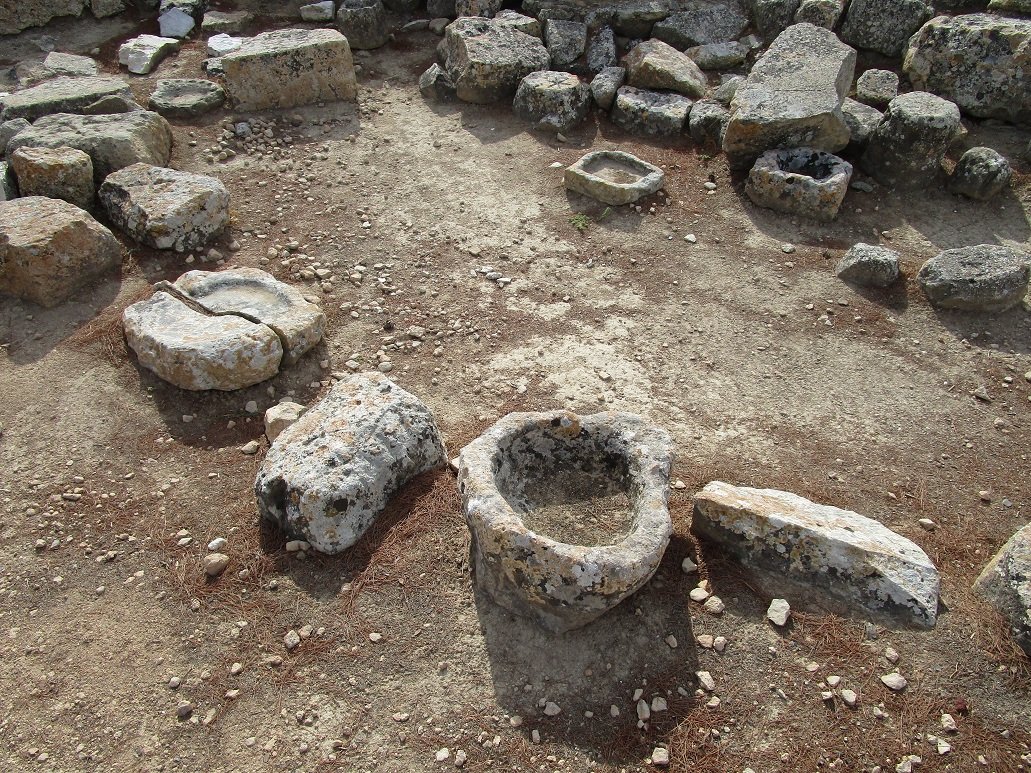

The palace of Phaistos is set on a hill and below it lies the ancient town. It was destroyed by earthquakes several times and then rebuild again. Around 1700 BC a new palace was built on top of the ruins of the old one. In 1450 BC it was destroyed together with all the other palaces on Crete.
 The most important find from Phaistos is "the disk of Phaistos" which can be seen in the Archaeological Museum in Heraklion. It is a clay tablet with inscriptions and symbols and it represents the oldest form of writing in the world.
It is thought to date from 1600 BC and there are 45 different symbols on the disc which may be the old Minoan language. Many people have tried to translate the signs but nobody has succeeded so far.
The most important find from Phaistos is "the disk of Phaistos" which can be seen in the Archaeological Museum in Heraklion. It is a clay tablet with inscriptions and symbols and it represents the oldest form of writing in the world.
It is thought to date from 1600 BC and there are 45 different symbols on the disc which may be the old Minoan language. Many people have tried to translate the signs but nobody has succeeded so far.
Also after the Minoan period the palace and the surroundings remained a place of importance. Phaistos was a heavily populated town and it took part in the Trojan war. In the 2nd century BC Phaistos was destroyed by neighbouring Gortys.